Department of Orthopedic Surgery, the First People's Hospital of Yunnan Province, the Affiliated Hospital of Kunming University of Science and Technology, the Key Laboratory of Digital Orthopaedics of Yunnan Provincial, Kunming, Yunnan, China.
InnoVec Biotherapeutics Co., Ltd, Beijing, China.
J Cachexia Sarcopenia Muscle. 2022 Dec;13(6):2985-2998. doi: 10.1002/jcsm.13091. Epub 2022 Sep 26.
Sarcopenia is defined as an age-related progressive loss of muscle mass and/or strength. Although different factors can contribute to this disease, the underlying mechanisms remain unclear. We assessed transcriptional heterogeneity in skeletal muscles from sarcopenic and control mice at single-cell resolution.
A mouse model was established to study sarcopenic skeletal muscles. Single-cell RNA-seq was performed on tibialis anterior (TA) muscle cells collected from sarcopenic and control mice. A series of bioinformatic analyses were carried out to identify and compare different cell types under different conditions. Immunofluorescence staining and western blotting were used to validate the findings from single-cell experiments. Tube formation assays were conducted to further evaluate the effects of Gbp2 on endothelial cells during angiogenesis.
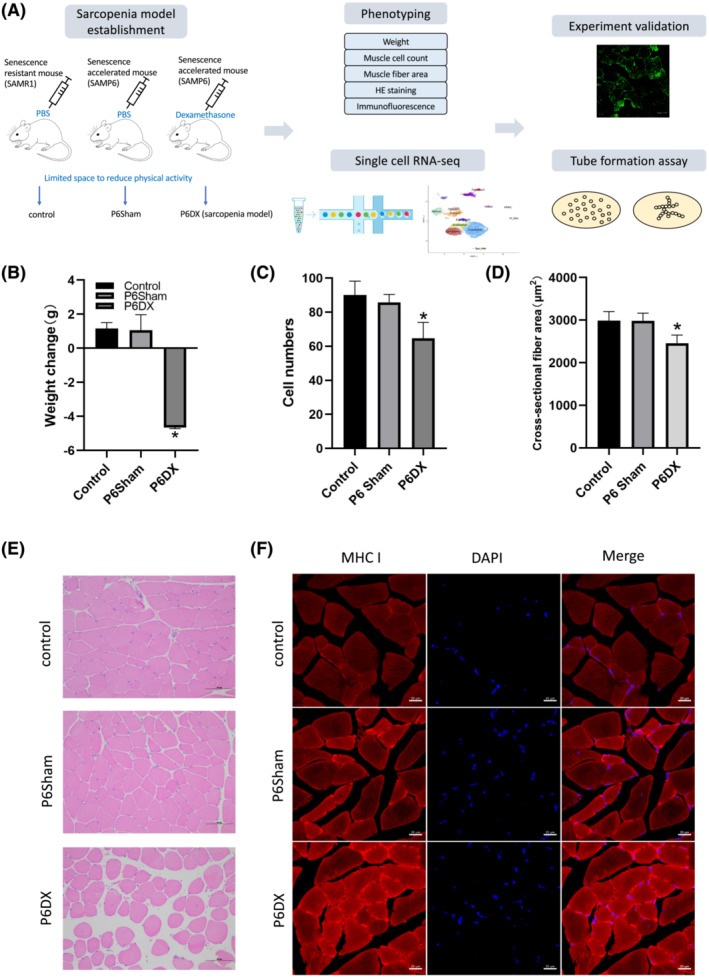
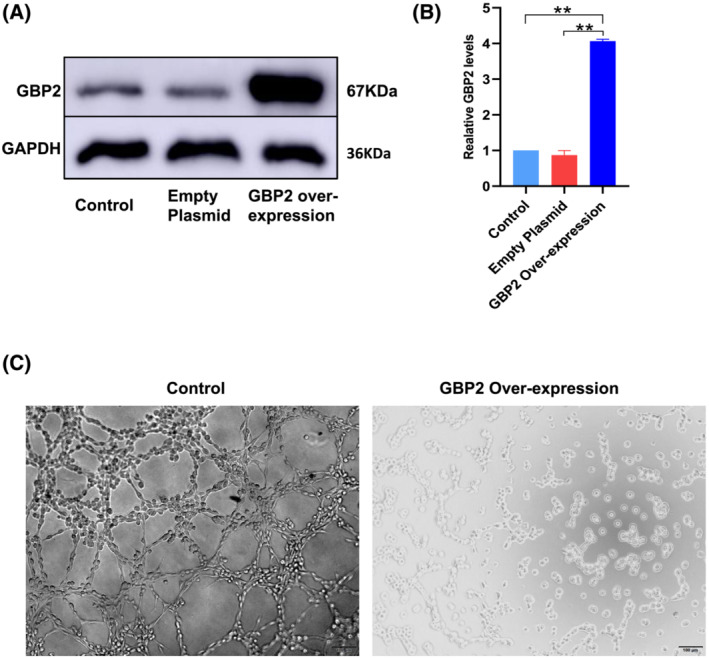
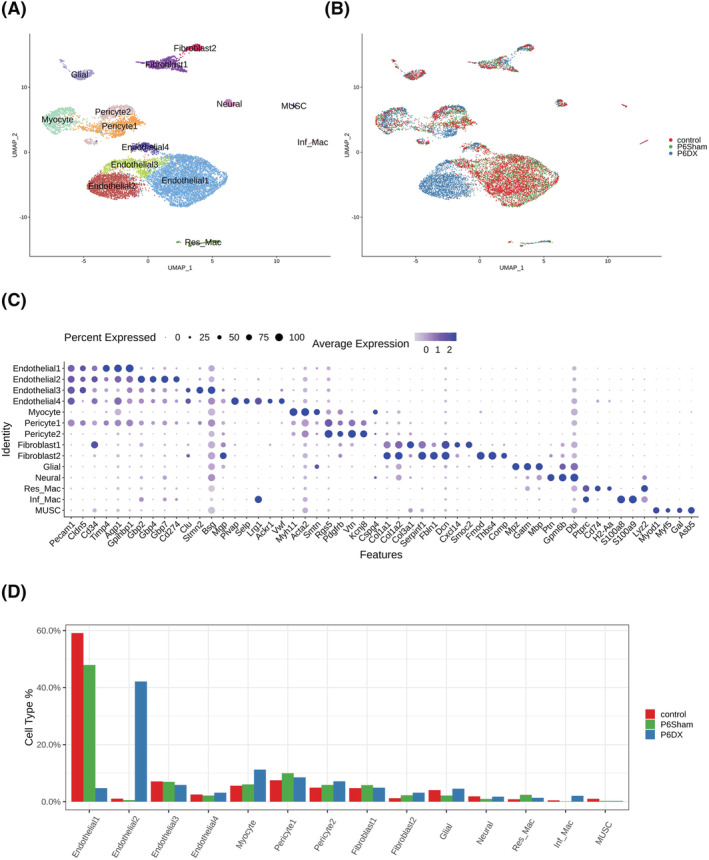
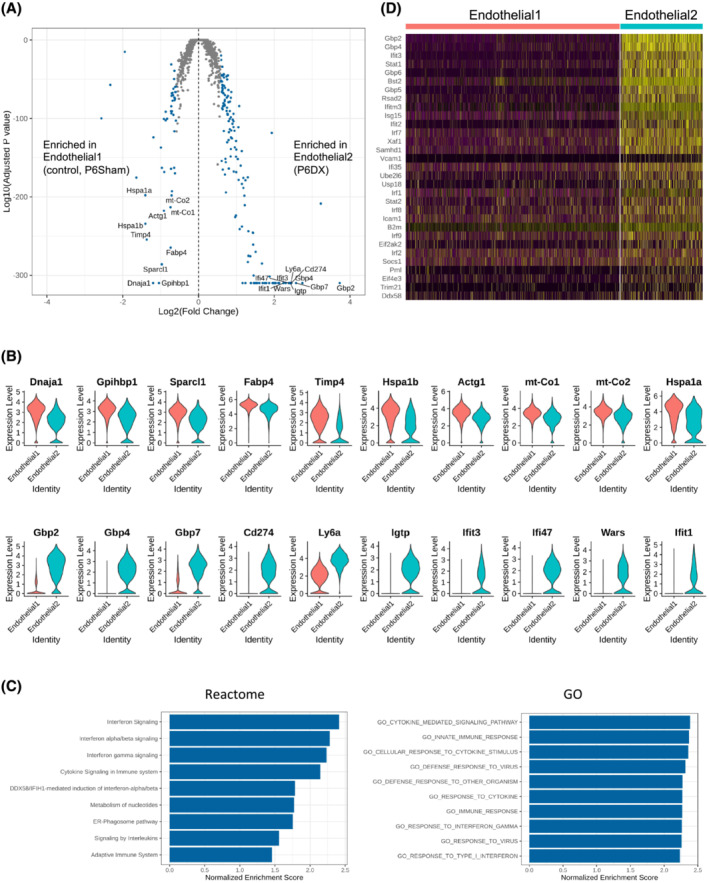
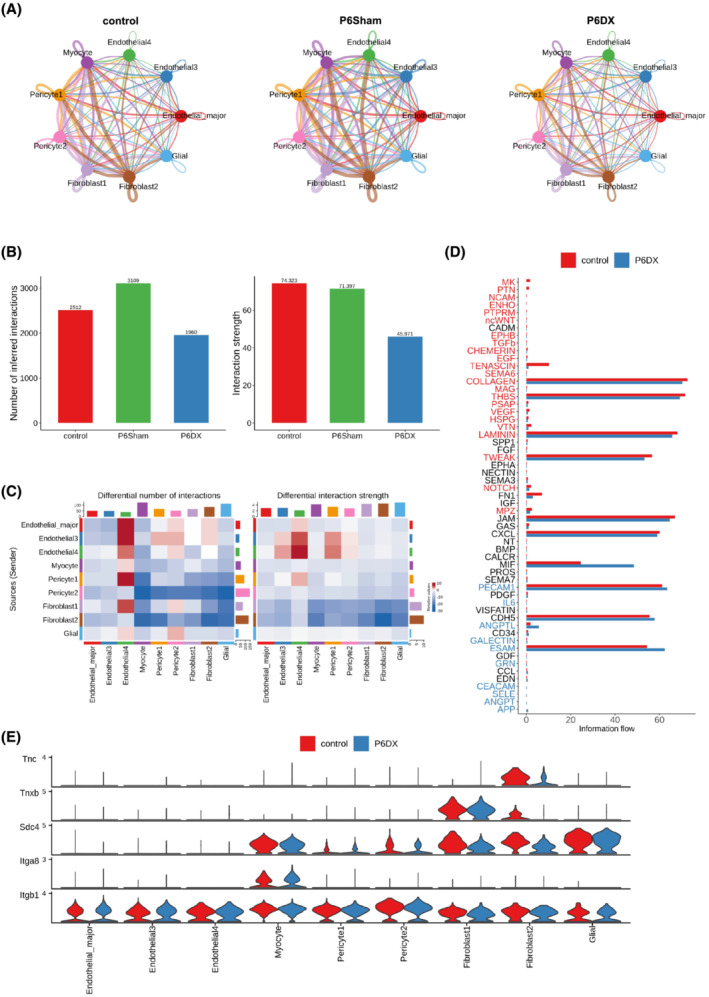
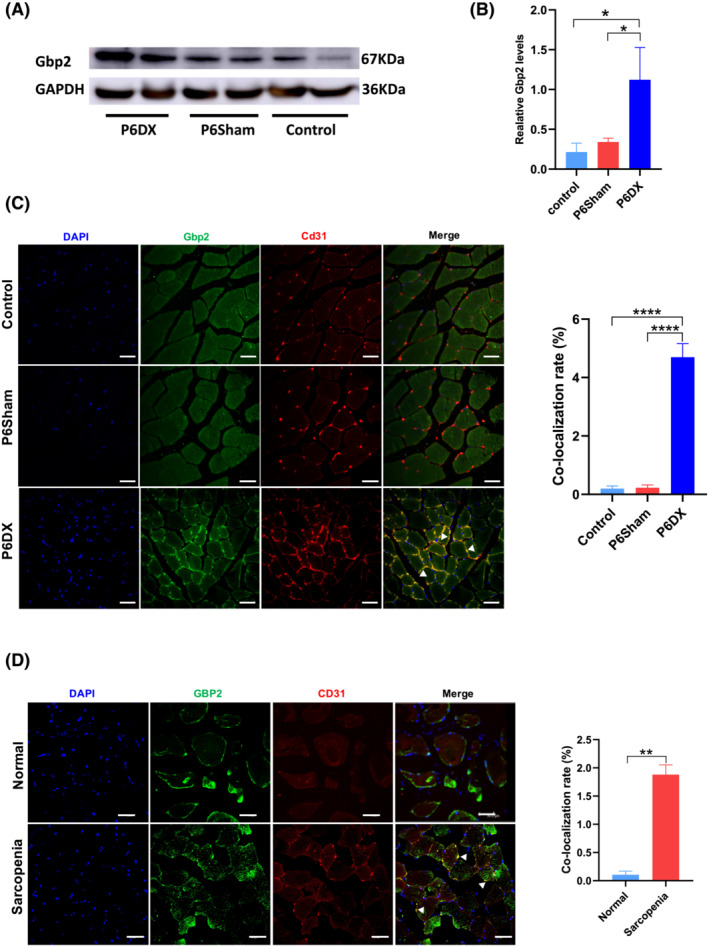
A murine sarcopenia model was successfully established using a senescence-accelerated mouse strain (SAMP6, n = 5). Sarcopenia phenotype was induced by administration of dexamethasone (20 mg/kg) and reduced physical activity. Senescence-resistant mice strain (SAMR1) and SAMP6 strain with similar activity but injected with PBS were recruited as two control groups. As signs of sarcopenia, body weight, muscle cell counts and cross-sectional fibre area were all significantly decreased in sarcopenic mice (P value = 0.004, 0.03 and 0.035, respectively). After quality control, 13 612 TA muscle single-cell transcriptomes were retained for analysis. Fourteen cell clusters were identified from the profiled cells. Among them, two distinct endothelial subtypes were found to be dominant in the sarcopenia group (42.2% cells) and in the two control groups (59.1% and 47.9% cells), respectively. 191 differentially expressed genes were detected between the two endothelial subtypes. Sarcopenia-specific endothelial cell subtype exhibited a dramatic increase in the interferon family genes and the interferon-inducible guanylate-binding protein (GBP) family gene expressions. For example, Igtp and Gbp2 in sarcopenic endothelial cells were 5.4 and 13.3 times higher than those in the control groups, respectively. We further validated our findings in muscle specimens of sarcopenia patients and observed that GBP2 levels were increased in endothelial cells of a subset of patients (11 of 40 patients, 27.5%), and we identified significantly higher CD31 and GBP2 co-localization (P value = 0.001128). Finally, we overexpressed Gbp2 in human umbilical vein endothelial cells in vitro. The endothelial cells with elevated Gbp2 expression displayed compromised tube formation.
Our single-cell-based results suggested that endothelial cells may play critical roles in sarcopenia development through interferon-GBP signalling pathways, highlighting new therapeutic directions to slow down or even reverse age-related sarcopenia.
肌少症是一种与年龄相关的进行性肌肉质量和/或力量丧失。虽然有许多因素会导致这种疾病,但潜在的机制仍不清楚。我们在单细胞分辨率下评估了来自肌少症和对照小鼠骨骼肌中的转录异质性。
建立了一个小鼠模型来研究肌少症骨骼肌。对来自肌少症和对照小鼠的胫骨前肌(TA)肌细胞进行单细胞 RNA-seq。进行了一系列生物信息学分析,以鉴定和比较不同条件下的不同细胞类型。免疫荧光染色和 Western blot 用于验证单细胞实验的结果。管形成实验用于进一步评估 Gbp2 在血管生成过程中对内皮细胞的影响。
使用衰老加速小鼠品系(SAMP6,n=5)成功建立了一种肌少症小鼠模型。使用地塞米松(20mg/kg)和减少体力活动诱导肌少症表型。选择衰老抗性小鼠品系(SAMR1)和接受 PBS 注射的 SAMP6 品系作为两个对照组。作为肌少症的迹象,肌少症小鼠的体重、肌细胞计数和横截面积纤维均显著降低(P 值=0.004、0.03 和 0.035)。经过质量控制,保留了 13612 个 TA 肌肉单细胞转录组进行分析。从分析的细胞中鉴定出 14 个细胞簇。其中,在肌少症组(42.2%的细胞)和两个对照组(59.1%和 47.9%的细胞)中发现两种不同的内皮亚型占主导地位。在两种内皮亚型之间检测到 191 个差异表达基因。肌少症特异性内皮细胞亚型中干扰素家族基因和干扰素诱导的鸟苷酸结合蛋白(GBP)家族基因表达显著增加。例如,肌少症内皮细胞中的 IgTp 和 Gbp2 分别比对照组高 5.4 倍和 13.3 倍。我们在肌少症患者的肌肉标本中进一步验证了我们的发现,并观察到内皮细胞中一组患者(40 名患者中的 11 名,27.5%)的 GBP2 水平升高,并且我们发现 CD31 和 GBP2 的共定位显著增加(P 值=0.001128)。最后,我们在体外过表达人脐静脉内皮细胞中的 Gbp2。表达升高的 Gbp2 的内皮细胞显示出管形成受损。
我们基于单细胞的结果表明,内皮细胞可能通过干扰素-GBP 信号通路在肌少症发展中发挥关键作用,这突显了减缓甚至逆转与年龄相关的肌少症的新治疗方向。