Instituto de Microbiología, Universidad San Francisco de Quito USFQ, Quito, Ecuador.
Laboratorio de Biotecnología Vegetal, Universidad San Francisco de Quito USFQ, Quito, Ecuador.
Front Cell Infect Microbiol. 2022 Sep 9;12:951383. doi: 10.3389/fcimb.2022.951383. eCollection 2022.
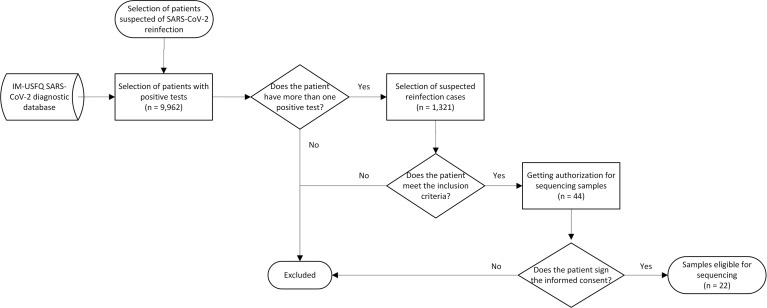
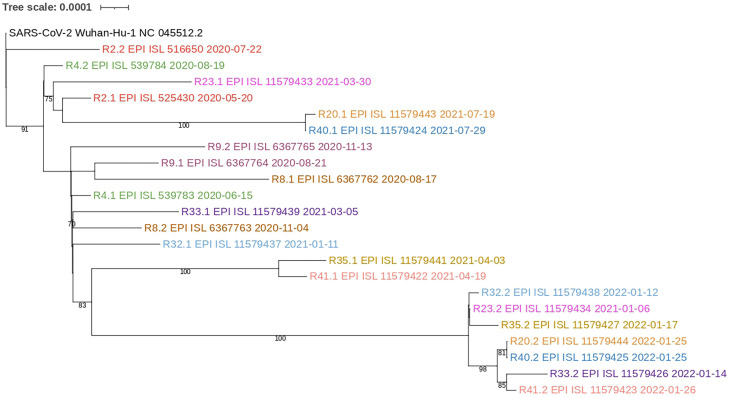
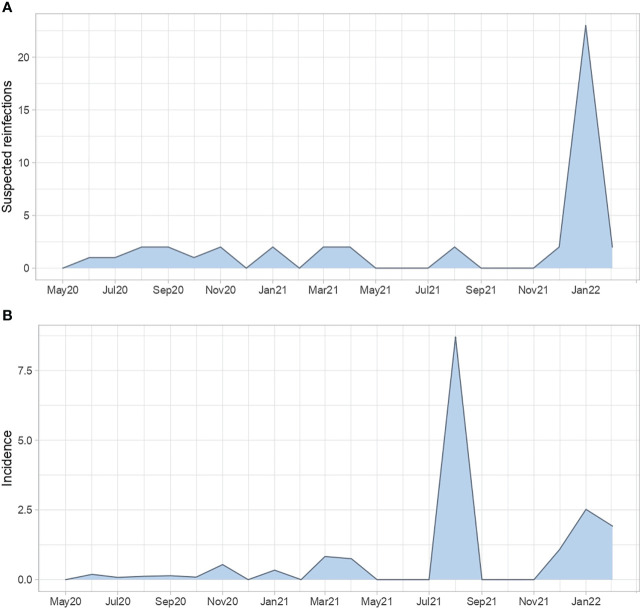
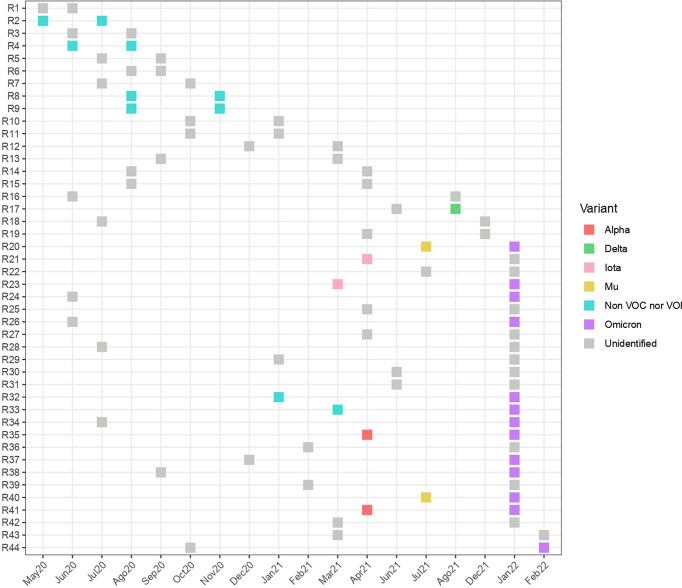
SARS-CoV-2 reinfection is defined as a new infection with a different virus variant in an individual who has already recovered from a previous episode of COVID-19. The first case of reinfection in the world was described in August 2020, since then, reinfections have increased over time and their incidence has fluctuated with specific SARS-CoV-2 variant waves. Initially, reinfections were estimated to represent less than 1% of total COVID-19 infections. With the advent of the Omicron variant, reinfections became more frequent, representing up to 10% of cases (based on data from developed countries). The frequency of reinfections in Latin America has been scarcely reported. The current study shows that in Ecuador, the frequency of reinfections has increased 10-fold following the introduction of Omicron, after 22 months of surveillance in a single center of COVID-19 diagnostics. Suspected reinfections were identified retrospectively from a database of RT-qPCR-positive patients. Cases were confirmed by sequencing viral genomes from the first and second infections using the ONT MinION platform. Monthly surveillance showed that the main incidence peaks of reinfections were reached within four to five months, coinciding with the increase of COVID-19 cases in the country, suggesting that the emergence of reinfections is related to higher exposure to the virus during outbreaks. This study performed the longest monitoring of SARS-CoV-2 reinfections, showing an occurrence at regular intervals of 4-5 months and confirming a greater propensity of Omicron to cause reinfections.
SARS-CoV-2 再感染定义为个体在先前 COVID-19 发作后已康复,再次感染不同病毒变体。世界上首例再感染病例于 2020 年 8 月描述,此后,再感染随着时间的推移而增加,其发生率随特定 SARS-CoV-2 变体波而波动。最初,再感染估计不到总 COVID-19 感染的 1%。随着奥密克戎变体的出现,再感染变得更加频繁,占病例的比例高达 10%(基于发达国家的数据)。拉丁美洲的再感染频率报道较少。本研究表明,在厄瓜多尔,在引入奥密克戎后,经过 22 个月在一个 COVID-19 诊断中心的监测,再感染频率增加了 10 倍。疑似再感染是从 RT-qPCR 阳性患者的数据库中回顾性确定的。通过使用 ONT MinION 平台对第一次和第二次感染的病毒基因组进行测序,对病例进行了确认。每月监测显示,再感染的主要发病高峰在四到五个月内达到,与该国 COVID-19 病例的增加相吻合,这表明再感染的出现与爆发期间更高的病毒暴露有关。本研究进行了最长时间的 SARS-CoV-2 再感染监测,显示出 4-5 个月的定期发生,并证实了奥密克戎更易引起再感染。