Department of Psychiatry and Behavioral Sciences, Stanford University School of Medicine, 401 Quarry Road, Stanford, CA, 94305-5795, USA.
Behavior Change Institute, Oakland, USA.
J Neurodev Disord. 2022 Sep 30;14(1):53. doi: 10.1186/s11689-022-09463-9.
A significant proportion of boys with fragile X syndrome (FXS), the most common known genetic cause of intellectual disability, exhibit challenging behaviors such as aggression and self-injury that can cause significant distress to families. Recent evidence suggests that coaching caregivers to implement functional communication training (FCT) with their child via telehealth can help to ameliorate these behaviors in FXS. In the present study, we followed families who had participated in our previous randomized controlled trial of FCT to evaluate the longer-term effects of FCT on challenging behaviors in this population.
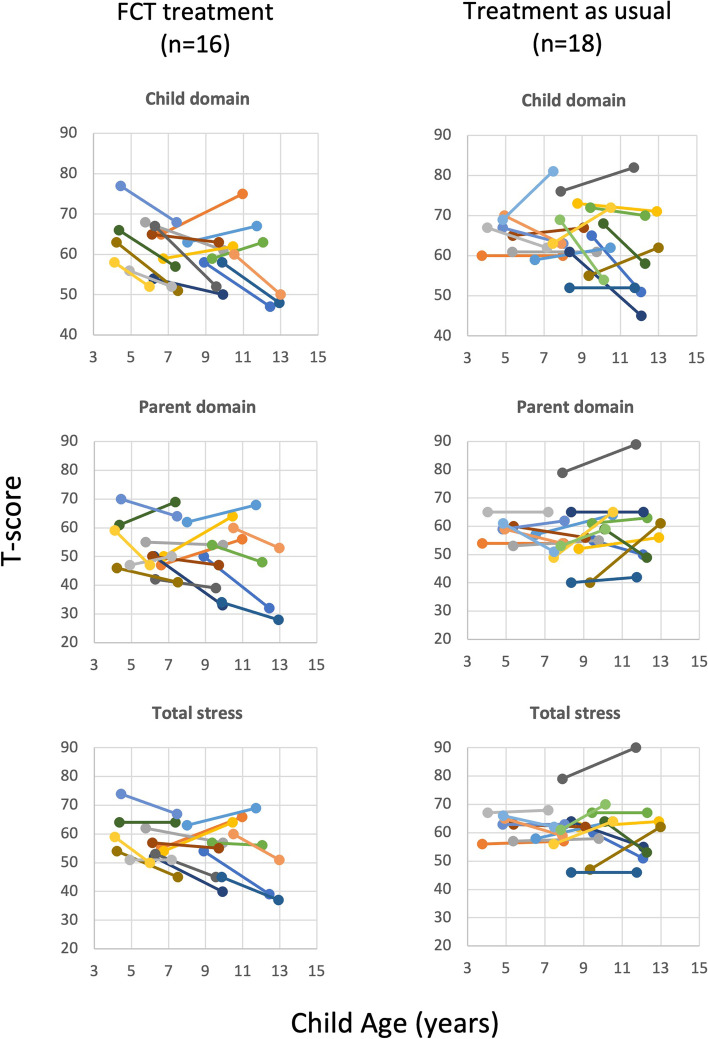
In study 1, follow-up emails, phone calls, text messages, and letters were sent to caregivers of 48 boys with FXS who had completed our previous study conducted between 2016 and 2019. The main outcome measures administered at follow-up were the Aberrant Behavior Checklist-Community (ABC-C) and the Parenting Stress Index, 4th Edition (PSI-4). In study 2, families who had received FCT treatment but whose child exhibited challenging behaviors daily at follow-up received a 1-h parent training booster session to determine whether the intervention effect could be recovered.
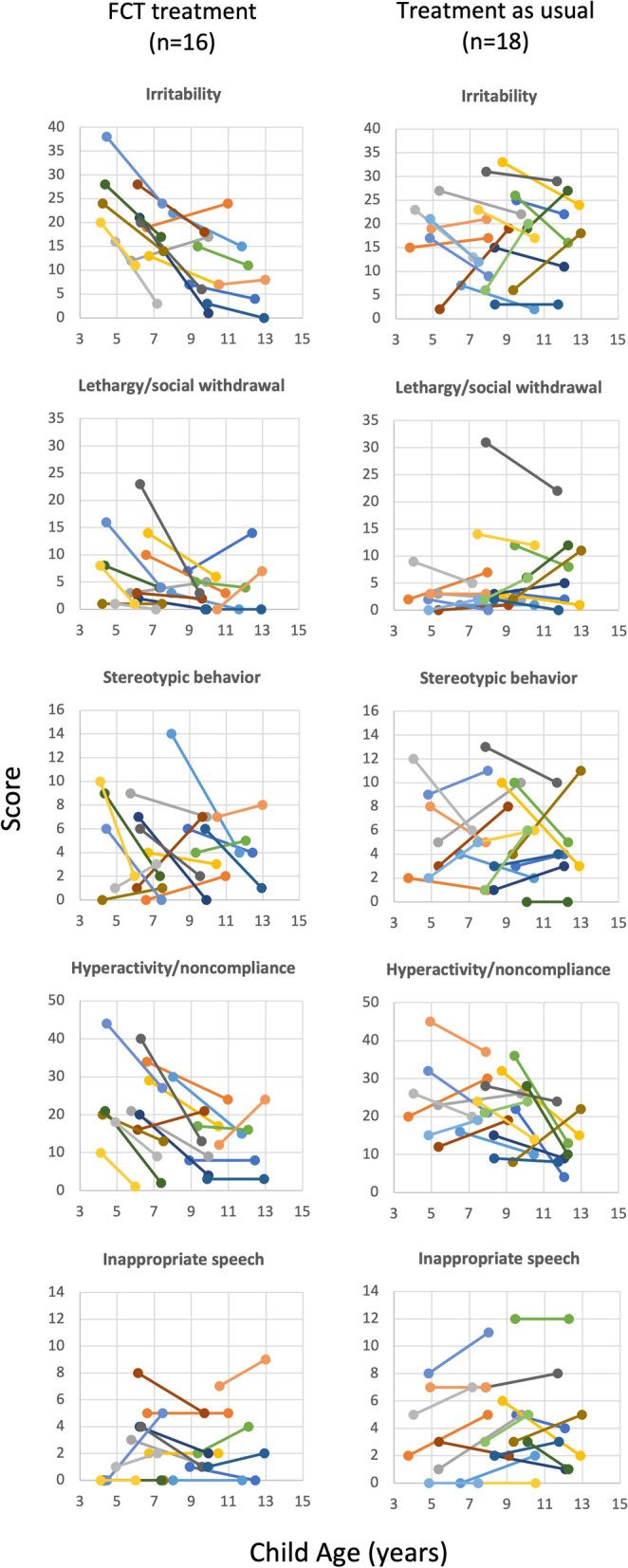
Sixteen (66.7%) of 24 families who had received FCT treatment and 18 (75.0%) of 24 families who had received treatment as usual were traced and consented between March and August 2021. The mean follow-up time was 3.1 years (range, 1.4 to 4.2 years). Longitudinal mixed effects analyses indicated that boys who had received FCT were more likely to show improvements on the irritability and lethargy/social withdrawal subscales of the ABC-C over the follow-up interval compared to boys who had continued with treatment as usual. Four of the six boys who had received the booster parent training session via telehealth were reported to exhibit fewer forms of challenging behavior at a 4-week follow-up.
Empowering parents to implement behavior analytic treatments with their child in their own home can have durable effects on maintaining low levels of challenging behaviors in boys with FXS. These data further support the need to implement parent-mediated interventions for challenging behaviors in this population at an early age.
ClinicalTrials.gov, . Registered 27 April 2018.
脆性 X 综合征(FXS)是最常见的已知遗传性智力障碍病因,其患儿中相当大的一部分存在行为挑战,如攻击和自残,这可能给家庭带来严重困扰。最近的证据表明,通过远程医疗对患儿的照护者进行功能性沟通训练(FCT)的培训,可以帮助改善 FXS 患儿的这些行为。在本研究中,我们对之前参加过我们的 FCT 随机对照试验的家庭进行了随访,以评估 FCT 对该人群行为挑战的长期影响。
在研究 1 中,我们向 2016 年至 2019 年期间完成我们之前研究的 48 名 FXS 男孩的照护者发送了后续电子邮件、电话、短信和信件。在随访时进行的主要评估措施是异常行为检查表-社区版(ABC-C)和第四版父母压力指数(PSI-4)。在研究 2 中,对接受了 FCT 治疗但在随访时每天仍表现出行为挑战的家庭进行了 1 小时的家长培训强化课程,以确定干预效果是否可以恢复。
2021 年 3 月至 8 月期间,共联系到并获得了 24 名接受 FCT 治疗的家庭中的 16 名(66.7%)和 24 名接受常规治疗的家庭中的 18 名(75.0%)的同意。平均随访时间为 3.1 年(范围为 1.4 至 4.2 年)。纵向混合效应分析表明,与继续接受常规治疗的男孩相比,接受 FCT 的男孩在随访期间更有可能在 ABC-C 的易激惹和嗜睡/社会退缩子量表上显示出改善。在通过远程医疗接受强化家长培训课程的 6 名男孩中,有 4 名在 4 周随访时报告的行为挑战形式较少。
授权父母在家中对孩子实施行为分析治疗可以对维持 FXS 男孩低水平的行为挑战产生持久影响。这些数据进一步支持在该人群中早期实施针对行为挑战的家长介导干预的必要性。
ClinicalTrials.gov,. 注册于 2018 年 4 月 27 日。