
小儿感染性休克中人类心房利钠肽与心功能及血流动力学的相关性
The Correlations of Human Atrial Natriuretic Peptide on Cardiac Function and Hemodynamics in Pediatric Septic Shock.
作者信息
Setyaningtyas Arina, Soetjipto Soetjipto, Endaryanto Anang, Pudjiadi Antonius Hocky
机构信息
Doctoral Program of Medical Science, Faculty of Medicine, Universitas Airlangga, Surabaya, East Java, Indonesia.
Department of Child Health, Dr. Soetomo General Academic Hospital, Faculty of Medicine, Universitas Airlangga, Surabaya, East Java, Indonesia.
出版信息
Open Access Emerg Med. 2022 Sep 26;14:525-534. doi: 10.2147/OAEM.S379543. eCollection 2022.
PURPOSE
We aimed to determine the correlations of human Atrial Natriuretic Peptide (ANP) on cardiac function and hemodynamics in pediatric septic shock.
PATIENTS AND METHODS
We conducted an observational and prospective study on 30 children with septic shock. Measurement of the level of human atrial natriuretic peptide was determined in the serum of patients. Cardiac power (CP) is a cardiac function parameter measured with cardiac output (cardiovascular flow) and mean arterial (intravascular) pressure. Cardiac output and mean arterial pressure were monitored using pressure recording analytical methods (PRAM). Hemodynamic status was represented by a vasoactive inotropic score.
RESULTS
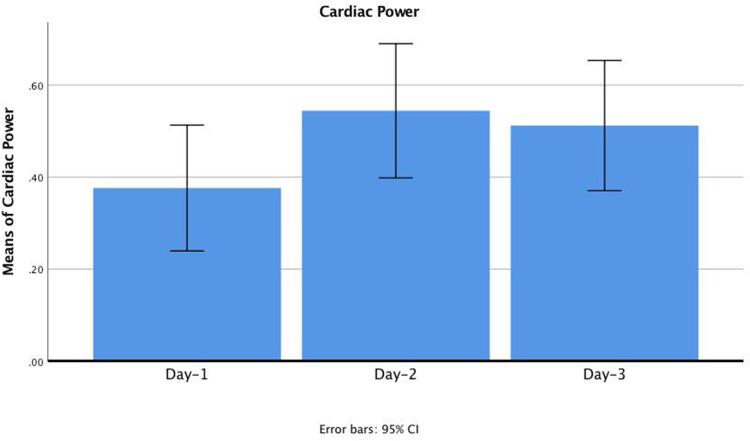
Thirty pediatric septic shock patients fulfilled the eligibility criteria. The human ANP level was not significantly different in pediatric septic shock on three days of examination. Cardiac power was significantly different in pediatric septic shock on three days of examination. There was a correlation between human ANP and cardiac power on day 3 and human ANP and VIS on day 2.
CONCLUSION
There was a significant correlation between human ANP level and cardiac power on day 3 and ANP level and VIS on day 2. The cardiac power on day 3 and VIS on 48 hours can be alternatives to evaluate the hemodynamic status and cardiac function concerning human ANP in pediatric septic shock.
目的
我们旨在确定人心房利钠肽(ANP)与小儿脓毒性休克患者心脏功能和血流动力学之间的相关性。
患者与方法
我们对30例小儿脓毒性休克患者进行了一项观察性前瞻性研究。测定患者血清中人心房利钠肽水平。心脏功率(CP)是一项心脏功能参数,通过心输出量(心血管流量)和平均动脉(血管内)压来测量。使用压力记录分析方法(PRAM)监测心输出量和平均动脉压。血流动力学状态用血管活性药物评分表示。
结果
30例小儿脓毒性休克患者符合纳入标准。在检查的三天中,小儿脓毒性休克患者的人ANP水平无显著差异。在检查的三天中,小儿脓毒性休克患者的心脏功率有显著差异。第3天的人ANP与心脏功率以及第2天的人ANP与血管活性药物评分之间存在相关性。
结论
第3天的人ANP水平与心脏功率以及第2天的ANP水平与血管活性药物评分之间存在显著相关性。第3天的心脏功率和48小时时的血管活性药物评分可作为评估小儿脓毒性休克中与人ANP相关的血流动力学状态和心脏功能的替代指标。




 Zotero 插件