Key Laboratory of Cellular Physiology at Shanxi Medical University, Ministry of Education, and the Department of Physiology, Shanxi Medical University, Taiyuan, People's Republic of China.
Department of Cardiology, First Clinical Medical College, Shanxi Medical University, Taiyuan, People's Republic of China.
Int J Nanomedicine. 2022 Sep 24;17:4481-4496. doi: 10.2147/IJN.S378727. eCollection 2022.
The wide application of copper oxide nanoparticles (CuO NPs) in industry, agriculture, environmental remediation, and biomedicine has increased the risk of human exposure to CuO NPs. Recent studies suggested that CuO NPs have genotoxic and cytotoxic effects on various cells. However, little is known about the toxicity of CuO NPs on major peripheral organs after respiratory exposure.
We investigated the toxicities of CuO NPs on human bronchial epithelial (BEAS-2B) and human cardiomyocytes (AC16) cells in vitro, and on the lungs, liver, kidneys, and heart of spontaneously hypertensive rats (SHRs) at 24 and 72 h after intrabronchial instillation in vivo.
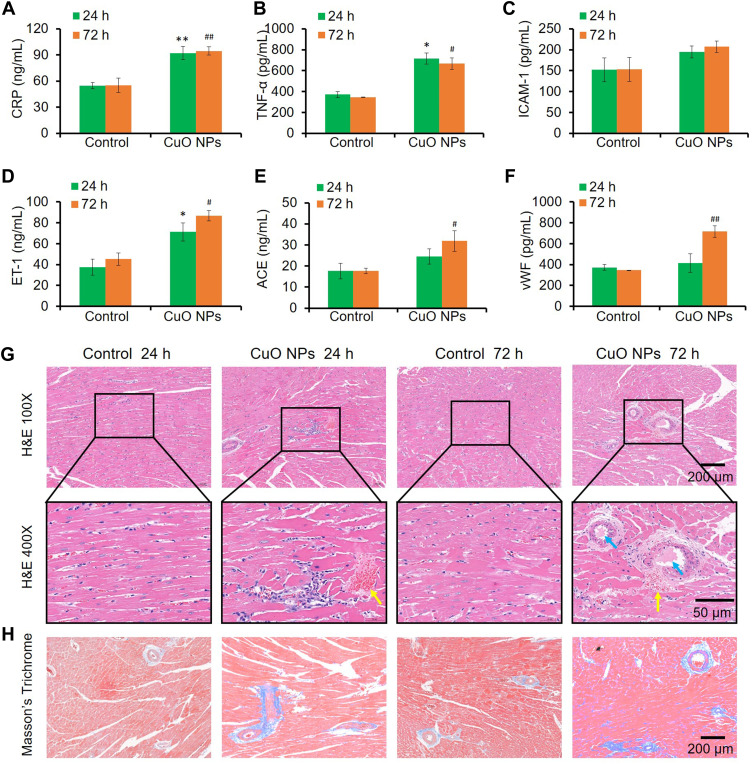
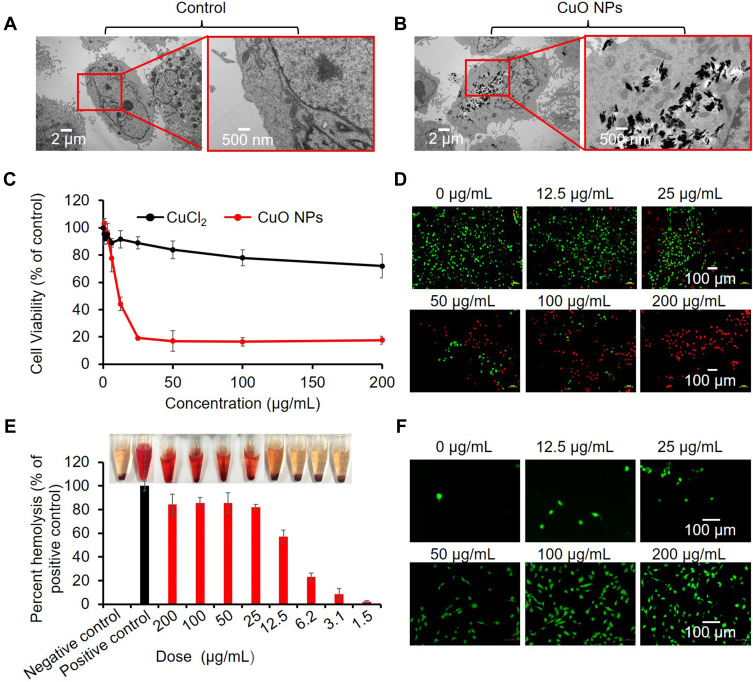
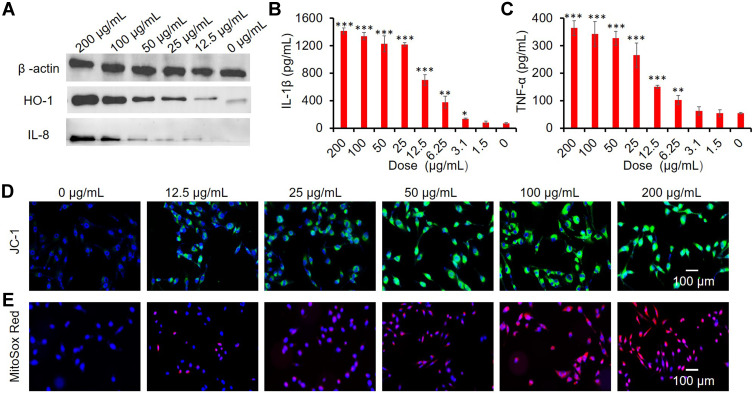
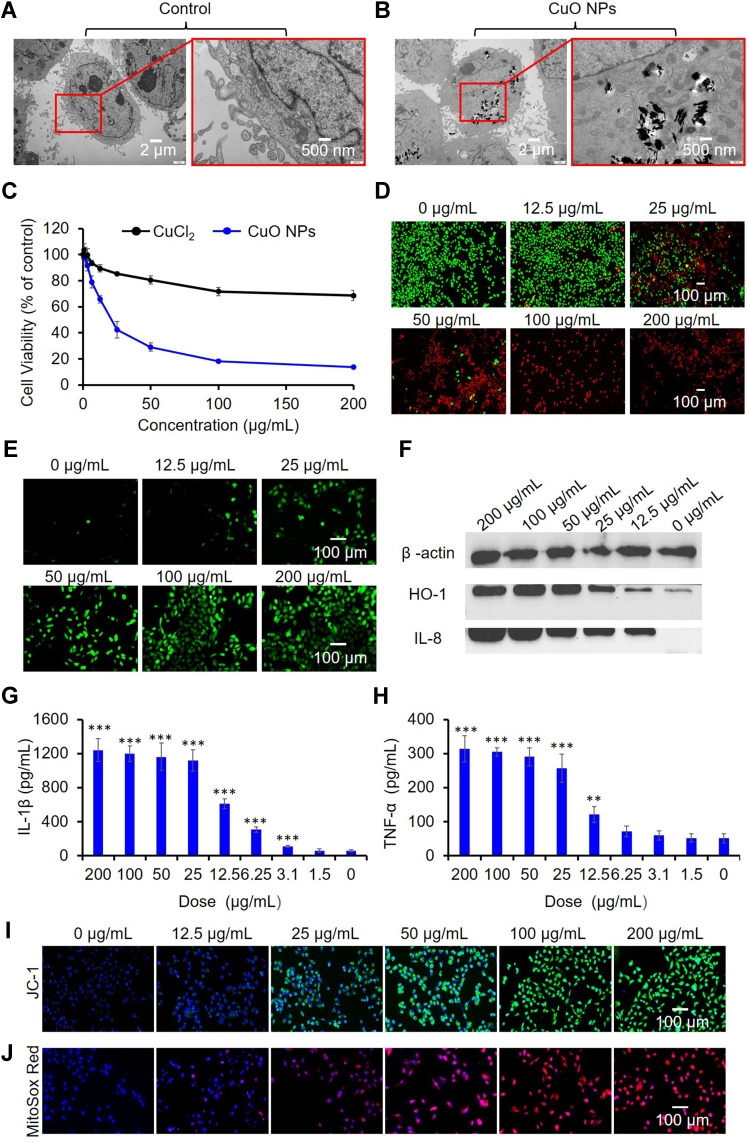
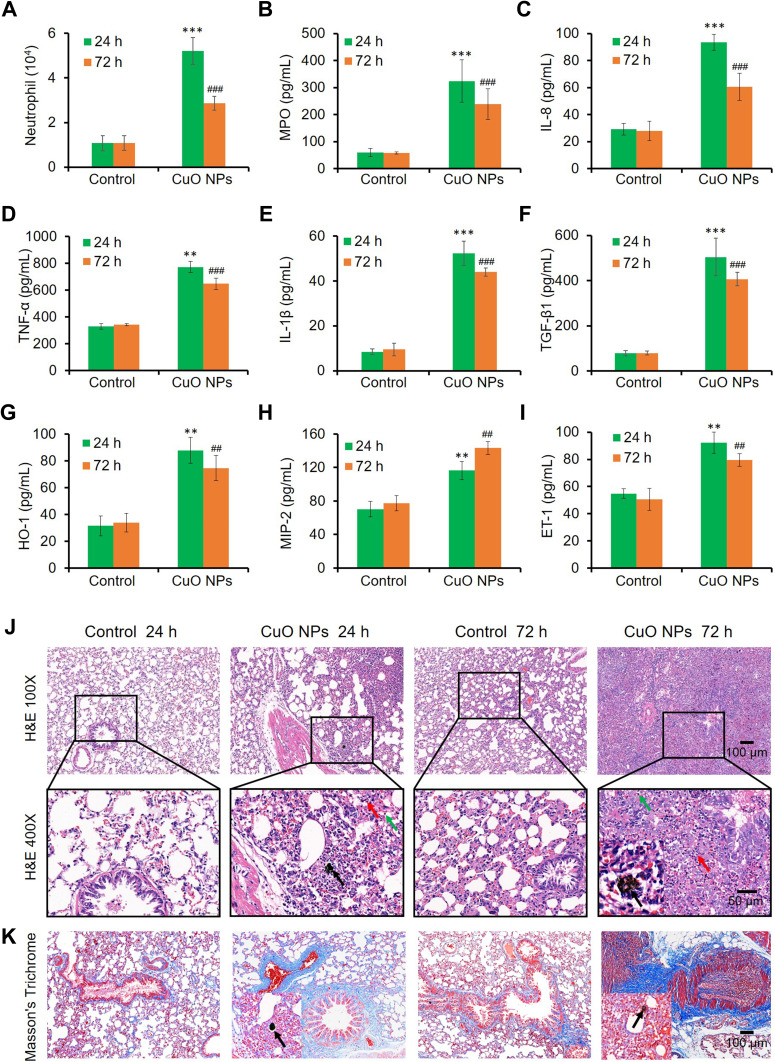
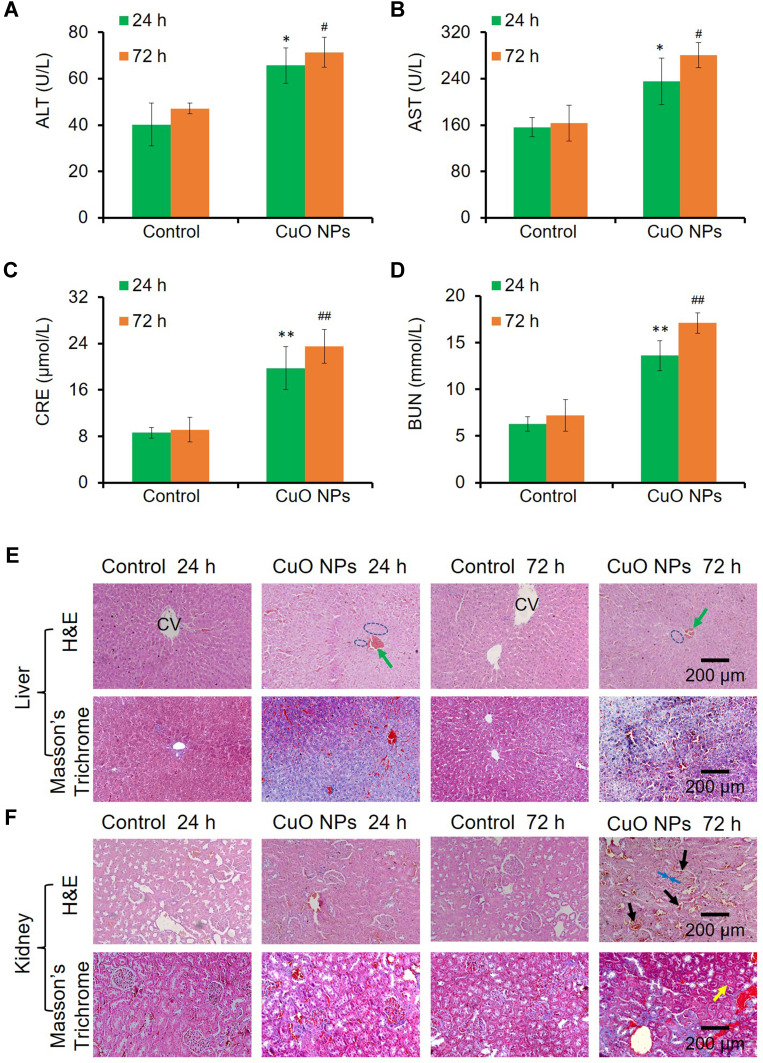
CuO NPs induced concentration-dependent toxicities in both BEAS-2B and AC16 cells mainly through hierarchical oxidative stress mechanisms, involving generation of reactive oxygen species (ROS), upregulation of heme oxygenase-1 (HO-1), mitochondrial dysfunction, and secretion of proinflammatory and profibrogenic cytokines. Respiratory exposure to CuO NPs induced acute multiple organ injuries in SHRs manifesting through inflammation and fibrosis. However, cardiac injury was relatively less severe than injuries in the lungs, liver, and kidneys. Upregulation of serum C-reaction protein (CRP), tumor necrosis factor α (TNF-α), intercellular adhesion molecule 1 (ICAM-1), endothelin-1 (ET-1), angiotensin converting enzyme (ACE), and von Willebrand factor (vWF) after exposure to CuO NPs indicated systematic inflammation, endothelial injury, and potential prothrombosis.
Respiratory exposure to CuO NPs induced acute injuries in main peripheral organs, including the lungs, liver, kidneys, and heart. Individuals with existing cardiovascular diseases were susceptible to exposure to CuO NPs. This study provides a warning about the extensive toxic effects of CuO NPs, especially in the susceptible population.
氧化铜纳米颗粒(CuO NPs)在工业、农业、环境修复和生物医学中的广泛应用增加了人类接触 CuO NPs 的风险。最近的研究表明,CuO NPs 对各种细胞具有遗传毒性和细胞毒性作用。然而,人们对呼吸暴露后 CuO NPs 对主要外周器官的毒性知之甚少。
我们在体外研究了 CuO NPs 对人支气管上皮(BEAS-2B)和人心肌细胞(AC16)的毒性,以及在体内经支气管内滴注后 24 和 72 小时,对自发性高血压大鼠(SHRs)的肺、肝、肾和心脏的毒性。
CuO NPs 主要通过分级氧化应激机制在 BEAS-2B 和 AC16 细胞中引起浓度依赖性毒性,涉及活性氧(ROS)的产生、血红素加氧酶-1(HO-1)的上调、线粒体功能障碍和促炎和促纤维化细胞因子的分泌。呼吸暴露于 CuO NPs 导致 SHRs 急性多器官损伤,表现为炎症和纤维化。然而,与肺、肝和肾损伤相比,心脏损伤相对较轻。暴露于 CuO NPs 后血清 C 反应蛋白(CRP)、肿瘤坏死因子 α(TNF-α)、细胞间黏附分子 1(ICAM-1)、内皮素-1(ET-1)、血管紧张素转换酶(ACE)和血管性血友病因子(vWF)的上调表明系统炎症、内皮损伤和潜在的血栓形成。
呼吸暴露于 CuO NPs 可导致肺、肝、肾和心脏等主要外周器官急性损伤。患有现有心血管疾病的个体易受 CuO NPs 暴露的影响。本研究对 CuO NPs 的广泛毒性作用,尤其是对易感人群,提供了一个警示。