Mihaylova Mariela, Gorin Simon, Reber Thomas P, Rothen Nicolas
Faculty of Psychology, UniDistance Suisse, CH.
Department of Psychology and Educational Sciences, University of Geneva, CH.
Psychol Belg. 2022 Sep 16;62(1):252-271. doi: 10.5334/pb.1146. eCollection 2022.
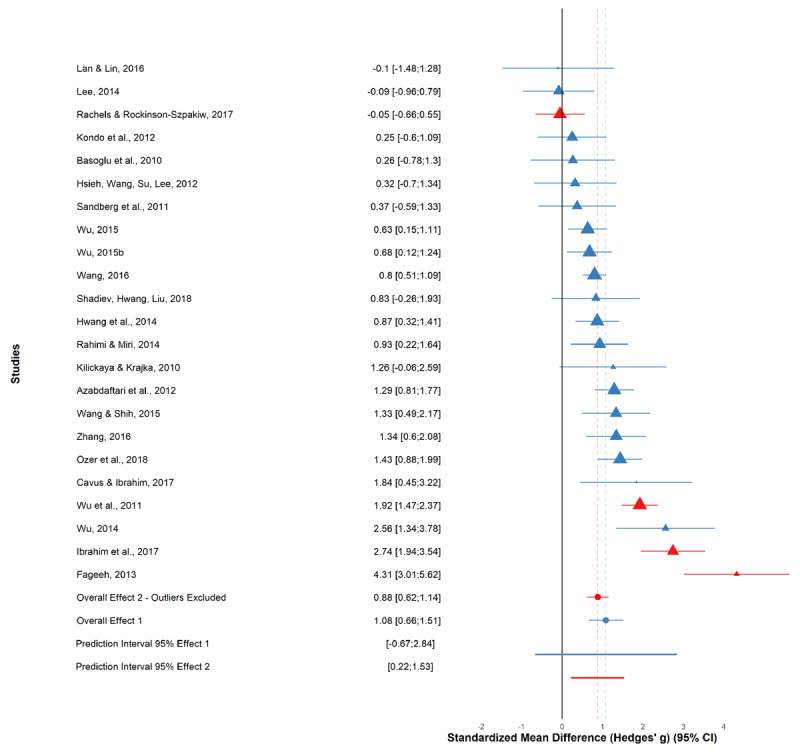
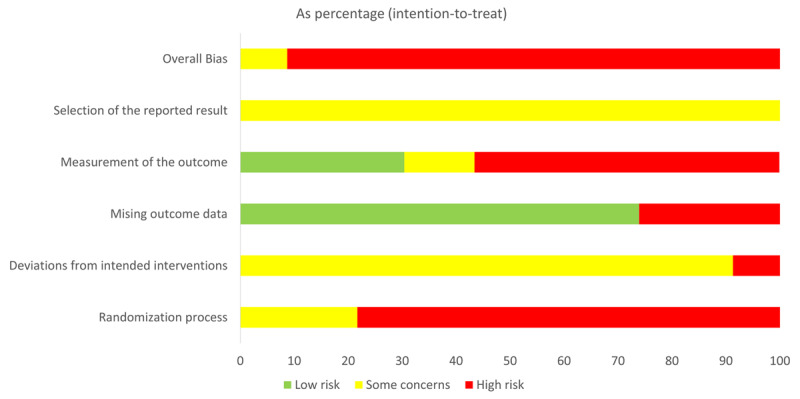
Mobile language learning applications are a pervasive facet of modern life, however evidence on their effectiveness on L2 learning outcomes is lacking. In the current work, we sought to determine the effect of mobile language learning applications on L2 proficiency between groups who used mobile language learning applications and control groups who learned with traditional methods on L2 achievement. We systematically searched journal articles and grey literature between 2007-2019 and performed a quantitative meta-analysis based on 23 synthesized effect sizes. We also performed risk of bias and quality of evidence assessments on our included papers. We found a moderate-to-strong overall effect ( = 0.88) of learning achievement using mobile language applications compared to control groups who learned with traditional approaches. At the same time, we found high risk of bias and low quality of evidence across all included studies. Our results provide evidence for mobile applications as a beneficial tool for second language learning. However, findings should be treated with caution due to risks of high bias and low quality of evidence. Improvements for future studies are discussed.
移动语言学习应用程序是现代生活中普遍存在的一个方面,然而,关于它们对第二语言学习成果有效性的证据却很缺乏。在当前的研究中,我们试图确定移动语言学习应用程序对使用移动语言学习应用程序的组和采用传统方法学习第二语言的对照组在第二语言能力方面的影响。我们系统地检索了2007年至2019年间的期刊文章和灰色文献,并基于23个综合效应量进行了定量荟萃分析。我们还对纳入的论文进行了偏倚风险和证据质量评估。我们发现,与采用传统方法学习的对照组相比,使用移动语言应用程序学习的总体效果为中度至强度(=0.88)。同时,我们发现所有纳入研究中都存在较高的偏倚风险和较低的证据质量。我们的结果为移动应用程序作为第二语言学习的有益工具提供了证据。然而,由于存在高偏倚风险和低证据质量,研究结果应谨慎对待。文中还讨论了对未来研究的改进。