Mengesha Bethlehem, Meir Karen, Gural Alexander, Asleh Rabea
Heart Institute, Hadassah Medical Center, Faculty of Medicine, Hebrew University of Jerusalem, Jerusalem 91120, Israel.
Department of Pathology. Hadassah Medical Center, Faculty of Medicine, Hebrew University of Jerusalem, Jerusalem 91120, Israel.
Eur Heart J Case Rep. 2022 Sep 16;6(9):ytac388. doi: 10.1093/ehjcr/ytac388. eCollection 2022 Sep.
Eosinophilic myocarditis (EM) is a rare form of myocarditis with various aetiologies and dire consequences if not diagnosed and treated expeditiously.
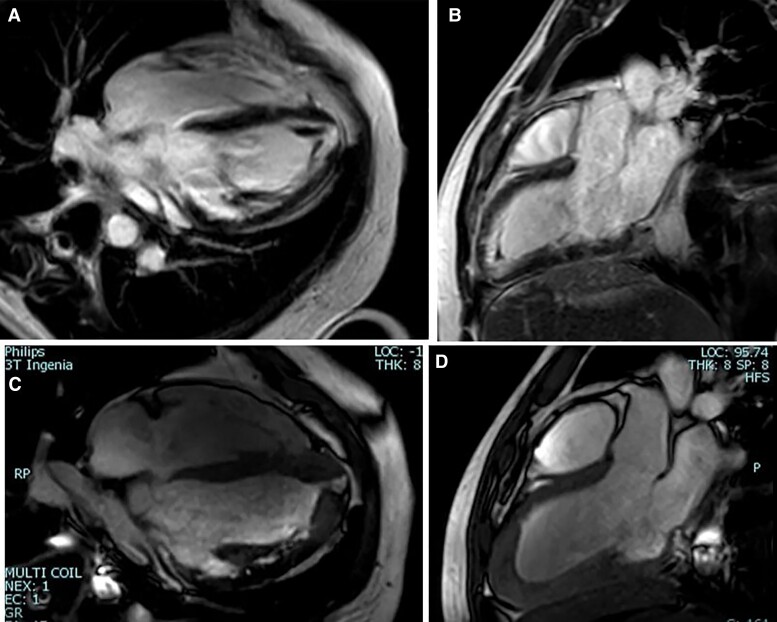
We report three cases of EM at different stages of the disease with differing clinical manifestations. We highlight the diagnostic workup including the role of multimodality imaging and endomyocardial biopsy (EMB), and the treatment strategies.
EM is an underdiagnosed and potentially life-threatening disease. Therefore, a high clinical suspicion for EM should arise when patients with signs and symptoms of cardiovascular disease develop hypereosinophilia or vice versa. Early identification of this condition using multimodality imaging and EMB is of paramount importance as the disease may progress to the irreversible late fibrotic stage if treatment is delayed.
嗜酸性粒细胞性心肌炎(EM)是一种罕见的心肌炎形式,病因多样,若不及时诊断和治疗,后果严重。
我们报告了3例处于疾病不同阶段且临床表现各异的EM病例。我们重点介绍了诊断检查,包括多模态成像和心内膜心肌活检(EMB)的作用,以及治疗策略。
EM是一种诊断不足且可能危及生命的疾病。因此,当患有心血管疾病体征和症状的患者出现嗜酸性粒细胞增多症时,或反之亦然时,应高度怀疑EM。使用多模态成像和EMB早期识别这种疾病至关重要,因为如果治疗延迟,疾病可能进展到不可逆的晚期纤维化阶段。