Department of General Surgery, The First Affiliated Hospital, Zhejiang University School of Medicine, Hangzhou, China.
Department of General Surgery, The First Affiliated Hospital of Xi'an Jiaotong University, Xi'an, China.
Front Immunol. 2022 Sep 15;13:1021634. doi: 10.3389/fimmu.2022.1021634. eCollection 2022.
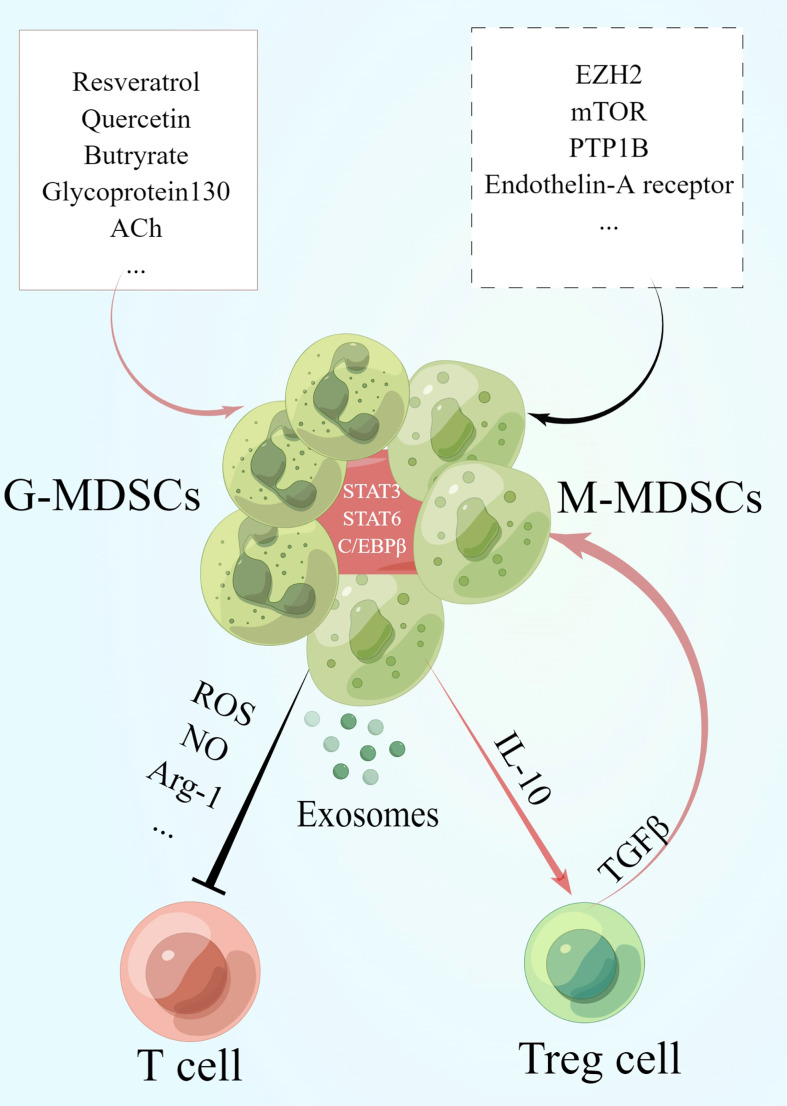
Myeloid-derived suppressor cells (MDSCs) are a group of bone marrow derived heterogeneous cells, which is known for their immunosuppressive functions especially in tumors. Recently, MDSCs have receiving increasing attention in pathological conditions like infection, inflammation and autoimmune diseases. Inflammatory bowel diseases (IBD) are a series of immune-dysfunctional autoimmune diseases characterized by relapsing intestinal inflammation. The role of MDSCs in IBD remains controversial. Although most studies demonstrated its anti-inflammatory effects by inhibiting the proliferation and function of T cells, it was reported that MDSCs failed to relieve inflammation but even promoted inflammatory responses in experimental IBD. Here we summarize recent insights into the role of MDSCs in the development of IBD and the potential of MDSCs-targeted therapy.
髓系来源的抑制性细胞(MDSCs)是一群骨髓来源的异质性细胞,其免疫抑制功能在肿瘤中尤为明显。最近,MDSCs 在感染、炎症和自身免疫性疾病等病理情况下受到越来越多的关注。炎症性肠病(IBD)是一系列免疫功能紊乱的自身免疫性疾病,其特征是反复发作的肠道炎症。MDSCs 在 IBD 中的作用仍存在争议。尽管大多数研究表明其通过抑制 T 细胞的增殖和功能发挥抗炎作用,但有报道称 MDSCs 未能缓解炎症,反而在实验性 IBD 中促进炎症反应。在这里,我们总结了 MDSCs 在 IBD 发展中的作用的最新见解,以及 MDSCs 靶向治疗的潜力。