Department of Psychiatry, Amsterdam UMC, Vrije Universiteit Amsterdam, Amsterdam, The Netherlands.
Amsterdam Public Health, Mental Health Program and Amsterdam Neuroscience, Mood, Anxiety, Psychosis, Sleep & Stress Program, Amsterdam, The Netherlands.
Nat Med. 2022 Oct;28(10):2027-2037. doi: 10.1038/s41591-022-02028-2. Epub 2022 Oct 3.
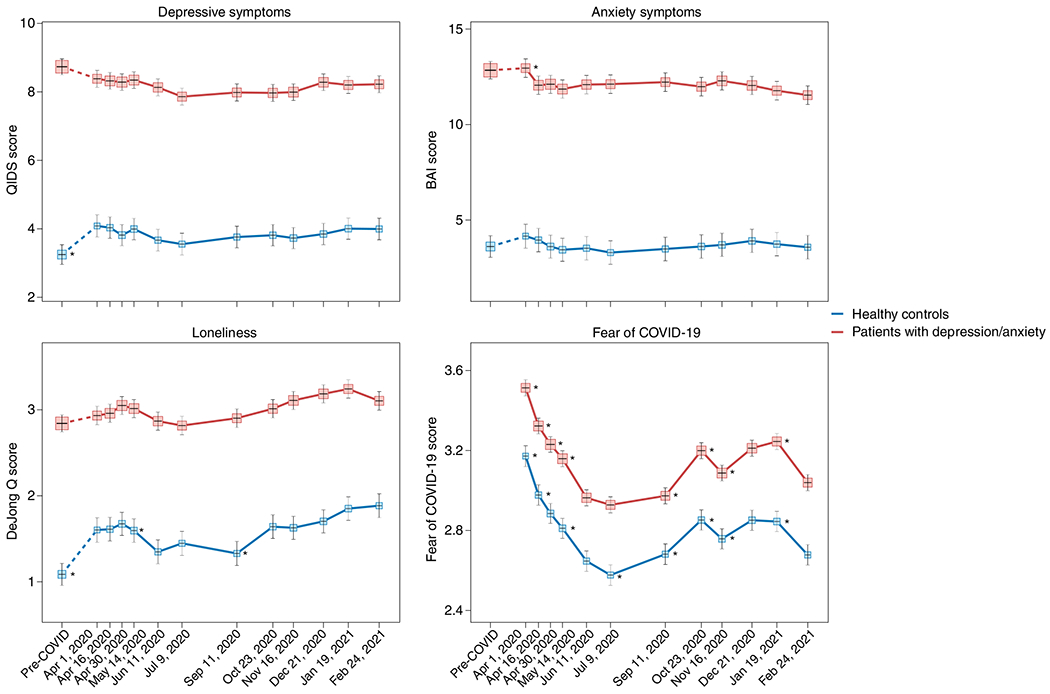
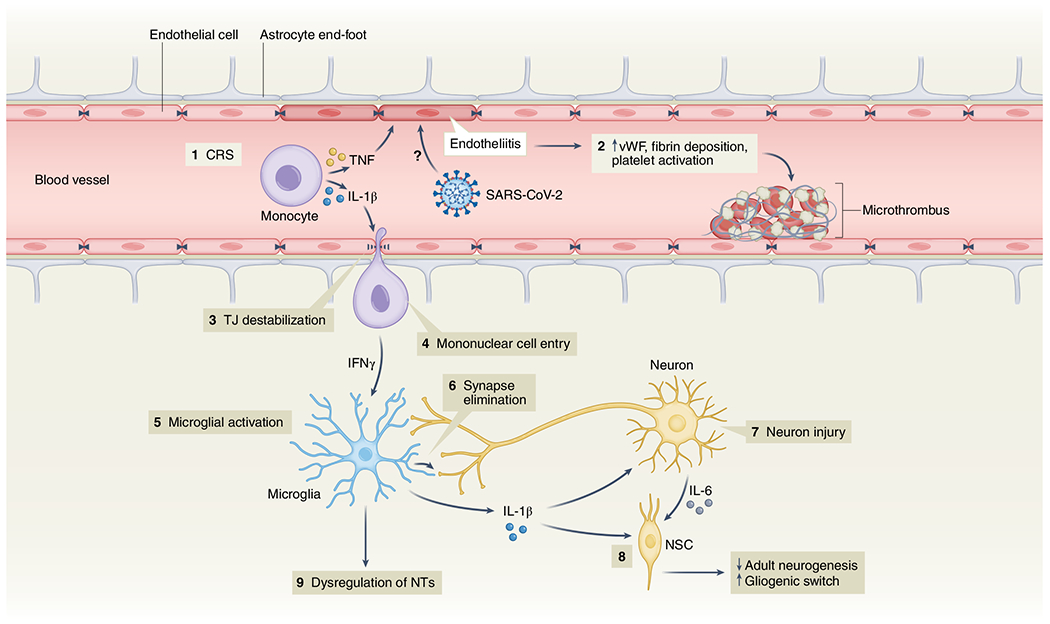
The Coronavirus Disease 2019 (COVID-19) pandemic has threatened global mental health, both indirectly via disruptive societal changes and directly via neuropsychiatric sequelae after SARS-CoV-2 infection. Despite a small increase in self-reported mental health problems, this has (so far) not translated into objectively measurable increased rates of mental disorders, self-harm or suicide rates at the population level. This could suggest effective resilience and adaptation, but there is substantial heterogeneity among subgroups, and time-lag effects may also exist. With regard to COVID-19 itself, both acute and post-acute neuropsychiatric sequelae have become apparent, with high prevalence of fatigue, cognitive impairments and anxiety and depressive symptoms, even months after infection. To understand how COVID-19 continues to shape mental health in the longer term, fine-grained, well-controlled longitudinal data at the (neuro)biological, individual and societal levels remain essential. For future pandemics, policymakers and clinicians should prioritize mental health from the outset to identify and protect those at risk and promote long-term resilience.
2019 年冠状病毒病(COVID-19)大流行威胁着全球心理健康,既可以通过破坏性的社会变革间接影响,也可以通过 SARS-CoV-2 感染后的神经精神后果直接影响。尽管自我报告的心理健康问题略有增加,但到目前为止,这并未转化为人群水平上可客观衡量的精神障碍、自残或自杀率的增加。这可能表明存在有效的适应和恢复能力,但在亚组之间存在很大的异质性,也可能存在时滞效应。就 COVID-19 本身而言,急性和后期的神经精神后果已经很明显,感染后数月内仍普遍存在疲劳、认知障碍以及焦虑和抑郁症状。为了了解 COVID-19 如何在更长时间内继续影响心理健康,仍需要在(神经)生物学、个体和社会层面上进行精细、良好控制的纵向数据。对于未来的大流行,政策制定者和临床医生应从一开始就优先考虑心理健康,以识别和保护高危人群,并促进长期适应能力。