Department of Biomedical Engineering, Faculty of Electrical and Computer Engineering, University of Tabriz, Tabriz, Iran.
Brain Behav. 2022 Nov;12(11):e2763. doi: 10.1002/brb3.2763. Epub 2022 Oct 5.
Epileptic condition can be detected in EEG data seconds before it occurs, according to evidence. To overcome the related long-term mortality and morbidity from epileptic seizures, it is critical to make an initial diagnosis, uncover underlying causes, and avoid applicable risk factors. Progress in diagnosing onset epileptic seizures can ensure that seizures and destroyed damages are detectable at the time of manifestation. Previous seizure detection models had problems with the presence of multiple features, the lack of an appropriate signal descriptor, and the time-consuming analysis, all of which led to uncertainty and different interpretations. Deep learning has recently made tremendous progress in categorizing and detecting epilepsy.
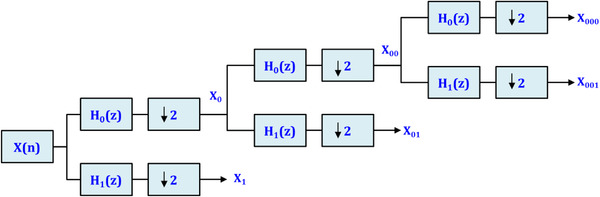
This work proposes an effective classification strategy in response to these issues. The discrete wavelet transform (DWT) is used to breakdown the EEG signal, and a deep convolutional neural network (DCNN) is used to diagnose epileptic seizures in the first phase. Using a medium-weight DCNN (mw-DCNN) architecture, we use a preprocess phase to improve the decision-maker method. The proposed approach was tested on the CHEG-MIT Scalp EEG database's collected EEG signals.
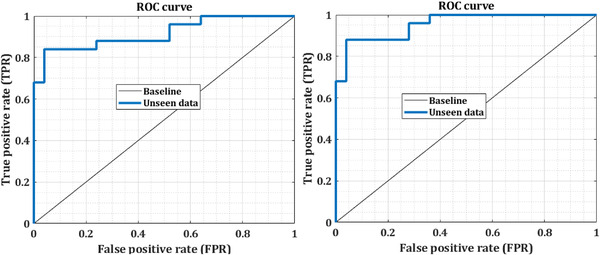
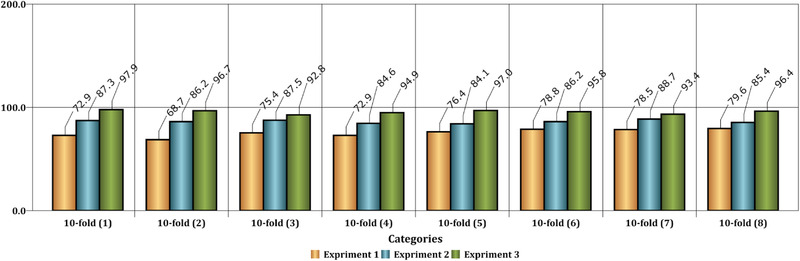
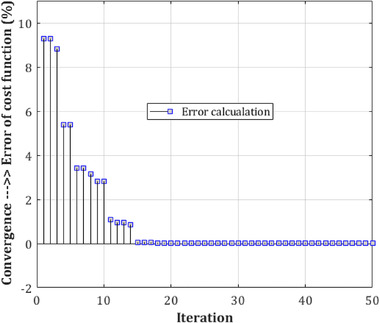
The results of the studies reveal that the mw-DCNN algorithm produces proper classification results under various conditions. To solve the uncertainty challenge, K-fold cross-validation was used to assess the algorithm's repeatability at the test level, and the accuracies were evaluated in the range of 99%-100%.
The suggested structure can assist medical specialistsin analyzing epileptic seizures' EEG signals more precisely.
有证据表明,癫痫状态可以在其发生前几秒钟从 EEG 数据中检测到。为了克服相关的癫痫发作的长期死亡率和发病率,进行初步诊断、揭示潜在原因和避免适用的风险因素至关重要。诊断癫痫发作的进展可以确保在表现时能够检测到发作和破坏的损伤。以前的癫痫发作检测模型存在多个特征的存在、缺乏适当的信号描述符和耗时的分析等问题,所有这些都导致了不确定性和不同的解释。深度学习最近在癫痫分类和检测方面取得了巨大进展。
针对这些问题,本研究提出了一种有效的分类策略。采用离散小波变换(DWT)对 EEG 信号进行分解,在第一阶段采用深度卷积神经网络(DCNN)对癫痫发作进行诊断。使用中权重 DCNN(mw-DCNN)架构,我们使用预处理阶段来改进决策方法。该方法在 CHEG-MIT 头皮 EEG 数据库收集的 EEG 信号上进行了测试。
研究结果表明,mw-DCNN 算法在各种条件下都能产生适当的分类结果。为了解决不确定性挑战,采用 K 折交叉验证在测试级别评估算法的可重复性,评估准确率在 99%-100%范围内。
所提出的结构可以帮助医学专家更精确地分析癫痫发作的 EEG 信号。