German Cancer Research Center, "Division of Virus-Associated Carcinogenesis", Im Neuenheimer Feld 280, 69120 Heidelberg, Germany.
Biosciences Faculty, University of Heidelberg, 69120 Heidelberg, Germany.
Sci Adv. 2022 Oct 7;8(40):eabq4469. doi: 10.1126/sciadv.abq4469. Epub 2022 Oct 5.
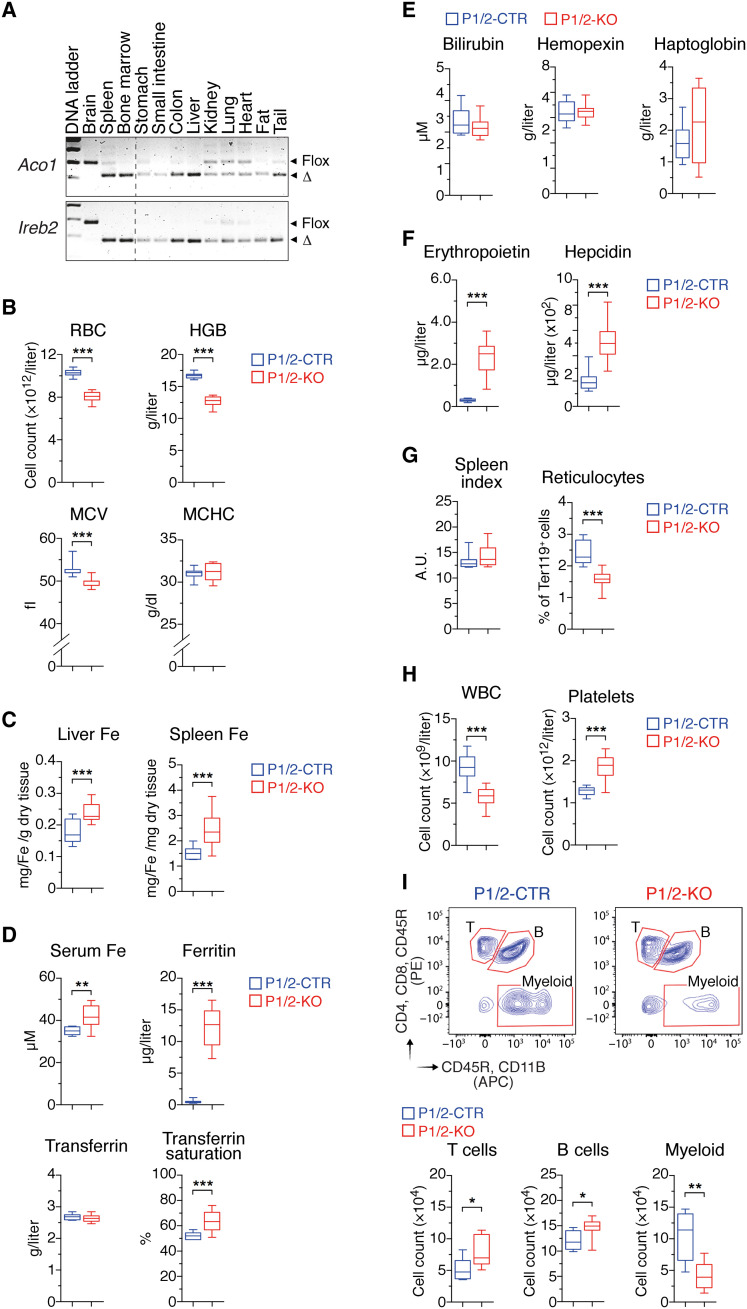
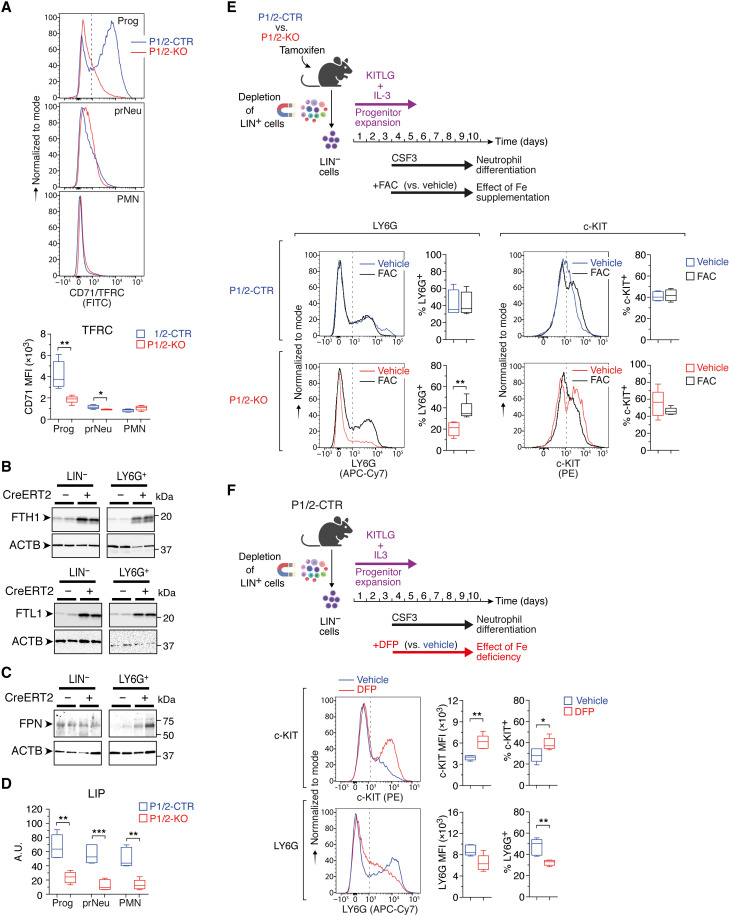
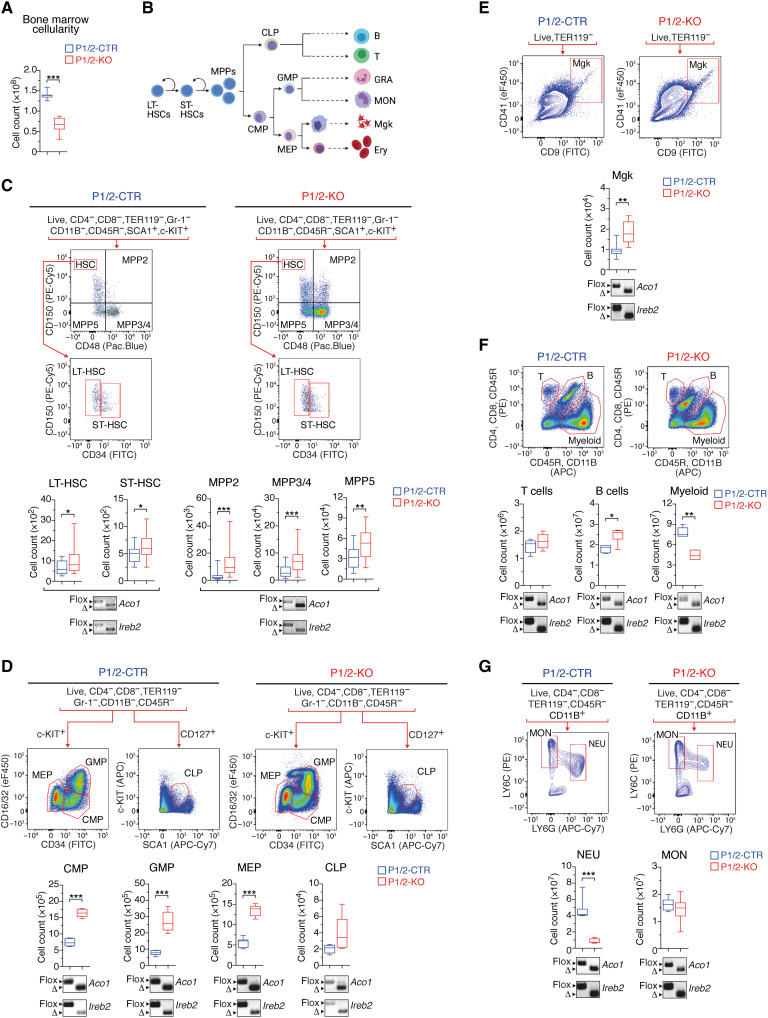
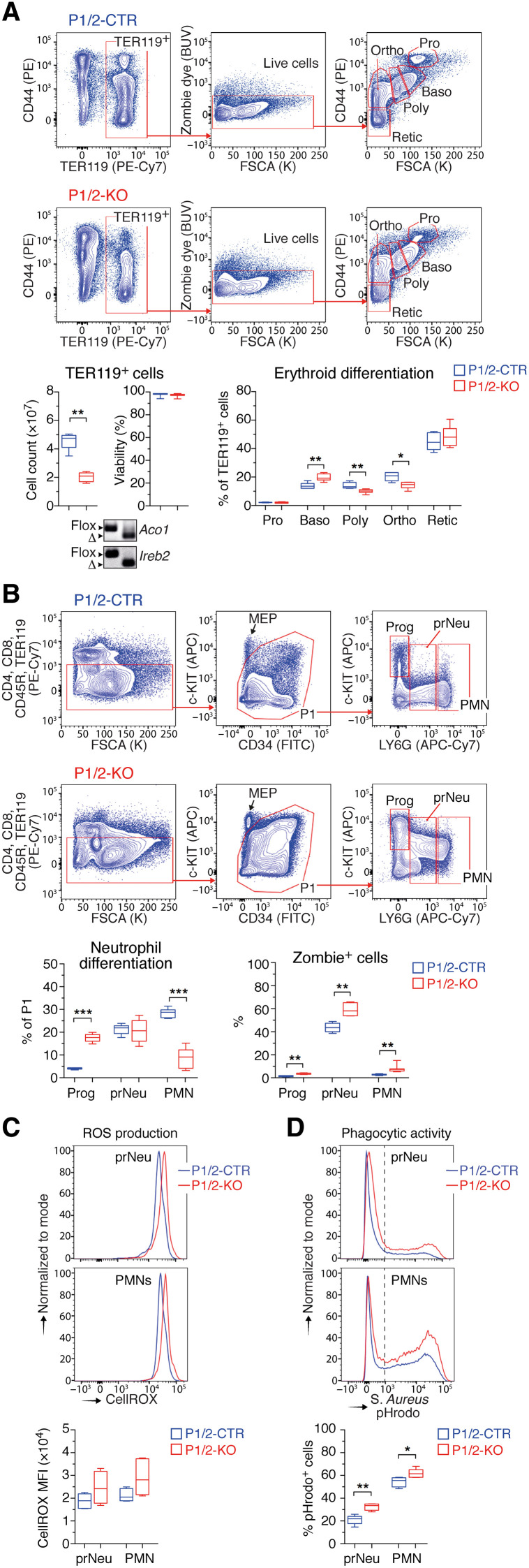
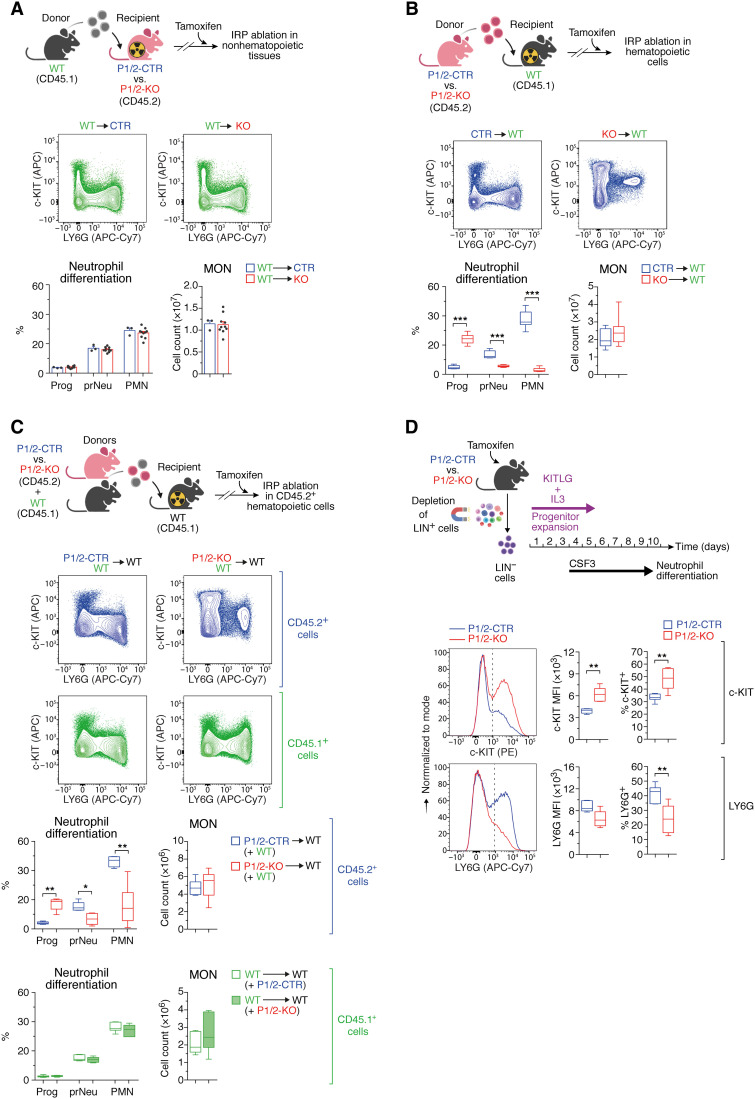
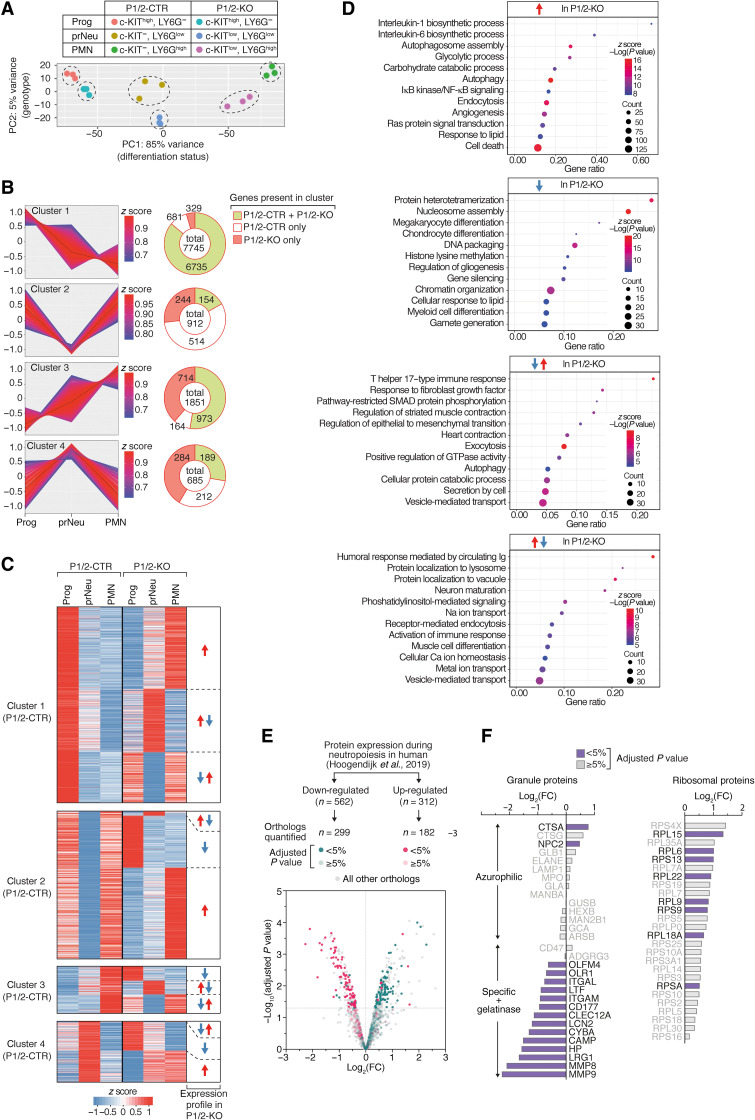
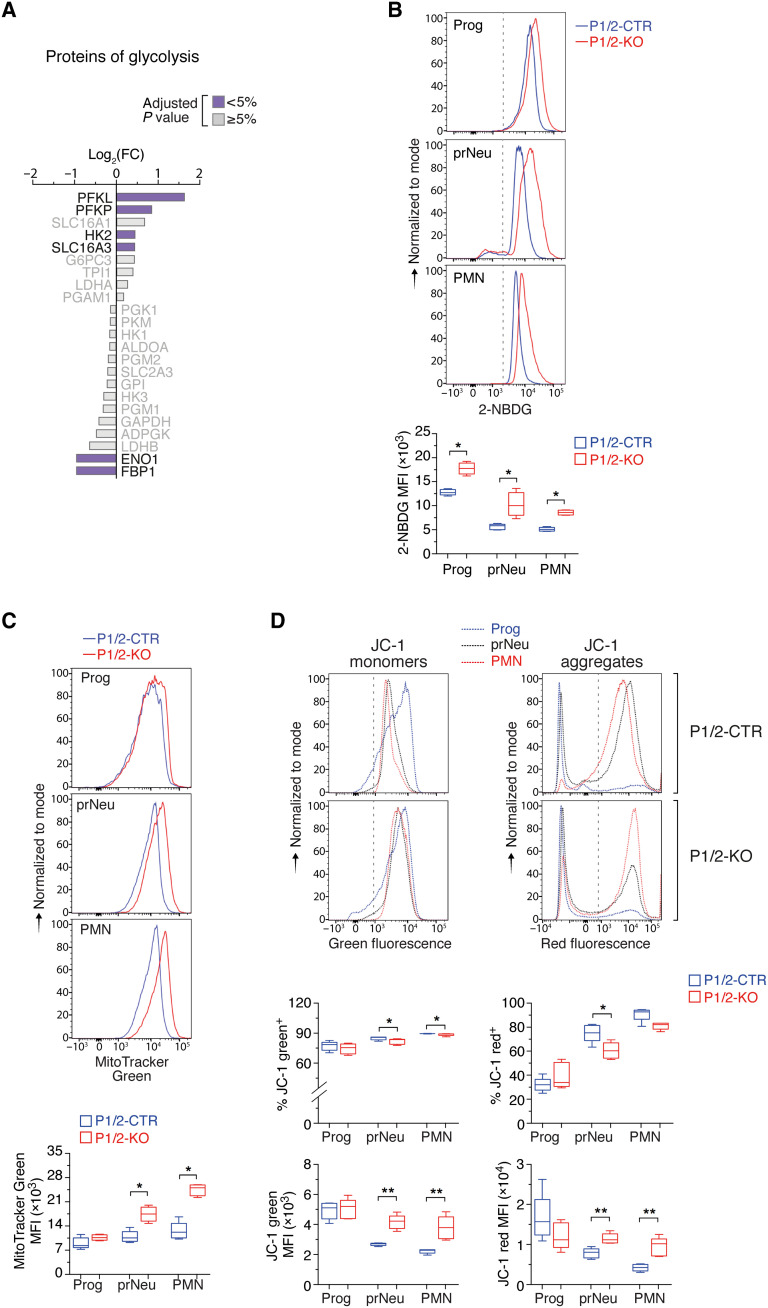
Iron is mostly devoted to the hemoglobinization of erythrocytes for oxygen transport. However, emerging evidence points to a broader role for the metal in hematopoiesis, including the formation of the immune system. Iron availability in mammalian cells is controlled by iron-regulatory protein 1 (IRP1) and IRP2. We report that global disruption of both IRP1 and IRP2 in adult mice impairs neutrophil development and differentiation in the bone marrow, yielding immature neutrophils with abnormally high glycolytic and autophagic activity, resulting in neutropenia. IRPs promote neutrophil differentiation in a cell intrinsic manner by securing cellular iron supply together with transcriptional control of neutropoiesis to facilitate differentiation to fully mature neutrophils. Unlike neutrophils, monocyte count was not affected by IRP and iron deficiency, suggesting a lineage-specific effect of iron on myeloid output. This study unveils the previously unrecognized importance of IRPs and iron metabolism in the formation of a major branch of the innate immune system.
铁主要用于红细胞的血红蛋白化以运输氧气。然而,新出现的证据表明,该金属在造血作用中具有更广泛的作用,包括免疫系统的形成。哺乳动物细胞中的铁可用性由铁调节蛋白 1 (IRP1) 和 IRP2 控制。我们报告称,在成年小鼠中全局敲除 IRP1 和 IRP2 会损害骨髓中中性粒细胞的发育和分化,产生具有异常高糖酵解和自噬活性的不成熟中性粒细胞,导致中性粒细胞减少症。IRPs 通过确保细胞内铁供应以及对嗜中性粒细胞生成的转录控制来促进中性粒细胞分化,从而促进向完全成熟的中性粒细胞分化。与中性粒细胞不同,单核细胞计数不受 IRP 和铁缺乏的影响,这表明铁对骨髓输出具有谱系特异性的影响。这项研究揭示了 IRP 和铁代谢在先天免疫系统的一个主要分支形成中的以前未被认识到的重要性。