Department of Biology, University of York, York, UK.
Fera Science Ltd, National Agri-Food Innovation Campus, Sand Hutton, York, UK.
BMC Genomics. 2022 Oct 6;23(1):689. doi: 10.1186/s12864-022-08909-7.
Ralstonia solanacearum species complex (RSSC) strains are destructive plant pathogenic bacteria and the causative agents of bacterial wilt disease, infecting over 200 plant species worldwide. In addition to chromosomal genes, their virulence is mediated by mobile genetic elements including integrated DNA of bacteriophages, i.e., prophages, which may carry fitness-associated auxiliary genes or modulate host gene expression. Although experimental studies have characterised several prophages that shape RSSC virulence, the global diversity, distribution, and wider functional gene content of RSSC prophages are unknown. In this study, prophages were identified in a diverse collection of 192 RSSC draft genome assemblies originating from six continents.
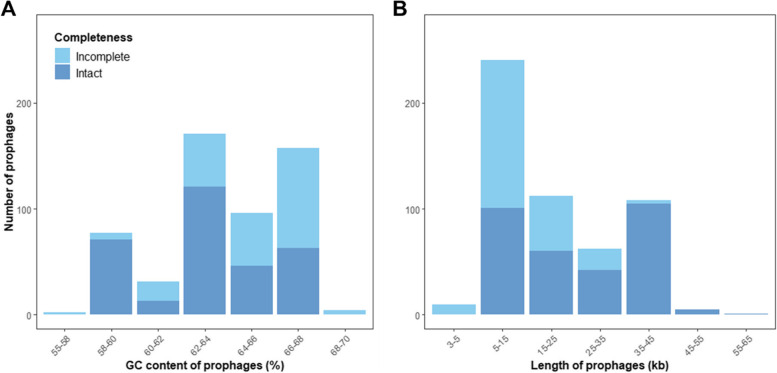
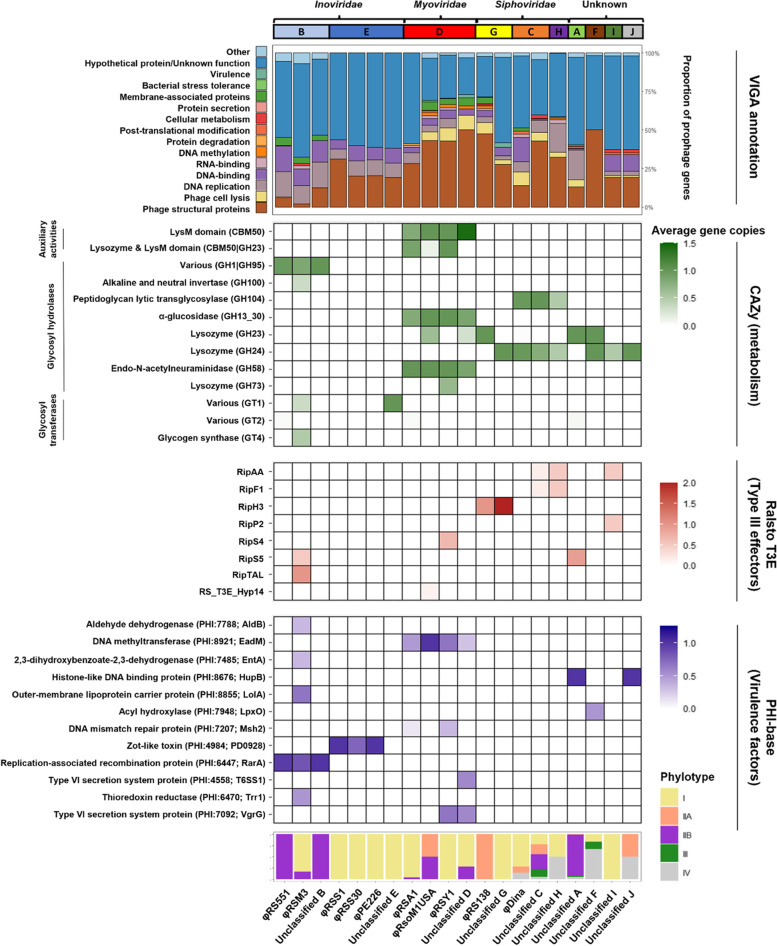
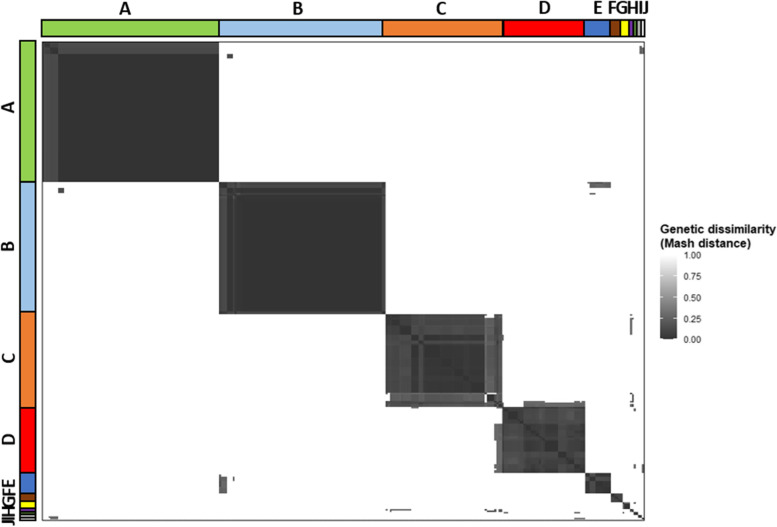
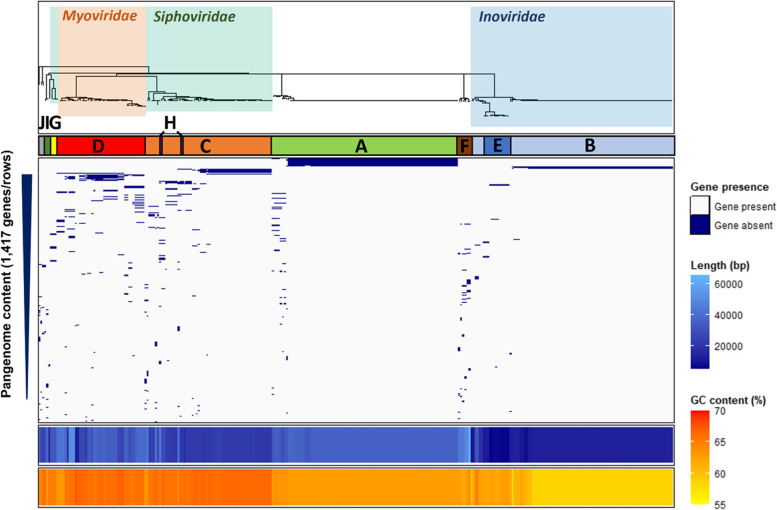
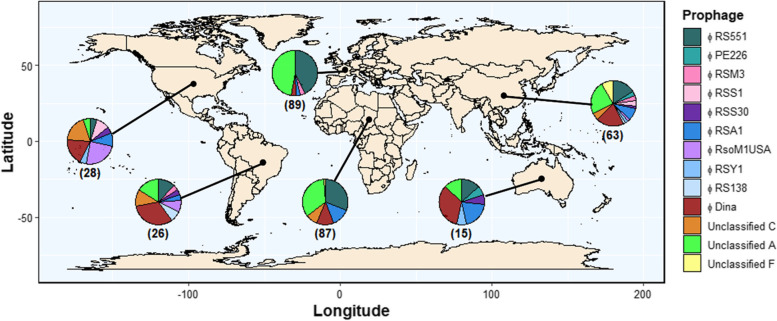
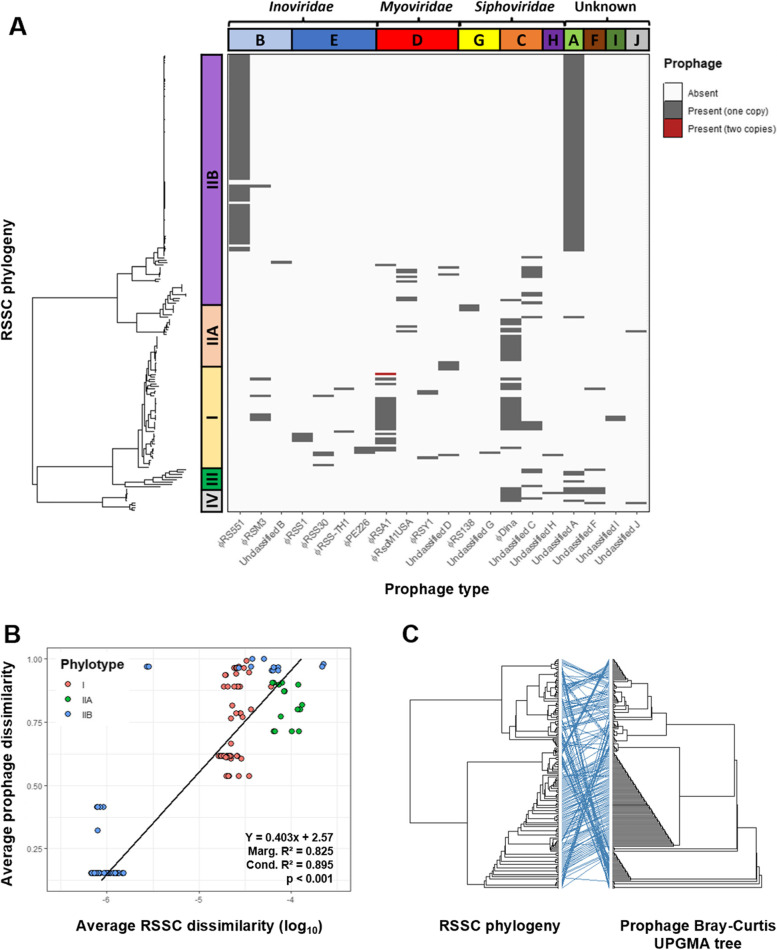
Prophages were identified bioinformatically and their diversity investigated using genetic distance measures, gene content, GC, and total length. Prophage distributions were characterised using metadata on RSSC strain geographic origin and lineage classification (phylotypes), and their functional gene content was assessed by identifying putative prophage-encoded auxiliary genes. In total, 313 intact prophages were identified, forming ten genetically distinct clusters. These included six prophage clusters with similarity to the Inoviridae, Myoviridae, and Siphoviridae phage families, and four uncharacterised clusters, possibly representing novel, previously undescribed phages. The prophages had broad geographical distributions, being present across multiple continents. However, they were generally host phylogenetic lineage-specific, and overall, prophage diversity was proportional to the genetic diversity of their hosts. The prophages contained many auxiliary genes involved in metabolism and virulence of both phage and bacteria.
Our results show that while RSSC prophages are highly diverse globally, they make lineage-specific contributions to the RSSC accessory genome, which could have resulted from shared coevolutionary history.
罗尔斯通氏菌复合种(RSSC)菌株是破坏性植物病原细菌,也是细菌性萎蔫病的病原体,感染了全球 200 多种植物。除了染色体基因外,它们的毒力还由移动遗传元件介导,包括整合噬菌体的 DNA,即原噬菌体,原噬菌体可能携带与适应性相关的辅助基因或调节宿主基因表达。尽管实验研究已经描述了几种塑造 RSSC 毒力的原噬菌体,但 RSSC 原噬菌体的全球多样性、分布和更广泛的功能基因内容仍不清楚。在这项研究中,从六大洲采集的 192 株 RSSC 草图基因组中鉴定出了原噬菌体。
通过遗传距离测量、基因内容、GC 和总长度等方法,从生物信息学上鉴定出原噬菌体,并对其多样性进行了研究。利用 RSSC 菌株地理起源和谱系分类(基因型)的元数据来描述原噬菌体的分布,并通过鉴定潜在的原噬菌体编码辅助基因来评估其功能基因含量。总共鉴定出 313 个完整的原噬菌体,形成十个具有遗传差异的聚类。其中包括六个与肌尾噬菌体科、长尾噬菌体科和短尾噬菌体科相似的原噬菌体聚类,以及四个未被描述的聚类,可能代表新的、以前未被描述的噬菌体。这些原噬菌体具有广泛的地理分布,存在于多个大陆。然而,它们通常是宿主系统发育谱系特异性的,总的来说,原噬菌体的多样性与宿主的遗传多样性成正比。这些原噬菌体包含许多与噬菌体和细菌代谢和毒力有关的辅助基因。
我们的研究结果表明,尽管 RSSC 原噬菌体在全球范围内具有高度多样性,但它们对 RSSC 附属基因组的贡献具有谱系特异性,这可能是由于共同的共同进化历史所致。