Mustafa Syeda Samar, Batool Rida, Kamran Muhammad, Javed Hasnain, Jamil Nazia
Institute of Microbiology and Molecular Genetics, Quaid e Azam Campus, University of the Punjab 54590, Lahore, Pakistan.
Queensland Alliance for Agriculture and Food Innovation Centre for Animal Science, University of Queensland, Brisbane, Queensland, 4072, Australia.
Infect Drug Resist. 2022 Sep 28;15:5715-5728. doi: 10.2147/IDR.S368886. eCollection 2022.
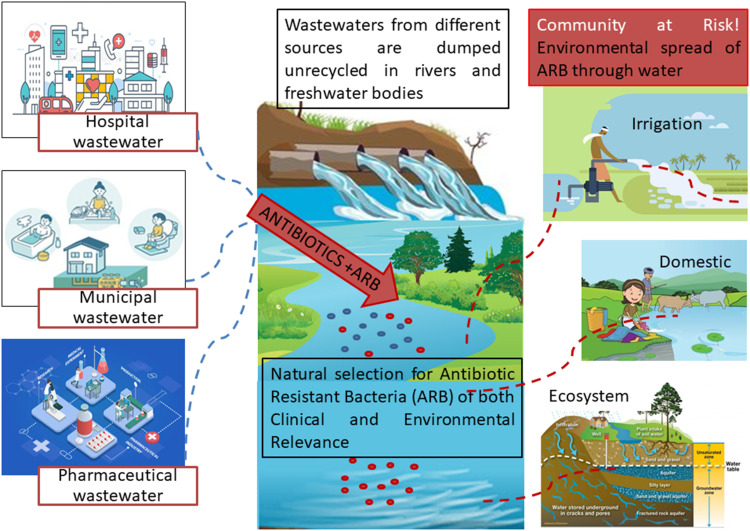
Wastewaters carrying thousands of human specimens from the community and representing the diversity of antibiotic-resistant bacteria (ARB) and antibiotic-resistance genes (ARGs) directly from the community mirror the extent of AR spread in the community and environment. This study aimed to investigate the occurrence and distribution of antibiotic-resistant ESKAPEE bacteria in the community versus clinical settings through monitoring nonclinical and clinical wastewaters.
Seven wastewater samples were collected from different environmental sources. Isolates were obtained on general and selective media, biochemically characterized and antimicrobial-susceptibility tests performed by disk diffusion against 13 antibiotics according to the European Committee on Antimicrobial Susceptibility Testing (EUCAST) guidelines using MastDisc disk cartridges, and 16S rRNA metagenomic analysis was performed for two water samples.
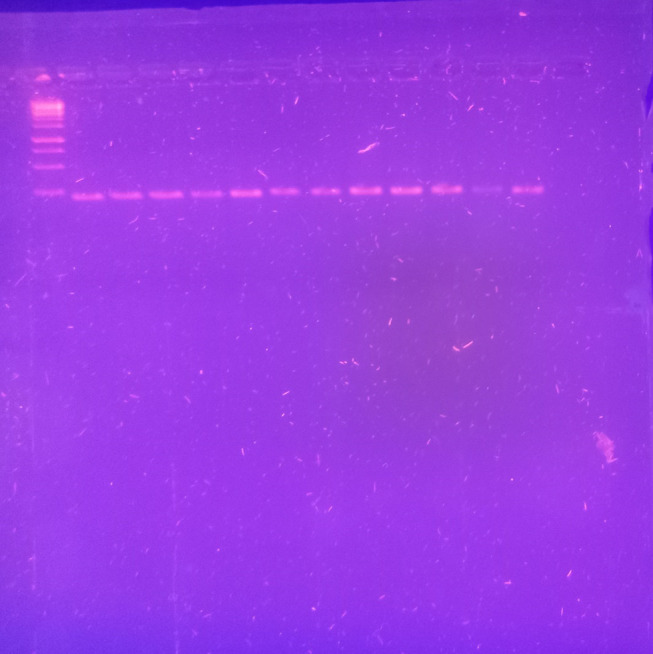
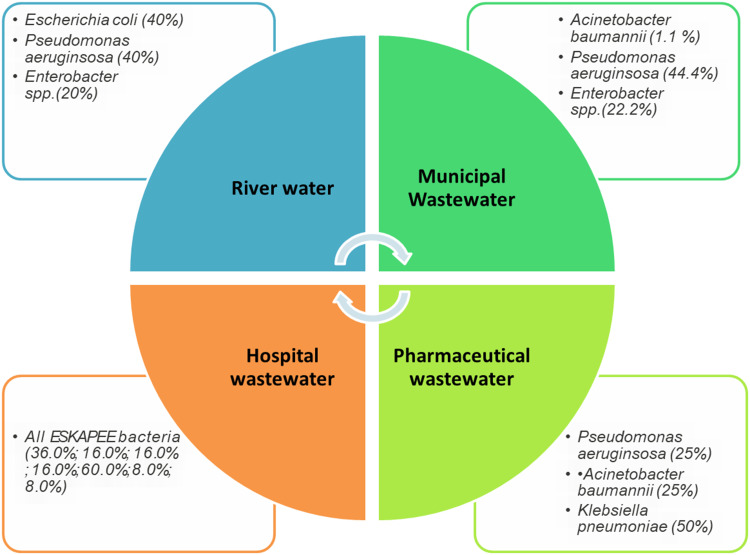
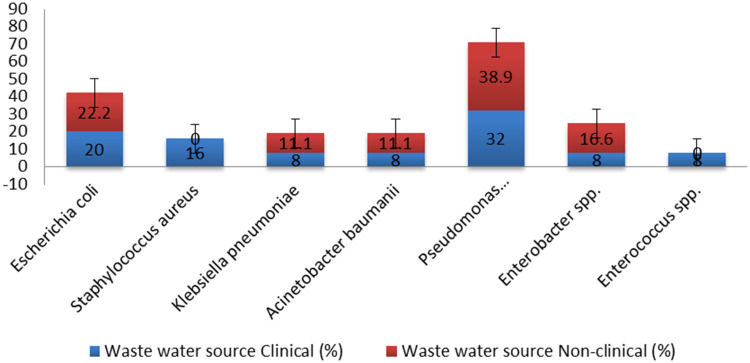
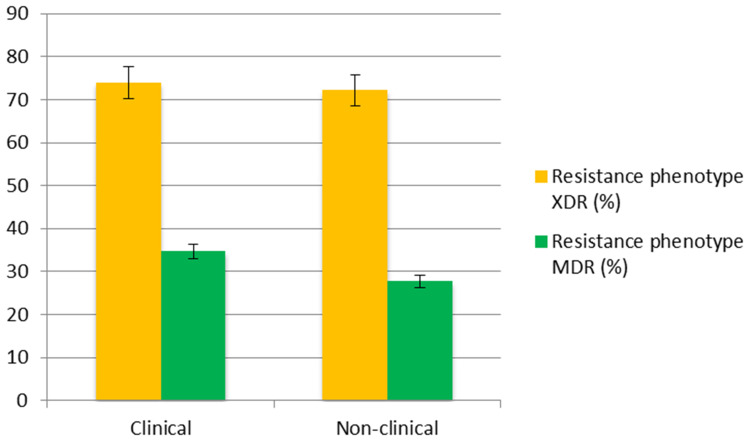
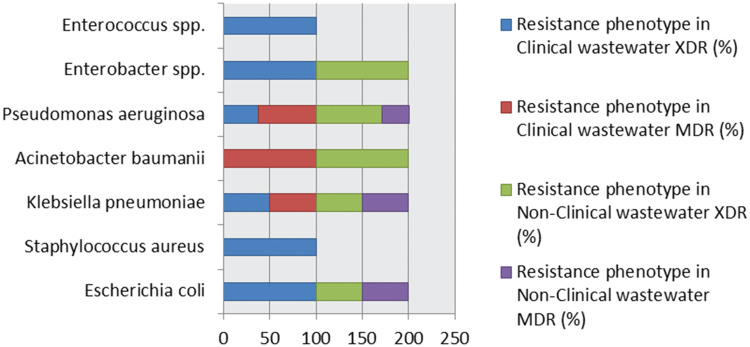
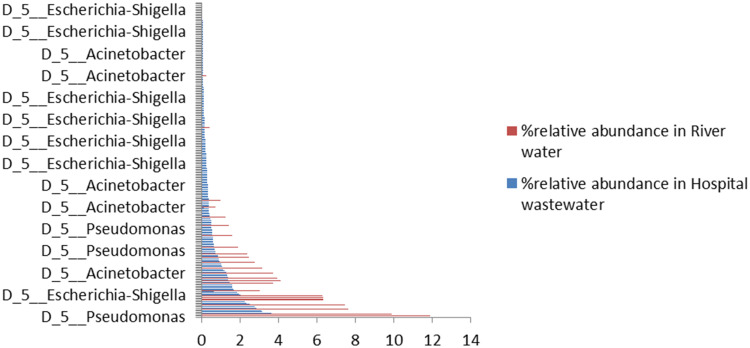
Of 43 isolates, all representatives of the ESKAPEE group were recovered from clinical wastewaters, but Gram-positive cocci were not obtained from nonclinical wastewaters. The most predominant isolate was (n=15; 33%), followed by (n=9; 20%). Complete (100%) resistance to eleven of the tested antibiotics was observed, with only a few isolates being susceptible to clarithromycin, amikacin, and gentamicin. The lowest (79%) resistance rate was observed for linezolid. The multiple antibiotic resistance (MAR) index was calculated, and the resistance phenotype was independent of the wastewater source, indicated by (=0.766). Metagenomic analysis replicated the results, as spp., spp., and spp. were found to be predominant. The integrase gene () was also amplified in , and .
Wastewaters are significant carriers of drug-resistant ESKAPEE bacteria and play an important role in their dissemination. This study endorses the periodic surveillance of water systems to evaluate the presence and burden of antibiotic-resistant pathogens.
携带来自社区数千份人体样本的废水,直接反映了社区抗生素耐药菌(ARB)和抗生素耐药基因(ARG)的多样性,反映了抗生素耐药性在社区和环境中的传播程度。本研究旨在通过监测非临床和临床废水,调查社区与临床环境中耐抗生素ESKAPEE细菌的发生情况和分布。
从不同环境来源收集了7份废水样本。在普通和选择性培养基上获得分离株,进行生化鉴定,并根据欧洲抗菌药物敏感性测试委员会(EUCAST)指南,使用MastDisc药敏盘对13种抗生素进行纸片扩散法抗菌药物敏感性测试,对两份水样进行16S rRNA宏基因组分析。
在43株分离株中,ESKAPEE组的所有代表菌株均从临床废水中分离得到,但非临床废水中未获得革兰氏阳性球菌。最主要的分离株是(n = 15;33%),其次是(n = 9;20%)。观察到对11种测试抗生素完全(100%)耐药,只有少数分离株对克拉霉素、阿米卡星和庆大霉素敏感。利奈唑胺的耐药率最低(79%)。计算了多重耐药(MAR)指数,耐药表型与废水来源无关,(=0.766)表明。宏基因组分析重复了结果,因为发现、和是优势菌。整合酶基因()也在、和中扩增。
废水是耐药ESKAPEE细菌的重要载体,在其传播中起重要作用。本研究支持定期监测水系统,以评估抗生素耐药病原体的存在和负担。