Research Unit, Polish Society of Disaster Medicine, Warsaw, Poland.
Clinic of Emergency Medicine, Medical University Bialystok, Poland.
Cardiol J. 2024;31(5):740-747. doi: 10.5603/CJ.a2022.0093. Epub 2022 Oct 6.
Therapeutic hypothermia, or targeted temperature management (TTM), is a strategy of reducing the core body temperature of survivors of sudden cardiac arrest, cardiogenic shock (CS) or stroke. Therefore, a systematic literature review and meta-analysis were performed to tackle the question about whether the implementation of TTM is actually beneficial for patients with CS.
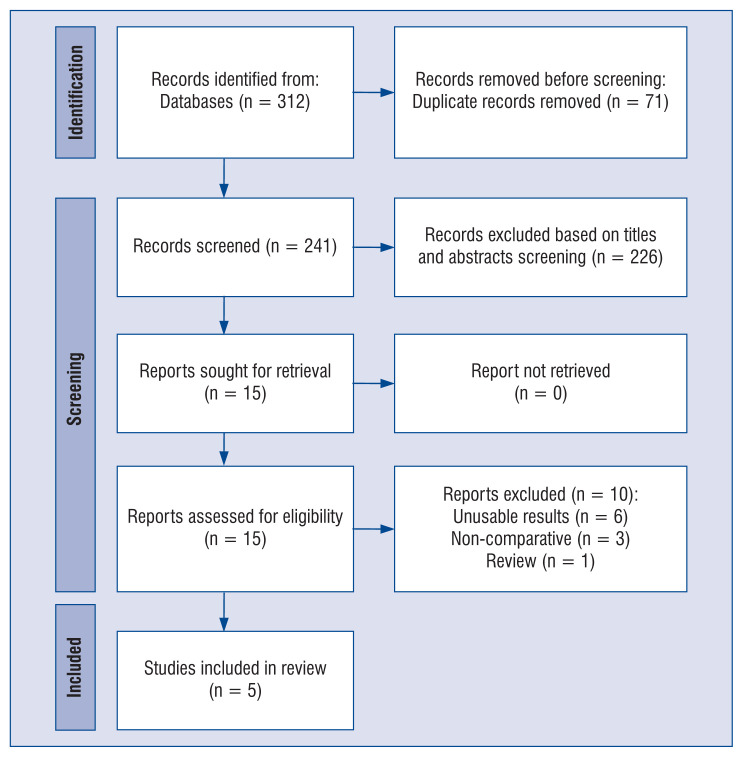
Study was designed as a systematic review and meta-analysis. PubMed, Cochrane Library, Web of Science and Scopus were searched from these databases inception to July 17, 2022. Eligible studies were those comparing TTM and non-TTM treatment in CS patients. Data were pooled with the Mantel-Haenszel method.
Thirty-day mortality was reported in 3 studies. Polled analysis of 30-day mortality was 44.2% for TTM group and 48.9% for non-TTM group (risk ratio: 0.90; 95% confidence interval: 0.75 to 1.08; p = 0.27). Other mortality follow-up periods showed also no statistically significant differences (p > 0.05). The occurrence of adverse events in the studied groups also did not show statistically significant differences between TTM and non-TTM groups (p > 0.05 for myocardial infarction, stent thrombosis, sepsis, pneumonia, stroke or bleeding events).
The present analysis shows no significant benefit of TTM in patients with CS. Moreover, no statistically significant increase of the incidence of adverse effects was found. However, further randomized studies with higher sample size and greater validity are needed to determine if TTM is worth implementing in CS patients.
治疗性低温,或目标温度管理(TTM),是一种降低心搏骤停、心源性休克(CS)或中风幸存者核心体温的策略。因此,进行了系统的文献回顾和荟萃分析,以解决 TTM 的实施是否对 CS 患者实际上有益的问题。
研究设计为系统评价和荟萃分析。从这些数据库的创建到 2022 年 7 月 17 日,检索了 PubMed、Cochrane 图书馆、Web of Science 和 Scopus。合格的研究是比较 TTM 和 CS 患者非 TTM 治疗的研究。使用 Mantel-Haenszel 方法汇总数据。
有 3 项研究报告了 30 天死亡率。30 天死亡率的汇总分析显示,TTM 组为 44.2%,非 TTM 组为 48.9%(风险比:0.90;95%置信区间:0.75 至 1.08;p = 0.27)。其他死亡率随访期也没有统计学上的显著差异(p > 0.05)。研究组不良事件的发生也没有统计学上的显著差异(心肌梗死、支架血栓形成、脓毒症、肺炎、中风或出血事件的 TTM 与非 TTM 组之间差异无统计学意义,p > 0.05)。
本分析显示 TTM 对 CS 患者没有显著益处。此外,未发现不良事件发生率有统计学意义的增加。然而,需要进一步进行样本量更大、有效性更高的随机研究,以确定 TTM 是否值得在 CS 患者中实施。