Diabetes Resource Centre, University Hospital Llandough, Cardiff, UK.
Health Economics and Outcomes Research Ltd., Cardiff, UK.
Age Ageing. 2022 Oct 6;51(10). doi: 10.1093/ageing/afac201.
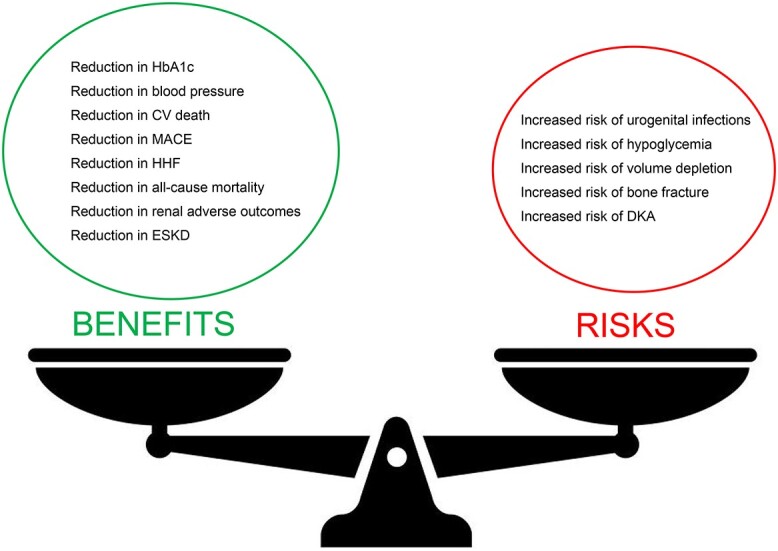
Sodium-glucose co-transporter-2 (SGLT2) inhibitors offer significant outcome benefits beyond glucose lowering, including reduced risk of cardiovascular death, all-cause mortality, major adverse cardiovascular events, hospitalisations for heart failure and progression of renal disease. Considering these therapeutic effects, minimal incremental risk for hypoglycaemia and simplicity of administration, this drug class appears to be an attractive therapeutic option for older adults, and post hoc analysis of trial data provides support for the use of SGLT2 inhibitors in this population. Nevertheless, despite favourable clinical trial data, there has been some hesitance in clinical practice prescribing these drugs to older frail adults due to the limited therapeutic experience in this population and insufficient long-term safety data. In this review article, we evaluate the risk-benefit profile for the use of SGLT2 inhibitors in this population and suggest that rather than being a treatment to avoid, SGLT2 inhibitors should be considered a valid therapeutic option for older frail adults with or without diabetes.
钠-葡萄糖共转运蛋白 2(SGLT2)抑制剂除了降低血糖外,还能带来显著的临床获益,包括降低心血管死亡风险、全因死亡率、主要心血管不良事件、心力衰竭住院和肾脏疾病进展。鉴于这些治疗效果、低血糖风险极小且给药简单,该类药物似乎是老年患者极具吸引力的治疗选择,并且试验数据的事后分析也支持在该人群中使用 SGLT2 抑制剂。然而,尽管临床试验数据有利,但由于该人群的治疗经验有限且长期安全性数据不足,临床实践中在老年虚弱患者中开具这些药物时仍存在一些顾虑。在这篇综述文章中,我们评估了 SGLT2 抑制剂在该人群中的风险效益情况,并认为 SGLT2 抑制剂不应被视为一种避免使用的治疗方法,而应被视为有或无糖尿病的老年虚弱患者的有效治疗选择。