MMWR Morb Mortal Wkly Rep. 2022 Oct 7;71(40):1253-1259. doi: 10.15585/mmwr.mm7140a1.
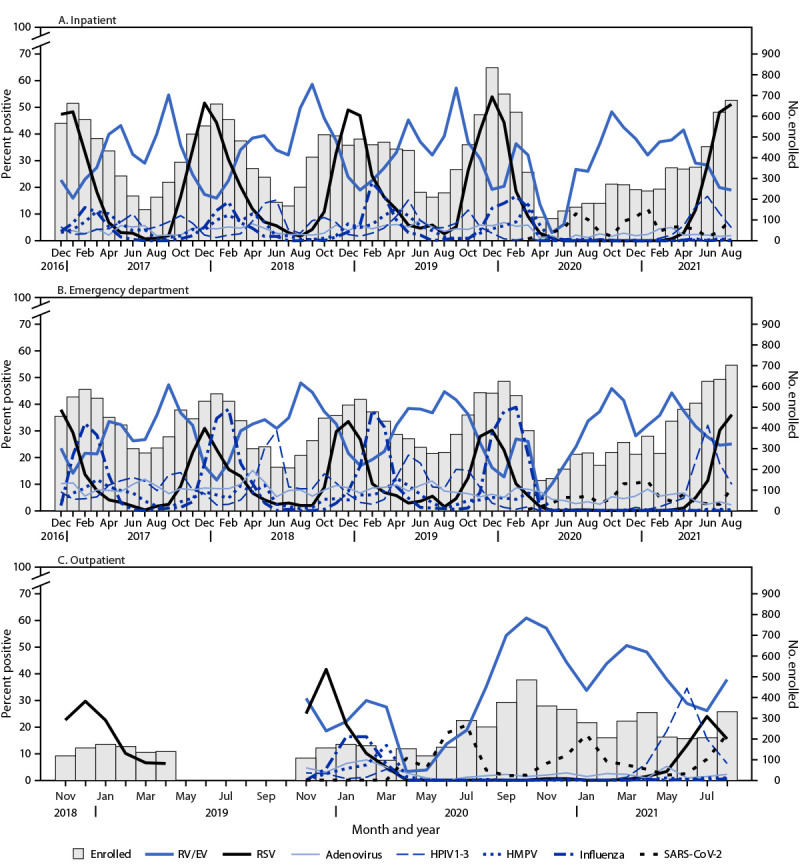
The New Vaccine Surveillance Network (NVSN) is a prospective, active, population-based surveillance platform that enrolls children with acute respiratory illnesses (ARIs) at seven pediatric medical centers. ARIs are caused by respiratory viruses including influenza virus, respiratory syncytial virus (RSV), human metapneumovirus (HMPV), human parainfluenza viruses (HPIVs), and most recently SARS-CoV-2 (the virus that causes COVID-19), which result in morbidity among infants and young children (1-6). NVSN estimates the incidence of pathogen-specific pediatric ARIs and collects clinical data (e.g., underlying medical conditions and vaccination status) to assess risk factors for severe disease and calculate influenza and COVID-19 vaccine effectiveness. Current NVSN inpatient (i.e., hospital) surveillance began in 2015, expanded to emergency departments (EDs) in 2016, and to outpatient clinics in 2018. This report describes demographic characteristics of enrolled children who received care in these settings, and yearly circulation of influenza, RSV, HMPV, HPIV1-3, adenovirus, human rhinovirus and enterovirus (RV/EV),* and SARS-CoV-2 during December 2016-August 2021. Among 90,085 eligible infants, children, and adolescents (children) aged <18 years with ARI, 51,441 (57%) were enrolled, nearly 75% of whom were aged <5 years; 43% were hospitalized. Infants aged <1 year accounted for the largest proportion (38%) of those hospitalized. The most common pathogens detected were RV/EV and RSV. Before the emergence of SARS-CoV-2, detected respiratory viruses followed previously described seasonal trends, with annual peaks of influenza and RSV in late fall and winter (7,8). After the emergence of SARS-CoV-2 and implementation of associated pandemic nonpharmaceutical interventions and community mitigation measures, many respiratory viruses circulated at lower-than-expected levels during April 2020-May 2021. Beginning in summer 2021, NVSN detected higher than anticipated enrollment of hospitalized children as well as atypical interseasonal circulation of RSV. Further analyses of NVSN data and continued surveillance are vital in highlighting risk factors for severe disease and health disparities, measuring the effectiveness of vaccines and monoclonal antibody-based prophylactics, and guiding policies to protect young children from pathogens such as SARS-CoV-2, influenza, and RSV.
新疫苗监测网络(NVSN)是一个前瞻性、主动、基于人群的监测平台,在七个儿科医疗中心招募患有急性呼吸道疾病(ARI)的儿童。ARI 由呼吸道病毒引起,包括流感病毒、呼吸道合胞病毒(RSV)、人偏肺病毒(HMPV)、人类副流感病毒(HPIVs)和最近的 SARS-CoV-2(导致 COVID-19 的病毒),这些病毒会导致婴儿和幼儿发病(1-6 岁)。NVSN 估计特定病原体引起的儿科 ARI 的发病率,并收集临床数据(例如,基础疾病和疫苗接种状况),以评估严重疾病的危险因素并计算流感和 COVID-19 疫苗的有效性。目前的 NVSN 住院(即医院)监测始于 2015 年,2016 年扩大到急诊科,2018 年扩大到门诊。本报告描述了在这些环境中接受治疗的入组儿童的人口统计学特征,以及 2016 年 12 月至 2021 年 8 月期间流感、RSV、HMPV、HPIV1-3、腺病毒、人类鼻病毒和肠道病毒(RV/EV)*和 SARS-CoV-2 的年循环情况。在 90085 名符合条件的婴儿、儿童和青少年(儿童)中,有 51441 名(57%)患有<18 岁的 ARI,其中近 75%年龄<5 岁;43%住院。<1 岁的婴儿占住院人数的比例最大(38%)。检测到的最常见病原体是 RV/EV 和 RSV。在 SARS-CoV-2 出现之前,检测到的呼吸道病毒遵循先前描述的季节性趋势,流感和 RSV 的年度高峰出现在秋季和冬季(7、8)。在 SARS-CoV-2 出现和实施相关的大流行非药物干预措施和社区缓解措施后,许多呼吸道病毒在 2020 年 4 月至 2021 年 5 月期间的流行水平低于预期。从 2021 年夏季开始,NVSN 检测到住院儿童的入组人数高于预期,以及 RSV 的非季节性循环。对 NVSN 数据的进一步分析和持续监测对于强调严重疾病和健康差异的危险因素、衡量疫苗和单克隆抗体预防性药物的有效性以及指导政策以保护幼儿免受 SARS-CoV-2、流感和 RSV 等病原体的侵害至关重要。