Microbiology, School of Natural Sciences, National University of Ireland Galway, University Road, Galway, H91 TK33, Ireland.
School of Natural Sciences, National University of Ireland Galway, University Road, Galway, H91 TK33, Ireland.
Sci Rep. 2022 Oct 6;12(1):16719. doi: 10.1038/s41598-022-17008-2.
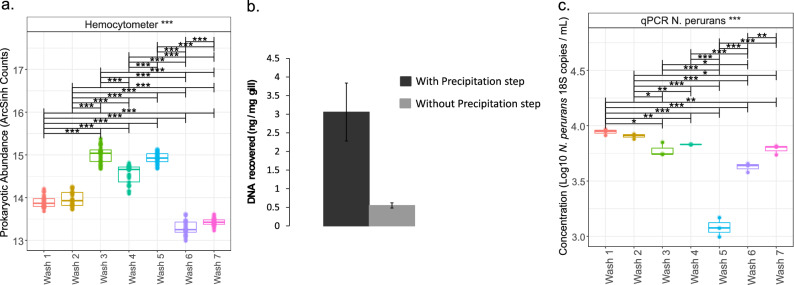
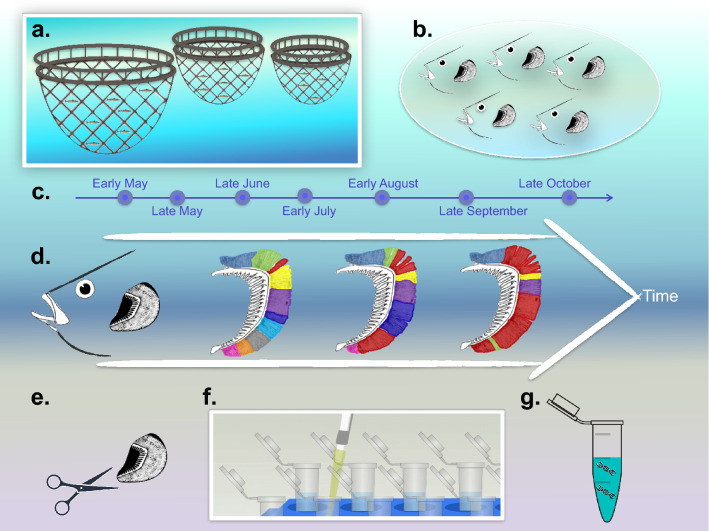
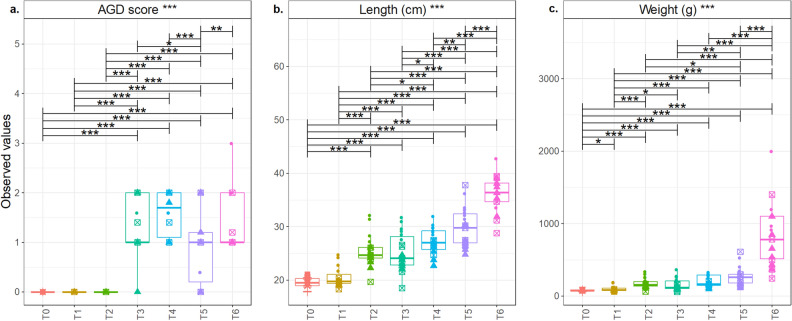
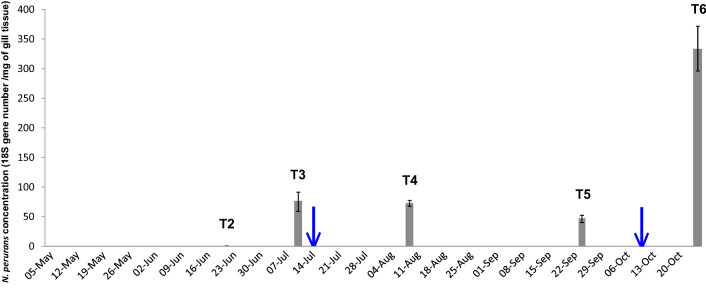
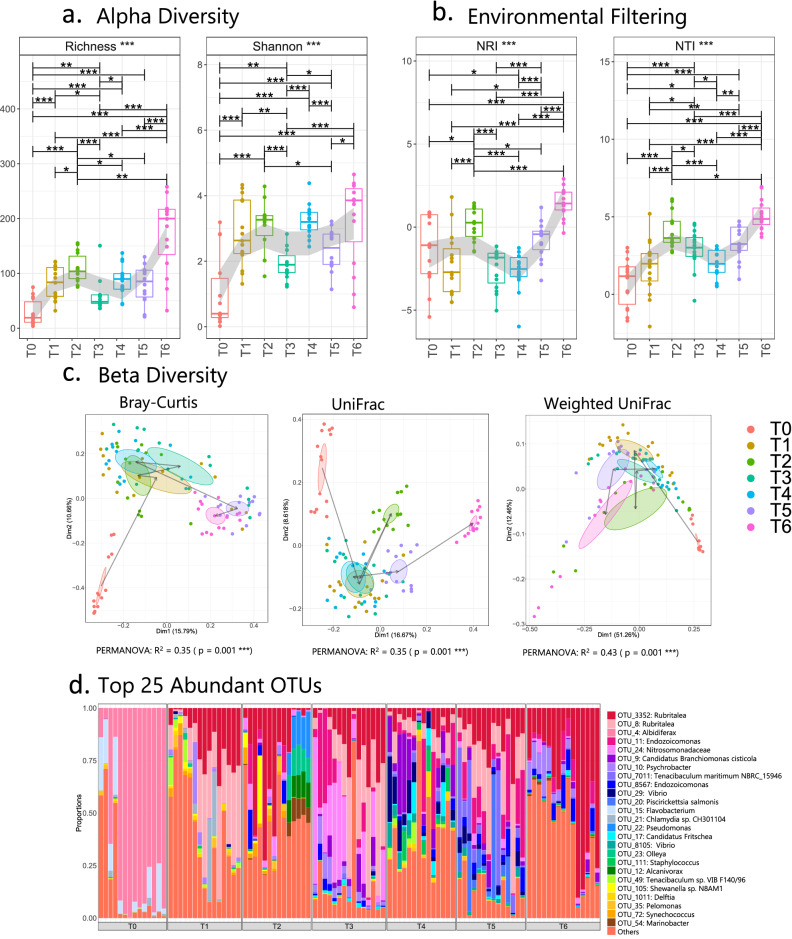
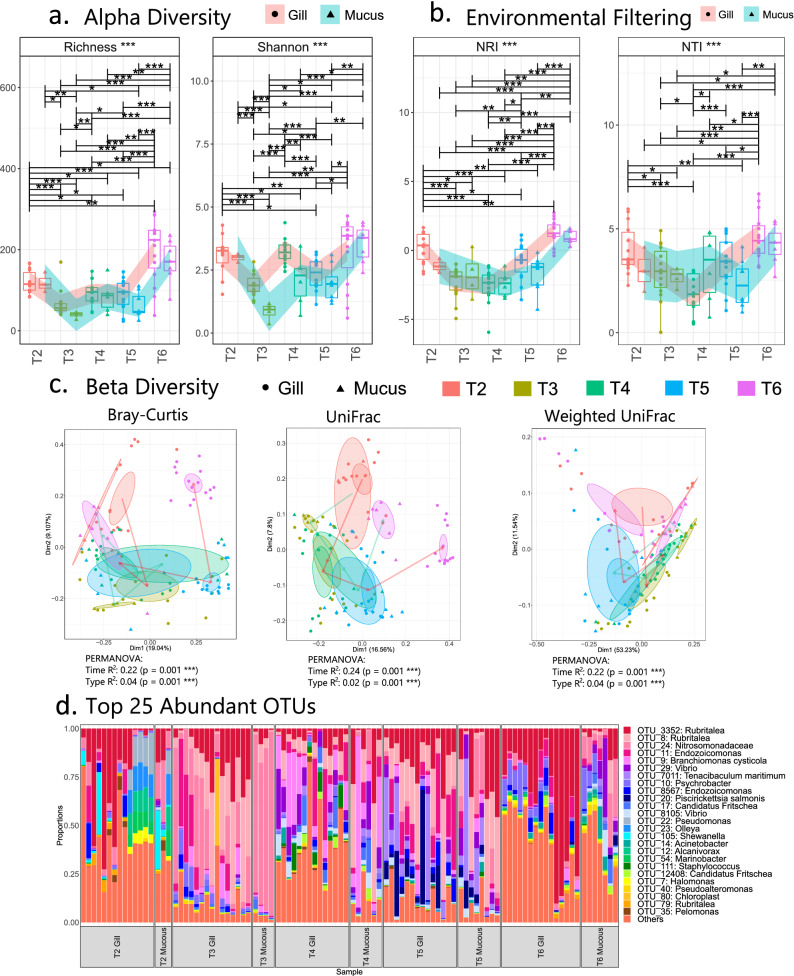
Amoebic gill disease (AGD) and complex gill disease (CGD) are recurrent gill disorders in Atlantic salmon, resulting in significant aquaculture losses. The role of gill microbiomes in gill disease development is unclear. We undertook a longitudinal study to characterise the gill tissue and gill mucus microbiomes of farmed Atlantic salmon before, and during, a gill disease episode. Using a newly optimised DNA extraction protocol, we sequenced rRNA genes from microbiomes of gill samples taken from 105 individual salmon on a farm, over a summer season. The AGD aetiological agent, Neoparamoeba perurans, was PCR-quantified targeting 18S rRNA genes. Similar analyses were carried out on mucus samples. Mucus scrapings were suitable, non-lethal substitutes for characterisation of the gill prokaryotic community in this study. Gill tissue and gill mucus microbiomes changed during the campaign, correlating with N. perurans concentrations. Time explained 35% of the gill tissue and gill mucus microbiome variance, while N. perurans concentrations explained 5%. Genera including Dyadobacter, Shewanella and Pedobacter were maximally abundant in gill and mucus samples at the timepoint prior to the the detection of gill disorder signs, at T3. Shewanella was significantly more abundant before than during the gill disease episode, and we suggest this genus could be considered in future studies addressing relationships between gill disease and the gill microbiome.
阿米巴性鳃病(AGD)和复合鳃病(CGD)是大西洋鲑鱼反复发生的鳃病,导致水产养殖严重损失。 然而,关于鳃微生物组在鳃病发展中的作用尚不清楚。 本研究采用纵向研究方法,在发生鳃病之前和期间,对养殖场大西洋鲑鱼的鳃组织和鳃黏液微生物组进行了特征描述。 我们使用新优化的 DNA 提取方案,对来自 105 条养殖鲑鱼的 105 个鳃样本中的微生物组的 rRNA 基因进行了测序。 在夏季期间,针对 18S rRNA 基因对 AGD 病原 Neoparamoeba perurans 进行了 PCR 定量分析。 还对黏液样本进行了类似的分析。 在本研究中,黏液刮取物适合作为非致死性替代品来描述鳃原核生物群落。 campaign 期间,鳃组织和鳃黏液微生物组发生了变化,与 N. perurans 浓度相关。 时间解释了 35%的鳃组织和鳃黏液微生物组的变异性,而 N. perurans 浓度解释了 5%。 在检测到鳃病迹象之前的 T3 时间点,包括 Dyadobacter、Shewanella 和 Pedobacter 在内的属在鳃和黏液样本中含量最多。 在鳃病发作之前,Shewanella 的丰度显著高于鳃病发作期间,我们建议在未来研究中考虑将该属与鳃病和鳃微生物组之间的关系。