Institute for Tumor Biology and Experimental Therapy, Georg-Speyer-Haus, 60596 Frankfurt/Main, Germany; Frankfurt Cancer Institute, Goethe University Frankfurt, Frankfurt/Main, Germany.
Frankfurt Cancer Institute, Goethe University Frankfurt, Frankfurt/Main, Germany; Department Radiotherapy and Oncology, Goethe University Frankfurt, Frankfurt/Main, Germany.
STAR Protoc. 2022 Dec 16;3(4):101749. doi: 10.1016/j.xpro.2022.101749. Epub 2022 Oct 5.
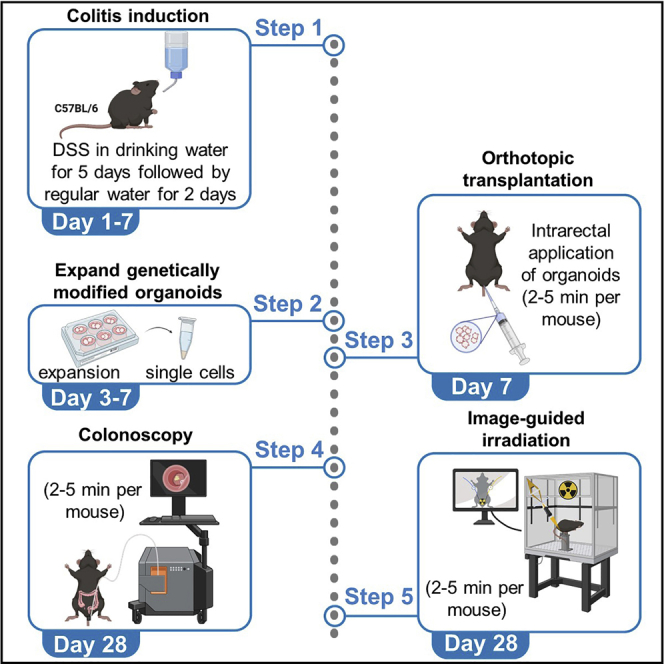
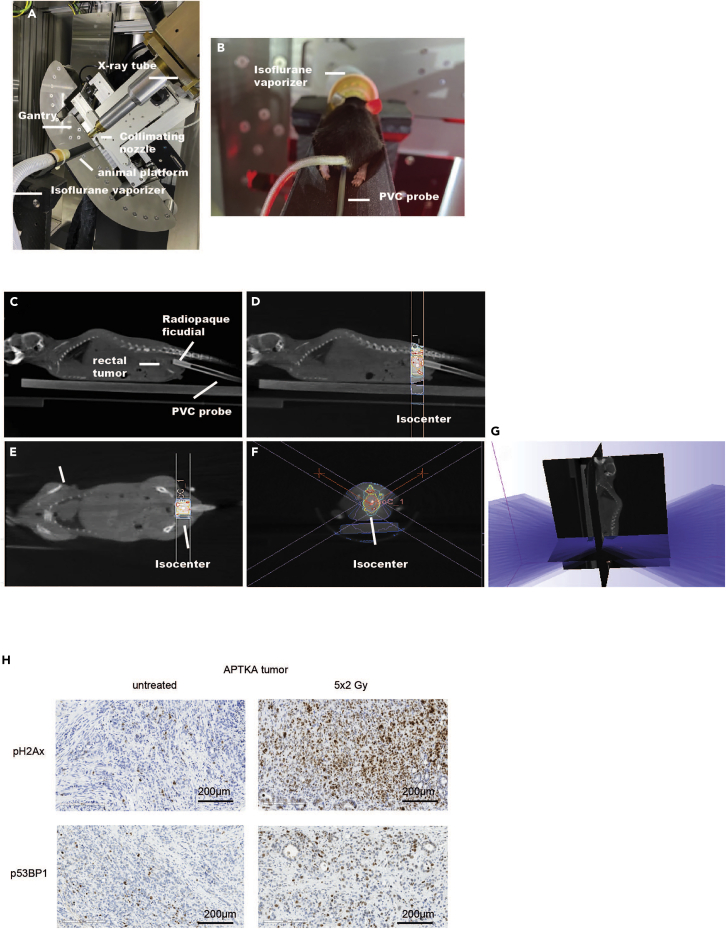
Radiobiology research in rectal cancer has been limited to cell lines, patient-derived organoids (PDOs), or xenografts. Here, we describe a protocol which recapitulates more efficiently the complex contributions of the tumor microenvironment. This approach establishes a preclinical mouse model of rectal cancer by intrarectal transplantation of genetically modified organoids into immunocompetent mice followed by precise image-guided radiotherapy (IGRT) of organoid-induced tumors. This model represents a useful platform to study the cellular and molecular determinants of therapy resistance in rectal cancer. For complete details on the use and execution of this protocol, please refer to Nicolas et al. (2022).
直肠癌的放射生物学研究一直局限于细胞系、患者来源的类器官(PDO)或异种移植物。在这里,我们描述了一种更有效地重现肿瘤微环境复杂贡献的方案。该方法通过将基因修饰的类器官经直肠内移植到免疫功能正常的小鼠中,并对类器官诱导的肿瘤进行精确的图像引导放疗(IGRT),建立了直肠癌的临床前小鼠模型。该模型为研究直肠癌治疗抵抗的细胞和分子决定因素提供了一个有用的平台。有关该方案使用和执行的完整详细信息,请参阅 Nicolas 等人(2022 年)。