Department of Neuroanaesthesia, Queen Elizabeth University Hospital, Glasgow, UK.
Department of Diagnostic Imaging, Nuclear Medicine & Clinical Physics, NHS Greater Glasgow and Clyde, Glasgow, UK.
Drugs R D. 2022 Dec;22(4):289-300. doi: 10.1007/s40268-022-00404-4. Epub 2022 Oct 7.
Pharmacokinetic or pharmacokinetic-pharmacodynamic models have been instrumental in facilitating the clinical use of propofol in target-controlled infusion systems in anaesthetic practice. There has been debate over which model should be recommended for practice. The covariates model is an updated pharmacokinetic model for propofol. The aim of this study was to prospectively validate this model in an adult population.
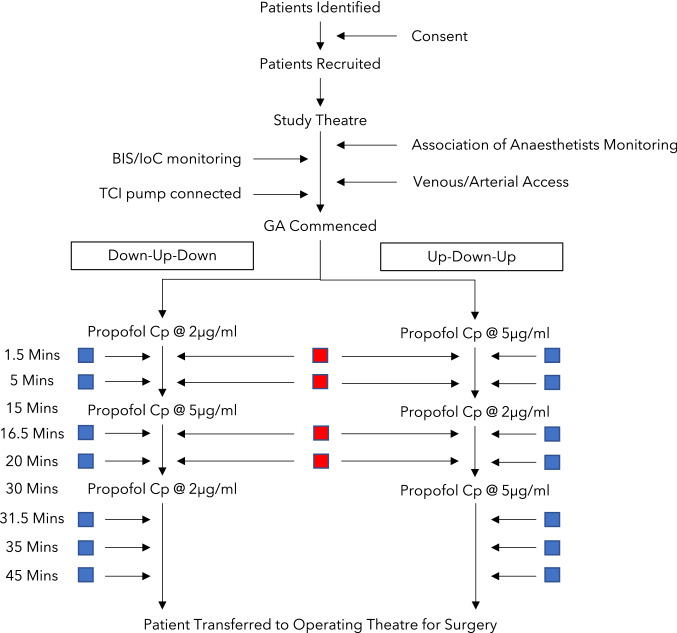
Twenty-nine patients were included, with a range of ages to assess model performance in younger and older individuals. Subjects received propofol through a target-controlled infusion device programmed with the covariates model. Subjects were randomised to one of two increasing/decreasing regimes of propofol plasma target concentrations between 2 and 5 μg.mL. After the start of the infusion, arterial and venous blood samples were drawn at pre-specified timepoints between 1.5 and 20 min and between 1.5 and 45 min, respectively. Predictive performance was assessed using established methodology.
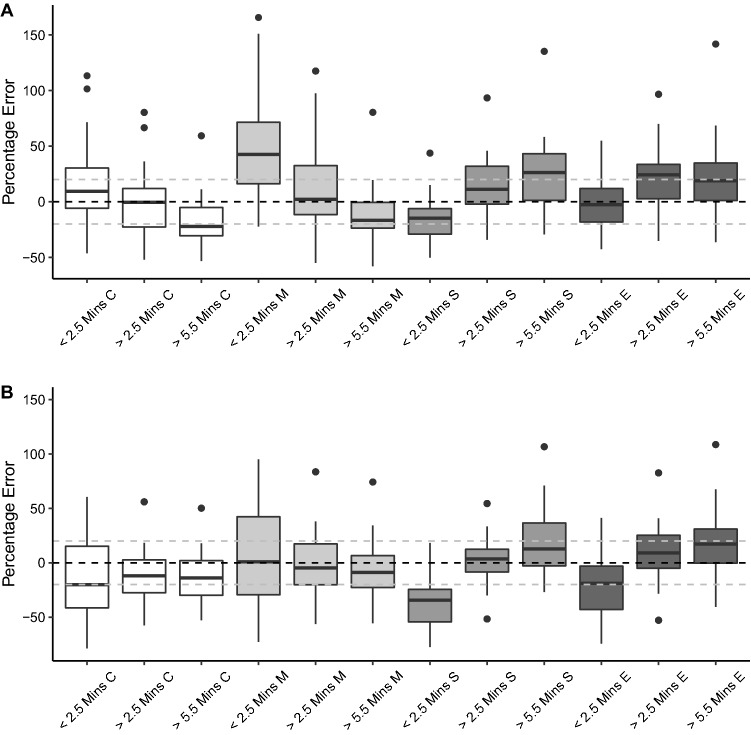
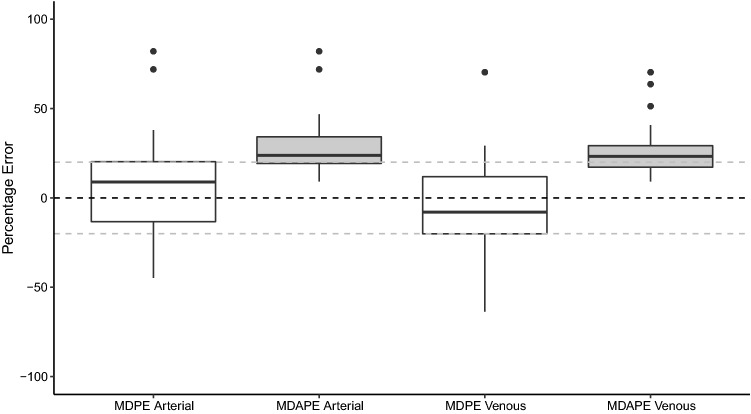
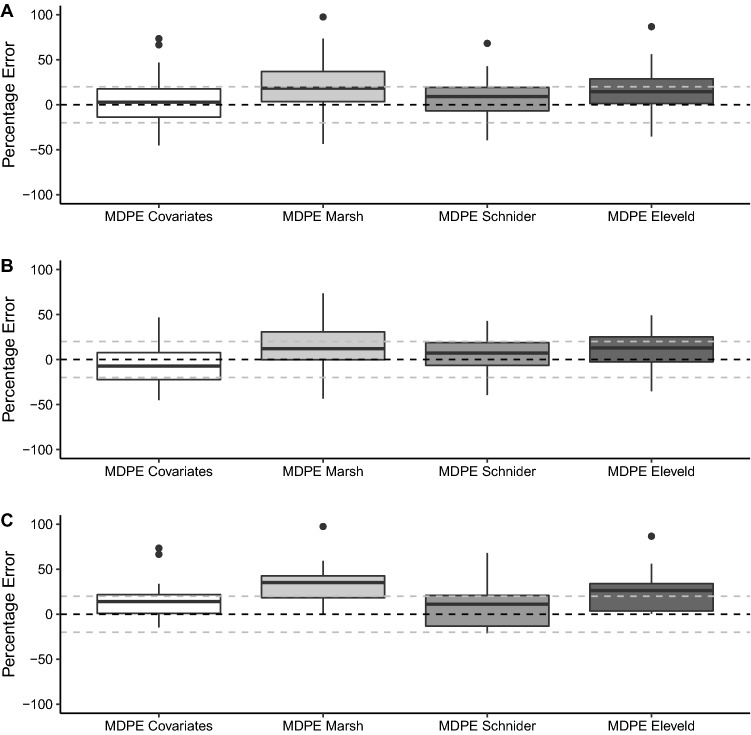
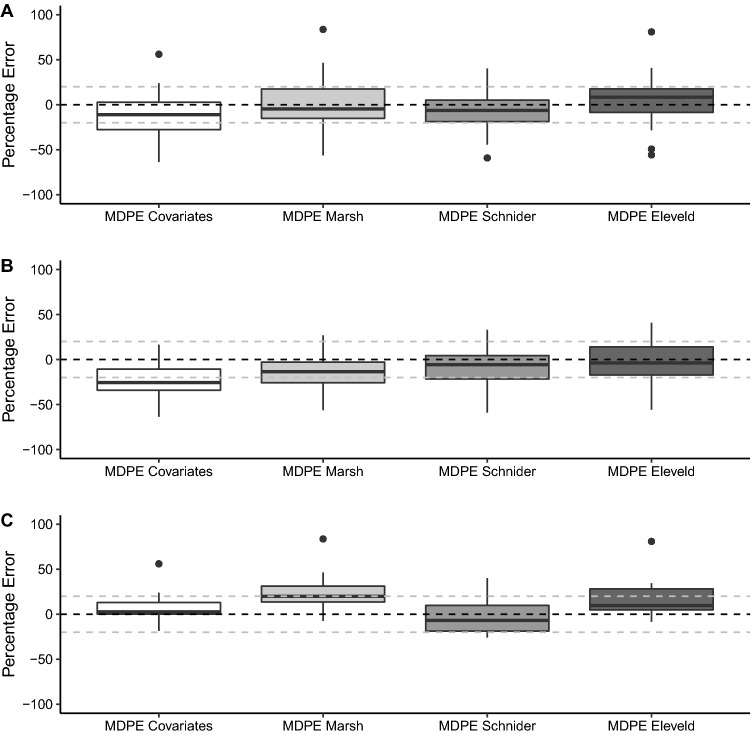
The model achieved a bias of 9 (- 45 to 82) and precision of 24 (9-82) for arterial samples and bias of - 8 (- 64 to 70) and precision of 23 (9-70) for venous samples. Predicted concentrations tended to be higher than the measured concentrations in female individuals but lower in male individuals. There was no clear systematic difference in the bias between younger and older patients.
The covariates propofol pharmacokinetic model achieved an acceptable level of predictive performance, as assessed by both arterial and venous sampling, for use in target-controlled infusion in clinical practice.
NCT01492712 (15 December, 2011).
药代动力学或药代动力学药效学模型在促进麻醉实践中靶控输注系统中丙泊酚的临床应用方面发挥了重要作用。关于应该推荐哪种模型用于实践一直存在争议。协变量模型是丙泊酚的更新药代动力学模型。本研究旨在前瞻性验证该模型在成年人群中的应用。
纳入 29 例患者,年龄范围广泛,以评估该模型在年轻和老年个体中的表现。患者通过编程协变量模型的靶控输注设备接受丙泊酚输注。患者随机分为两种递增/递减丙泊酚血浆靶浓度方案之一,浓度范围为 2 至 5μg/ml。输注开始后,在 1.5 至 20 分钟和 1.5 至 45 分钟之间分别在特定时间点抽取动脉和静脉血样。使用既定方法评估预测性能。
该模型在动脉样本中的偏差为 9(-45 至 82),精度为 24(9-82),在静脉样本中的偏差为-8(-64 至 70),精度为 23(9-70)。预测浓度往往高于女性个体的实测浓度,但低于男性个体。在年轻和老年患者之间,偏差没有明显的系统差异。
协变量丙泊酚药代动力学模型在评估动脉和静脉采样时,均具有可接受的预测性能,可用于临床实践中的靶控输注。
NCT01492712(2011 年 12 月 15 日)。