Department of Social Education, UiT - The Arctic University of Norway, Harstad, Norway; Department of Research, Lovisenberg Diaconal Hospital, Oslo, Norway.
Department of Research, Lovisenberg Diaconal Hospital, Oslo, Norway.
Contemp Clin Trials. 2022 Nov;122:106955. doi: 10.1016/j.cct.2022.106955. Epub 2022 Oct 5.
Post-COVID-19 condition is frequently comprised of persistent cognitive sequela, including deficits in attention and executive functions (EFs), which can act as a barrier for regaining pre-illness functional levels. Goal Management Training (GMT) is a cognitive rehabilitation (CR) intervention for improving attention and EFs that has received empirical support in studies of other patient groups. The present study aims to determine the efficacy of GMT for improving everyday attention and EFs in adults who experience persistent cognitive deficits after COVID-19.
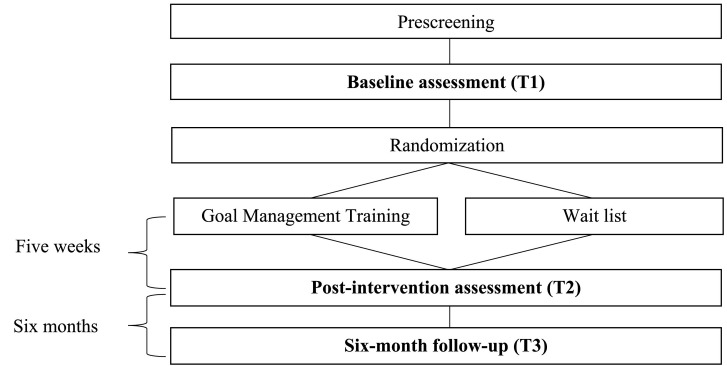
This study protocol describes an open-label randomized controlled trial comparing the efficacy of GMT to a wait list control condition (WL), for improving persistent (> 2 months) cognitive sequela in post-COVID-19 condition. The study aims to recruit 240 participants aged 18 to 65 years with a history of SARS-CoV-2 infection and perceived attentional and EF difficulties in daily life. Participants will be block randomized (computer-algorithm) to either group-based GMT (n = 120) or WL (n = 120). GMT will be internet-delivered to groups of six participants in six two-hour sessions delivered once a week. The primary outcome will be the Metacognition Index of the Behavior Rating Inventory of Executive Function - Adult Version, a self-report measure assessing everyday EF difficulties, specifically metacognition, at six months post-treatment. Secondary outcomes include performance-based neurocognitive measures, and tertiary outcomes include rating scales of cognition, emotional health, quality of life, and fatigue.
Study findings could contribute to providing an evidence-based treatment option for symptoms that are frequent and debilitating following a prevalent condition.
NCT05494424.
新冠后状况常伴有持续性认知后遗症,包括注意力和执行功能(EF)缺陷,这可能成为患者恢复发病前功能水平的障碍。目标管理训练(GMT)是一种认知康复(CR)干预措施,可改善注意力和 EF,已在其他患者群体的研究中得到实证支持。本研究旨在确定 GMT 对改善 COVID-19 后持续性认知缺陷成年人的日常注意力和 EF 的疗效。
本研究方案描述了一项开放标签随机对照试验,比较 GMT 与等待名单对照条件(WL)对改善 COVID-19 后持续性(>2 个月)认知后遗症的疗效。该研究旨在招募 240 名年龄在 18 至 65 岁之间、有 SARS-CoV-2 感染史且在日常生活中感知到注意力和 EF 困难的参与者。参与者将采用计算机算法进行分组随机化(GMT 组,n=120;WL 组,n=120)。GMT 将以小组为单位通过互联网进行,每组 6 人,每周进行一次,每次 2 小时。主要结局指标是行为评定量表-成人版执行功能评定量表的元认知指数,这是一种自我报告的评估工具,用于评估治疗后 6 个月的日常 EF 困难,特别是元认知。次要结局指标包括基于表现的神经认知测量,以及认知、情绪健康、生活质量和疲劳的评定量表。
研究结果可能有助于为一种常见且致残性的疾病提供一种基于证据的治疗选择。
NCT05494424。