Deng Weijie, Zhu Peng, Xu Huixuan, Hou Xianliang, Chen Wenbiao
Clinical Skills Center, Shenzhen Pingshan District People's Hospital, Pingshan General Hospital, Southern Medical University, Shenzhen 518000, China.
Central Laboratory, Shenzhen Pingshan District People's Hospital, Pingshan General Hospital, Southern Medical University, Shenzhen 518000, China.
J Oncol. 2022 Sep 30;2022:2014625. doi: 10.1155/2022/2014625. eCollection 2022.
Liver hepatocellular carcinoma (LIHC) is among the most frequent causes of cancer-related death across the world with a considerably poor prognosis. The current study targeted providing a new type of LIHC from the perspective of the glycolysis/cholesterol synthesis axis, predicting its prognostic characteristics, and exploring the potential role and mechanism of the glycolysis/cholesterol synthesis axis in the occurrence and development of LIHC.
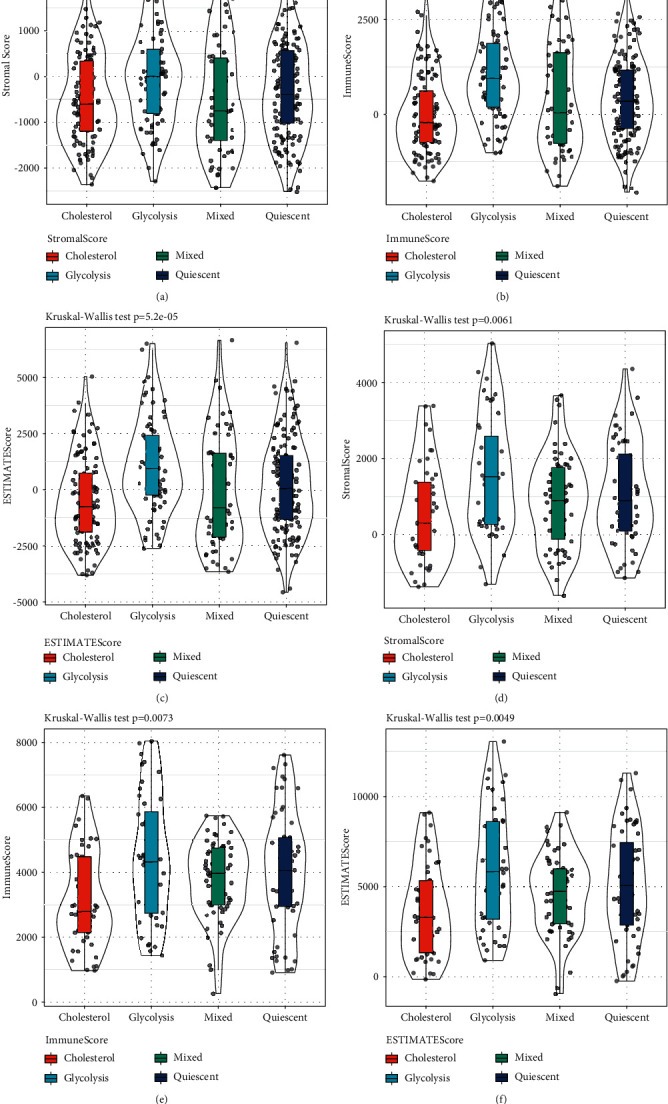
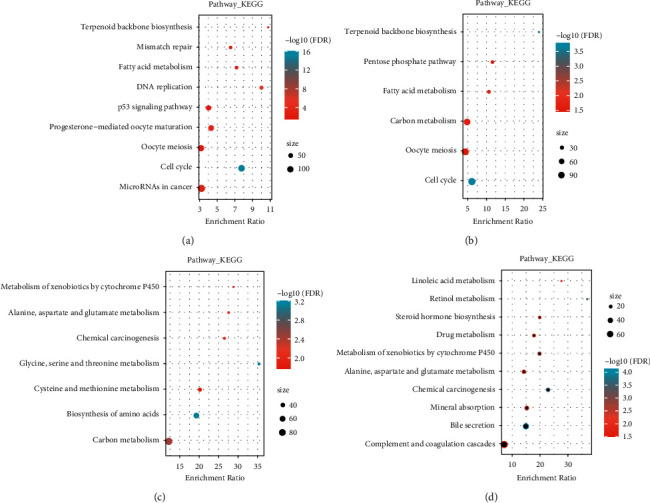
Based on the two expression profile data and clinical information of LIHC in The Cancer Genome Atlas (TCGA) database and hepatocellular carcinoma database (HCCDB), as well as glycolysis/cholesterol-related genes from the Molecular Signatures Database (MSigDB), unsupervised consistent clustering method was used to identify molecular subtypes. In addition, the differential genes were identified by limma package, and then the gene set was enriched, analyzed, and annotated by WebGestaltR package. At the same time, the immune infiltration analysis of tumor samples was carried out using the ESTIMATE to evaluate the tumor immune score of the samples. Finally, the differences in clinical characteristics among molecular subtypes were measured using univariate and multivariate Cox analyses.
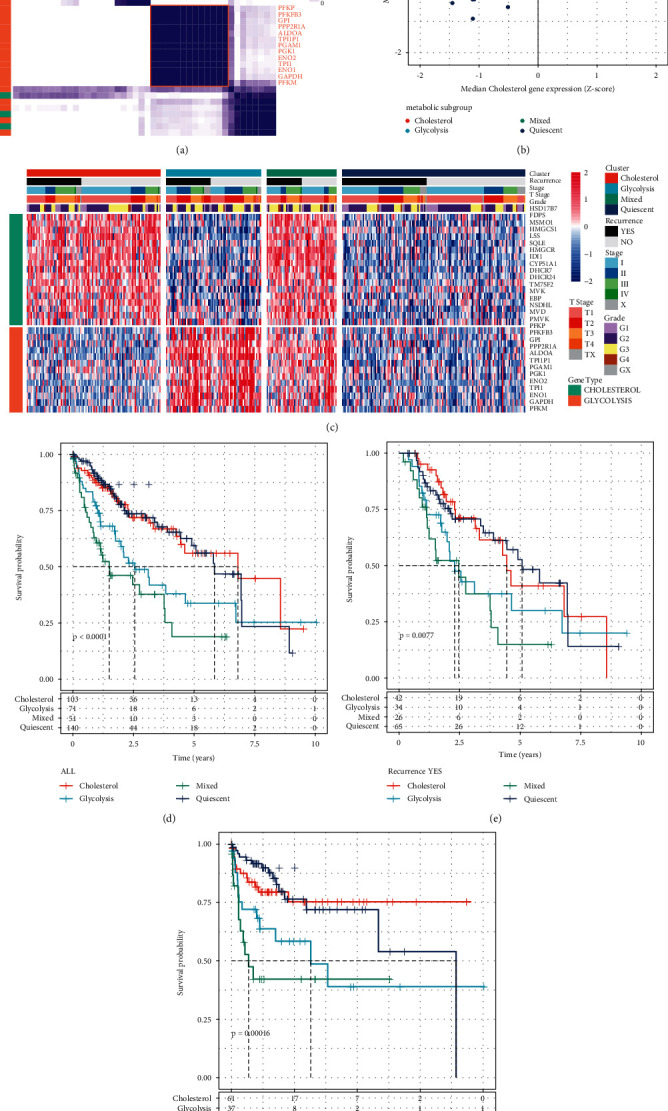
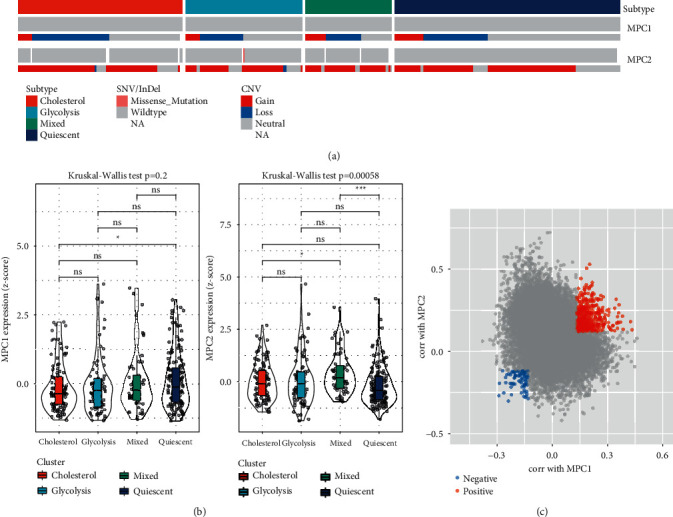
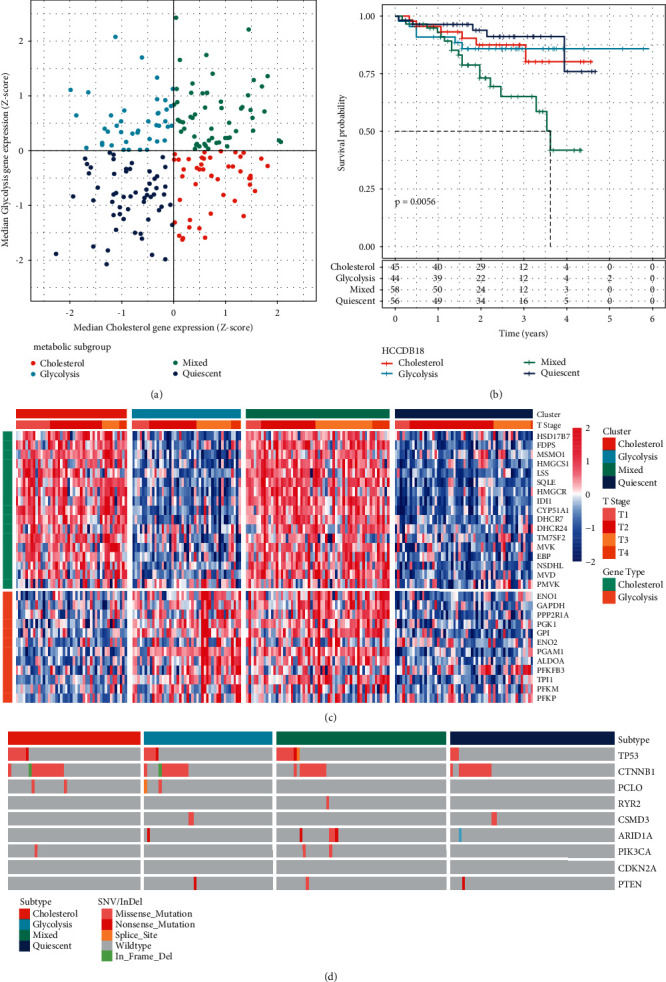
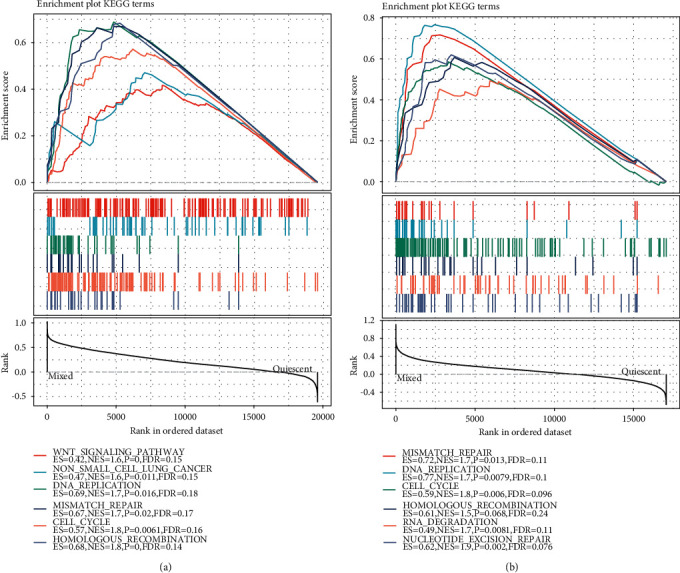
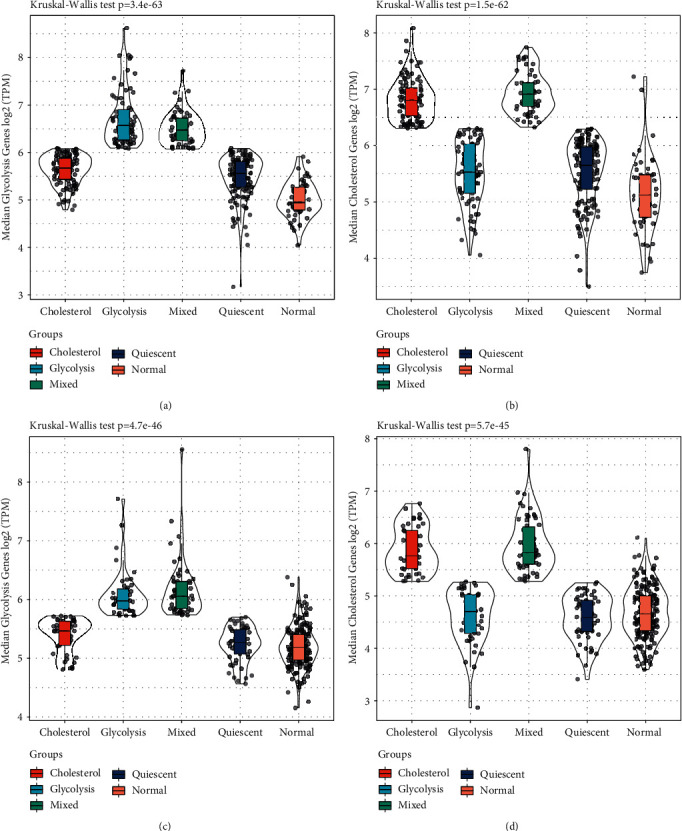
According to the median standardized expression levels of glycolysis/cholesterol production genes, samples were divided into four groups (molecular subtypes): Quiescent group, Glycolysis group, Cholesterol group, and Mixed group. Significant prognostic differences were observed among the four groups. In both TCGA and HCCDB18 datasets, the prognosis of subtype Mixed was the worst, while Quiescent had a good prognosis. Cell cycle and oncogenic pathways were significantly enriched in the Mixed group. In addition, glycolysis and cholesterol production gene expressions were related to the prognostic LIHC subtype classification genes' expression levels.
Metabolic classification regarding glycolysis and cholesterol production pathways provided new insights into the biological aspects of LIHC molecular subtypes and might help to develop personalized therapies for unique tumor metabolic profiles.
肝细胞肝癌(LIHC)是全球癌症相关死亡的最常见原因之一,预后相当差。本研究旨在从糖酵解/胆固醇合成轴的角度提供一种新型的LIHC,预测其预后特征,并探索糖酵解/胆固醇合成轴在LIHC发生发展中的潜在作用及机制。
基于癌症基因组图谱(TCGA)数据库和肝细胞癌数据库(HCCDB)中LIHC的两个表达谱数据和临床信息,以及来自分子特征数据库(MSigDB)的糖酵解/胆固醇相关基因,采用无监督一致性聚类方法识别分子亚型。此外,使用limma软件包识别差异基因,然后通过WebGestaltR软件包对基因集进行富集、分析和注释。同时,使用ESTIMATE对肿瘤样本进行免疫浸润分析,以评估样本的肿瘤免疫评分。最后,采用单因素和多因素Cox分析测量分子亚型之间临床特征的差异。
根据糖酵解/胆固醇生成基因的中位数标准化表达水平,样本被分为四组(分子亚型):静止组、糖酵解组、胆固醇组和混合组。四组之间观察到显著的预后差异。在TCGA和HCCDB18数据集中,混合亚型的预后最差,而静止组预后良好。细胞周期和致癌途径在混合组中显著富集。此外,糖酵解和胆固醇生成基因的表达与预后性LIHC亚型分类基因的表达水平相关。
关于糖酵解和胆固醇生成途径的代谢分类为LIHC分子亚型的生物学方面提供了新的见解,并可能有助于针对独特的肿瘤代谢谱开发个性化治疗方法。