The Generation R Study Group, Erasmus MC, University Medical Center Rotterdam, Rotterdam, The Netherlands.
Department of Pediatrics, Erasmus MC - Sophia Children's Hospital, University Medical Center Rotterdam, Rotterdam, The Netherlands.
Clin Epigenetics. 2022 Oct 10;14(1):125. doi: 10.1186/s13148-022-01345-0.
Phthalates and bisphenols are non-persistent endocrine disrupting chemicals that are ubiquitously present in our environment and may have long-lasting health effects following fetal exposure. A potential mechanism underlying these exposure-outcome relationships is differential DNA methylation. Our objective was to examine the associations of maternal phthalate and bisphenol concentrations during pregnancy with DNA methylation in cord blood using a chemical mixtures approach.
This study was embedded in a prospective birth cohort study in the Netherlands and included 306 participants. We measured urine phthalates and bisphenols concentrations in the first, second and third trimester. Cord blood DNA methylation in their children was processed using the Illumina Infinium HumanMethylation450 BeadChip using an epigenome-wide association approach. Using quantile g-computation, we examined the association of increasing all mixture components by one quartile with cord blood DNA methylation.
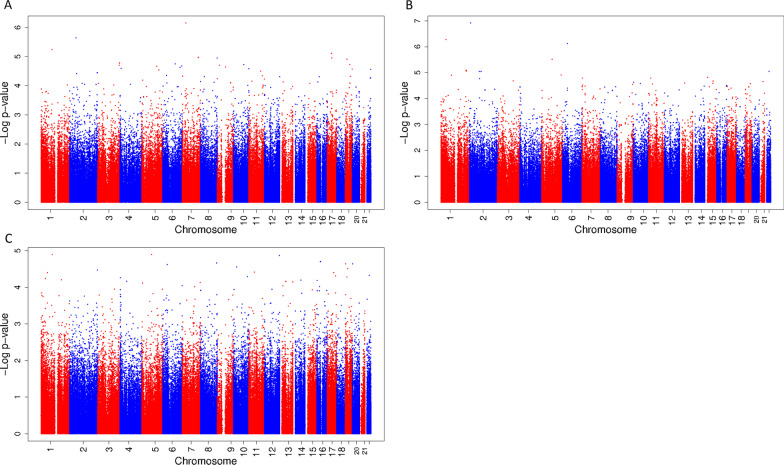
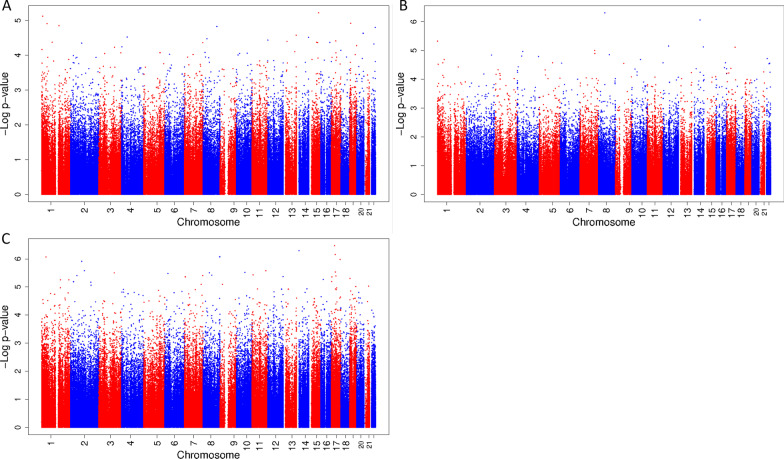
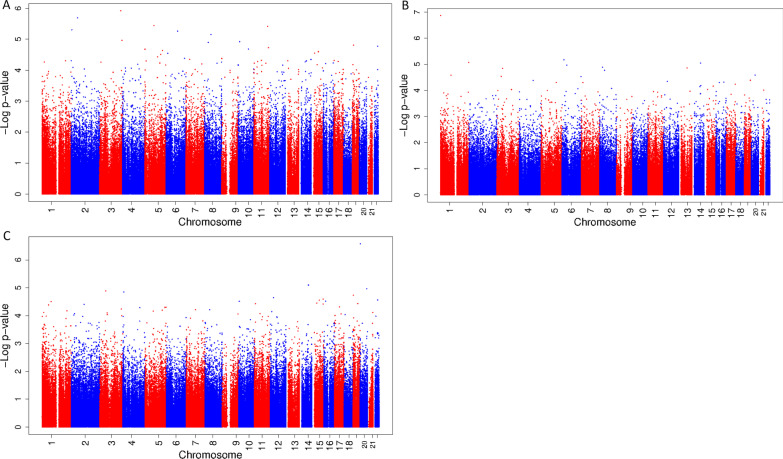
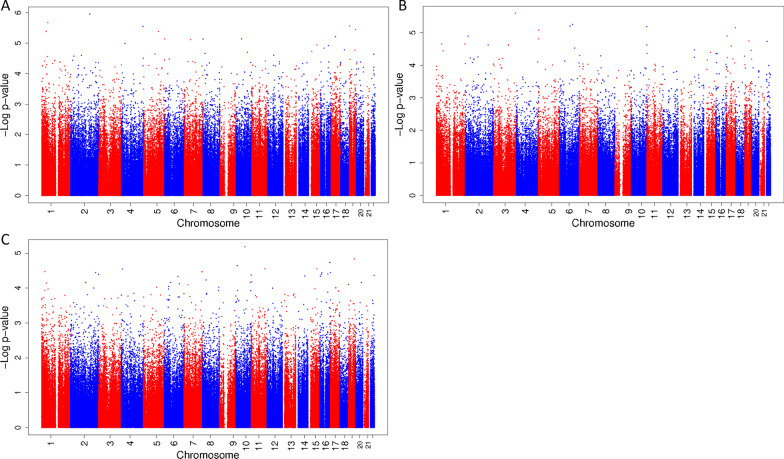
We did not find evidence for statistically significant associations of a maternal mixture of phthalates and bisphenols during any of the trimesters of pregnancy with DNA methylation in cord blood (all p values > 4.01 * 10). However, we identified one suggestive association (p value < 1.0 * 10) of the first trimester maternal mixture of phthalates and bisphenols and three suggestive associations of the second trimester maternal mixture of phthalates and bisphenols with DNA methylation in cord blood.
Although we did not identify genome-wide significant results, we identified some suggestive associations of exposure to a maternal mixture of phthalates and bisphenols in the first and second trimester with DNA methylation in cord blood that need further exploration in larger study samples.
邻苯二甲酸酯和双酚类物质是普遍存在于我们环境中的非持久性内分泌干扰化学物质,可能会对胎儿暴露后的长期健康产生影响。这些暴露-结果关系的潜在机制是差异 DNA 甲基化。我们的目的是使用化学混合物方法检查孕妇在怀孕期间接触的邻苯二甲酸酯和双酚类物质浓度与脐带血中 DNA 甲基化之间的关联。
这项研究嵌入了荷兰的一项前瞻性出生队列研究,包括 306 名参与者。我们测量了孕妇在第一、第二和第三孕期尿液中的邻苯二甲酸酯和双酚类物质浓度。使用 Illumina Infinium HumanMethylation450 BeadChip 通过全基因组关联方法处理其子女的脐带血 DNA 甲基化。使用分位数 g 计算,我们检查了每个孕期所有混合物成分增加一个四分位数与脐带血 DNA 甲基化之间的关联。
我们没有发现任何孕期任何一个孕期母体邻苯二甲酸酯和双酚类物质混合物与脐带血 DNA 甲基化之间存在统计学上显著关联的证据(所有 p 值均>4.0110)。然而,我们发现母体邻苯二甲酸酯和双酚类物质混合物与脐带血 DNA 甲基化之间存在一个提示性关联(p 值<1.010),以及母体邻苯二甲酸酯和双酚类物质混合物与脐带血 DNA 甲基化之间存在三个提示性关联。
尽管我们没有发现全基因组显著结果,但我们发现了一些提示性关联,即母体邻苯二甲酸酯和双酚类物质混合物在第一和第二孕期暴露与脐带血中 DNA 甲基化之间存在关联,需要在更大的研究样本中进一步探索。