Neurology Department at Huashan Hospital, State Key Laboratory of Medical Neurobiology and MOE Frontiers Center for Brain Science, School of Life Sciences, Fudan University, Shanghai, China.
Shanghai Engineering Research Center of Molecular Therapeutics and New Drug Development, School of Chemistry and Molecular Engineering, East China Normal University, Shanghai, China.
Chem Soc Rev. 2022 Oct 31;51(21):8832-8876. doi: 10.1039/d2cs00624c.
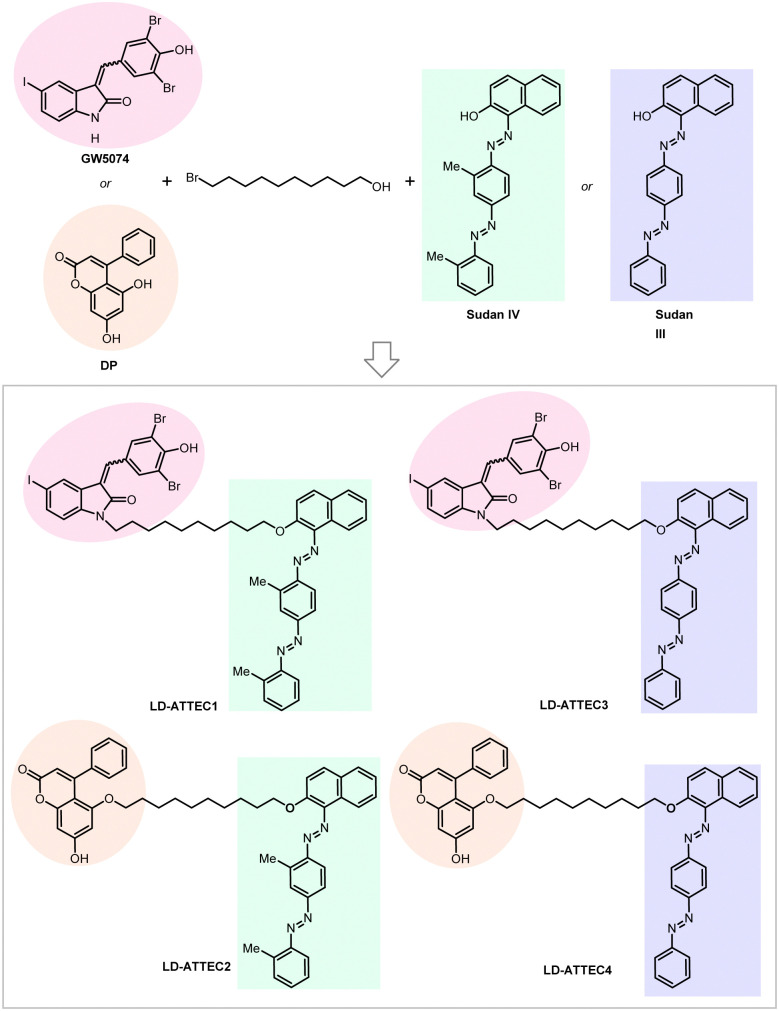
Targeted protein degradation (TPD) provides unprecedented opportunities for drug discovery. While the proteolysis-targeting chimera (PROTAC) technology has already entered clinical trials and changed the landscape of small-molecule drugs, new degrader technologies harnessing alternative degradation machineries, especially lysosomal pathways, have emerged and broadened the spectrum of degradable targets. We have recently proposed the concept of autophagy-tethering compounds (ATTECs) that hijack the autophagy protein microtubule-associated protein 1A/1B light chain 3 (LC3) for targeted degradation. Other groups also reported degrader technologies engaging lysosomal pathways through different mechanisms including AUTACs, AUTOTACs, LYTACs and MoDE-As. In this review, we analyse and discuss ATTECs along with other lysosomal-relevant degrader technologies. Finally, we will briefly summarize the current status of these degrader technologies and envision possible future studies.
靶向蛋白降解(TPD)为药物发现提供了前所未有的机会。尽管蛋白水解靶向嵌合体(PROTAC)技术已经进入临床试验并改变了小分子药物的格局,但利用替代降解机制(特别是溶酶体途径)的新型降解剂技术已经出现,并拓宽了可降解靶标的范围。我们最近提出了自噬连接化合物(ATTECs)的概念,这些化合物劫持自噬蛋白微管相关蛋白 1A/1B 轻链 3(LC3)以进行靶向降解。其他研究小组还报告了通过不同机制(包括 AUTACs、AUTOTACs、LYTACs 和 MoDE-As)利用溶酶体途径的降解剂技术。在这篇综述中,我们将分析和讨论 ATTECs 以及其他与溶酶体相关的降解剂技术。最后,我们将简要总结这些降解剂技术的现状,并展望未来可能的研究方向。