Tao Ye, Hu Hanwen, Li Jie, Li Mengting, Zheng Qingyuan, Zhang Guoqiang, Ni Ming
Department of Orthopedics, the Fourth Medical Center, Chinese PLA General Hospital, 51 Fucheng Road, Beijing, 100036, China.
Arthroplasty. 2022 Oct 14;4(1):49. doi: 10.1186/s42836-022-00145-4.
This study aimed to establish a deep learning method based on convolutional networks for the preliminary study of the pathological diagnosis of prosthetic joint infections (PJI).
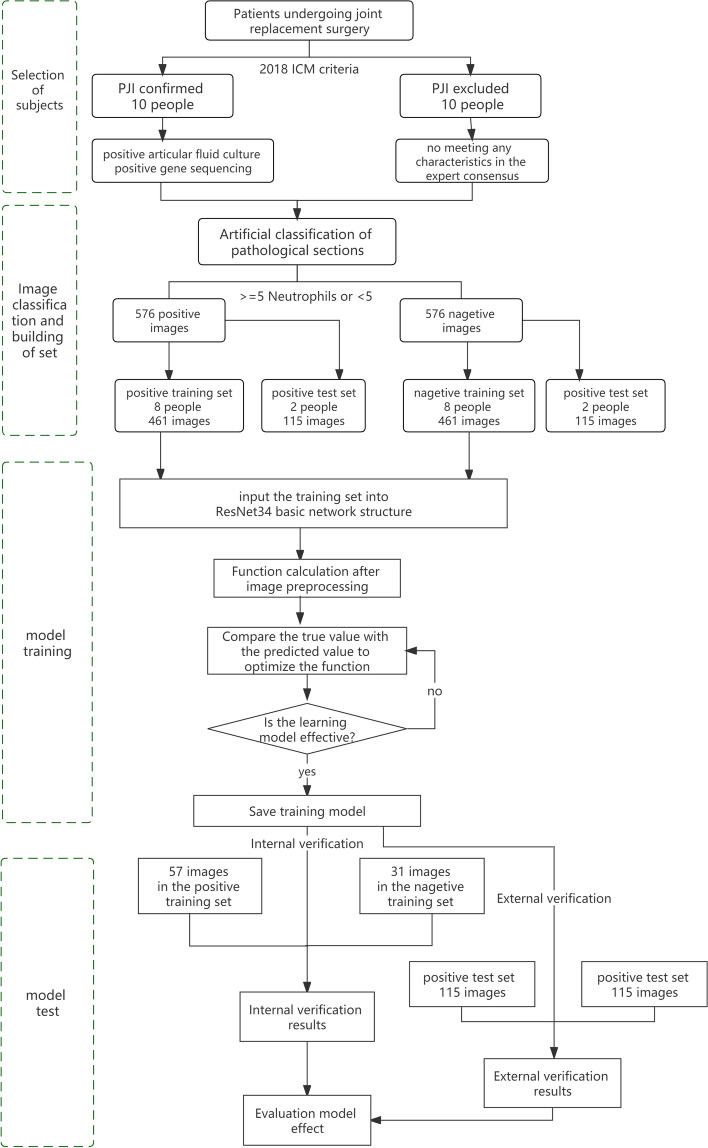
We enrolled 20 revision patients after joint replacement from the Department of Orthopedics, the First Medical Center, General Hospital of the People's Liberation Army, from January 2021 to January 2022 (10 of whom were confirmed to be infected against 2018 ICM criteria, and the remaining 10 were verified to be non-infected), and classified high-power field images according to 2018 ICM criteria. Then, we inputted 576 positive images and 576 negative images into a neural network by employing a resNET model, used to select 461 positive images and 461 negative images as training sets, 57 positive images and 31 negative images as internal verification sets, 115 positive images and 115 negative images as external test sets.
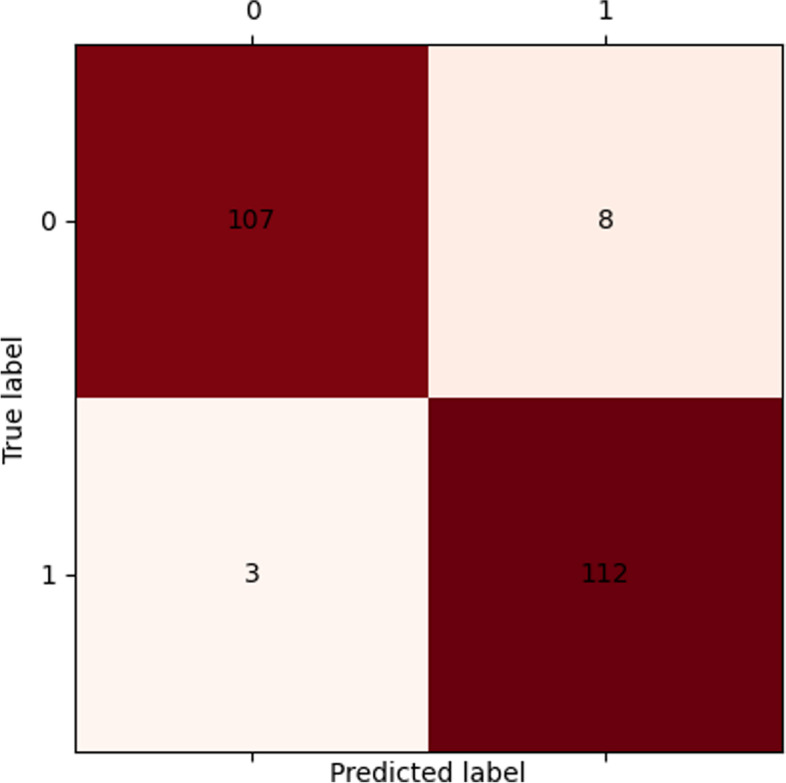
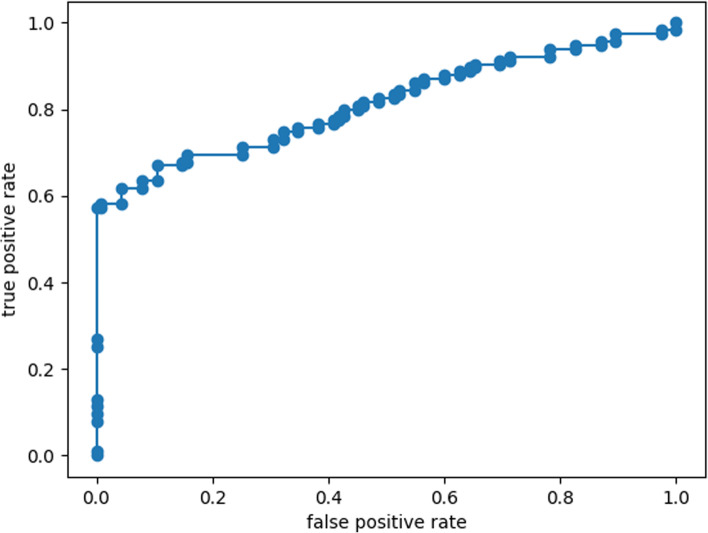
The resNET model classification was used to analyze the pathological sections of PJI patients under high magnification fields. The results of internal validation set showed a positive accuracy of 96.49%, a negative accuracy of 87.09%, an average accuracy of 93.22%, an average recall rate 96.49%, and an F1 of 0.9482. The accuracy of external test results was 97.39% positive, 93.04% negative, the average accuracy of external test set was 93.33%, the average recall rate was 97.39%, with an F1 of 0.9482. The AUC area of the intelligent image-reading diagnosis system was 0.8136.
This study used the convolutional neural network deep learning to identify high-magnification images from pathological sections of soft tissues around joints, against the diagnostic criteria for acute infection, and a high precision and a high recall rate were accomplished. The results of this technique confirmed that better results could be achieved by comparing the new method with the standard strategies in terms of diagnostic accuracy. Continuous upgrading of extended training sets is needed to improve the diagnostic accuracy of the convolutional network deep learning before it is applied to clinical practice.
本研究旨在建立一种基于卷积网络的深度学习方法,用于人工关节感染(PJI)病理诊断的初步研究。
我们纳入了2021年1月至2022年1月期间来自中国人民解放军总医院第一医学中心骨科的20例关节置换翻修患者(其中10例根据2018年ICM标准确诊为感染,其余10例经证实未感染),并根据2018年ICM标准对高倍视野图像进行分类。然后,我们使用resNET模型将576张阳性图像和576张阴性图像输入神经网络,选择461张阳性图像和461张阴性图像作为训练集,57张阳性图像和31张阴性图像作为内部验证集,115张阳性图像和115张阴性图像作为外部测试集。
采用resNET模型分类法对PJI患者高倍视野下的病理切片进行分析。内部验证集结果显示阳性准确率为96.49%,阴性准确率为87.09%,平均准确率为93.22%,平均召回率为96.49%,F1值为0.9482。外部测试结果的阳性准确率为97.39%,阴性准确率为93.04%,外部测试集平均准确率为93.33%,平均召回率为97.39%,F1值为0.9482。智能图像读取诊断系统的AUC面积为0.8136。
本研究利用卷积神经网络深度学习,根据急性感染的诊断标准识别关节周围软组织病理切片的高倍图像,实现了高精度和高召回率。该技术的结果证实,在诊断准确性方面,将新方法与标准策略进行比较可以取得更好的结果。在将卷积网络深度学习应用于临床实践之前,需要不断升级扩展训练集以提高其诊断准确性。