Criado Celia, Muñoz-González Carolina, Mora María, Fernández-Ruíz Virginia, Chaya Carolina, Pozo-Bayón María Angeles
Instituto de Investigación en Ciencias de la Alimentación (CIAL), Consejo Superior de Investigaciones Científicas-Universidad Autónoma de Madrid (CSIC-UAM), C/Nicolás Cabrera, 9, 28049 Madrid, Spain.
BCC Innovation, Centro Tecnológico en Gastronomía, Basque Culinary Center, 20009 Donostia-San Sebastián, Spain.
Foods. 2022 Oct 5;11(19):3104. doi: 10.3390/foods11193104.
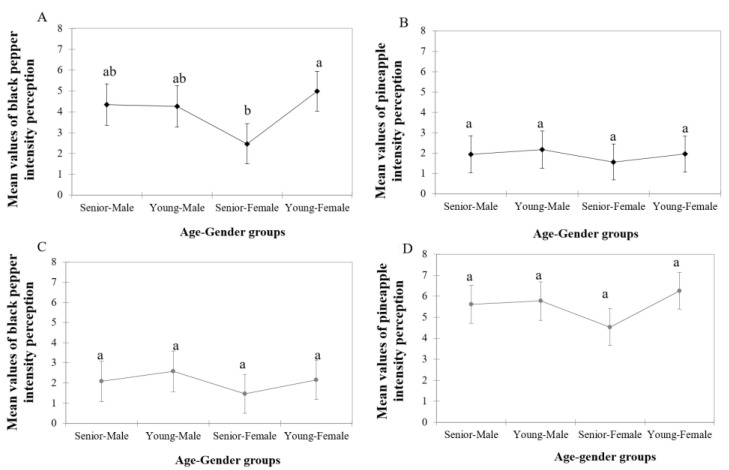
The relationship between oral physiology (e.g., salivary protein content) and aroma perception over wine consumption was investigated in previous work. However, the relationship between oral physiology and the consumer's response to wine is unknown. Additionally, age-gender differences might affect oral physiology and, therefore, inter-individual differences in the consumer's enjoyment of wine. The aim of this work was to study the effect of biological individual factors such as sex and age on salivary flow rate and total protein content, on wine retronasal aroma perception and on the hedonic and self-reported emotional consumer response to wine. Additionally, the relationship between saliva composition, aroma perception and liking was also assessed. Results showed that age and sex influenced saliva composition and aroma perception in wine consumers in the case of red but not white wines. Younger females reported higher aroma intensity of the black pepper descriptor compared to older females. Correlation analysis confirmed the relationship between salivary flow rate and aroma perception and between the salivary protein content and wine acceptability. The interactions between wine polyphenols-saliva-aroma that occurred in the mouth during the oral processing of wine might partially explain these results, although further research will be required to confirm this hypothesis.
先前的研究探讨了口腔生理学(如唾液蛋白质含量)与饮酒过程中香气感知之间的关系。然而,口腔生理学与消费者对葡萄酒的反应之间的关系尚不清楚。此外,年龄和性别差异可能会影响口腔生理学,进而影响消费者对葡萄酒喜好的个体差异。这项研究的目的是研究性别和年龄等生物个体因素对唾液流速和总蛋白含量、葡萄酒后鼻腔香气感知以及消费者对葡萄酒的享乐主义和自我报告的情感反应的影响。此外,还评估了唾液成分、香气感知和喜好之间的关系。结果表明,对于红葡萄酒而非白葡萄酒,年龄和性别会影响葡萄酒消费者的唾液成分和香气感知。与年长女性相比,年轻女性报告的黑胡椒描述符的香气强度更高。相关性分析证实了唾液流速与香气感知之间以及唾液蛋白质含量与葡萄酒可接受性之间的关系。在葡萄酒口腔处理过程中,口腔中发生的葡萄酒多酚 - 唾液 - 香气之间的相互作用可能部分解释了这些结果,不过还需要进一步研究来证实这一假设。