Department of Pharmaceutical Sciences, University of Arkansas for Medical Sciences, Little Rock, AR 72205, USA.
Rejuvenics Technologies, LLC, Perryville, AR 72126, USA.
Int J Mol Sci. 2022 Oct 2;23(19):11662. doi: 10.3390/ijms231911662.
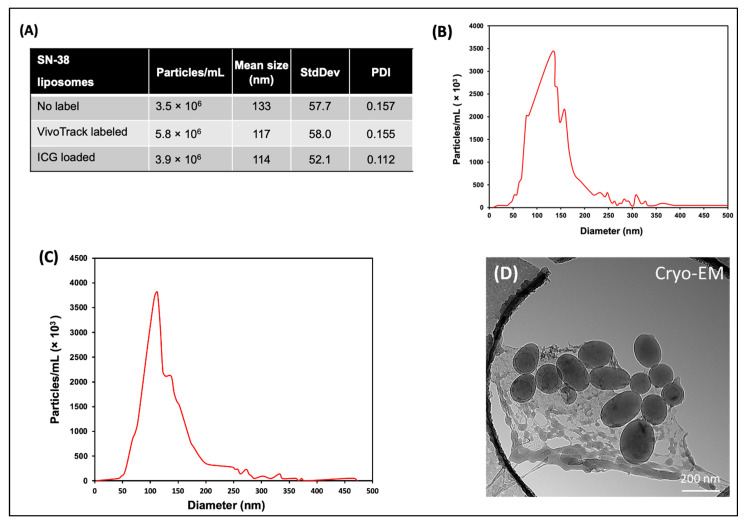
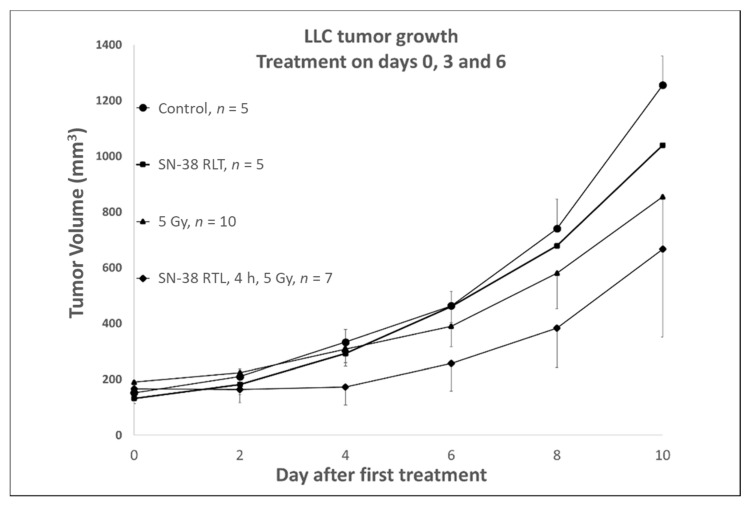
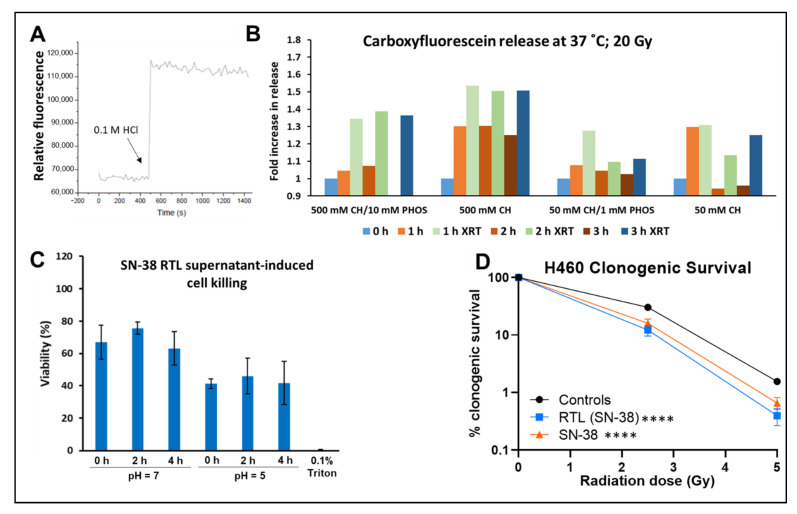
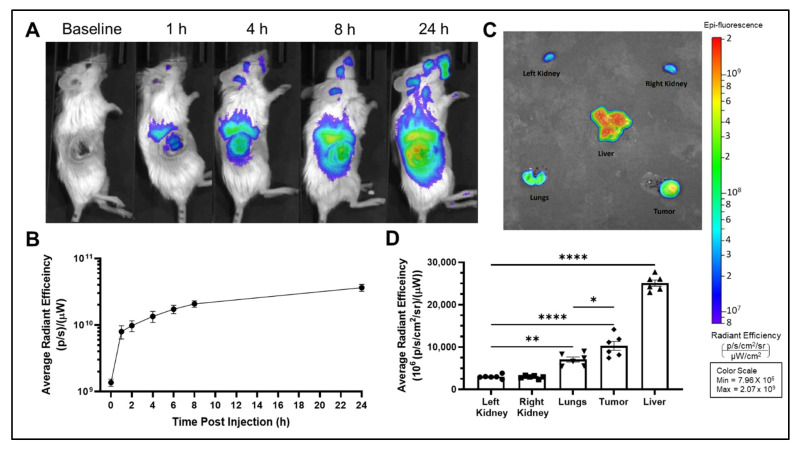
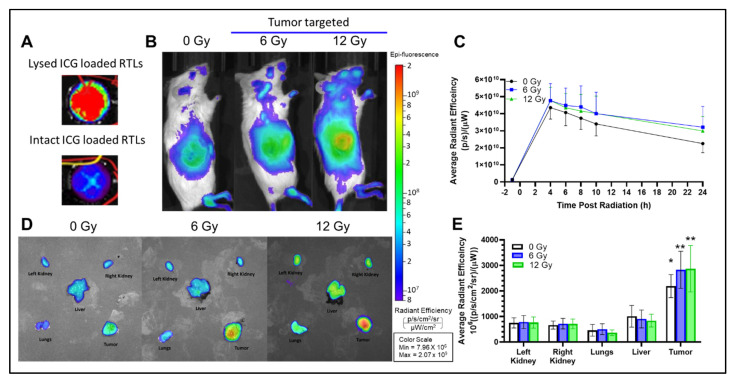
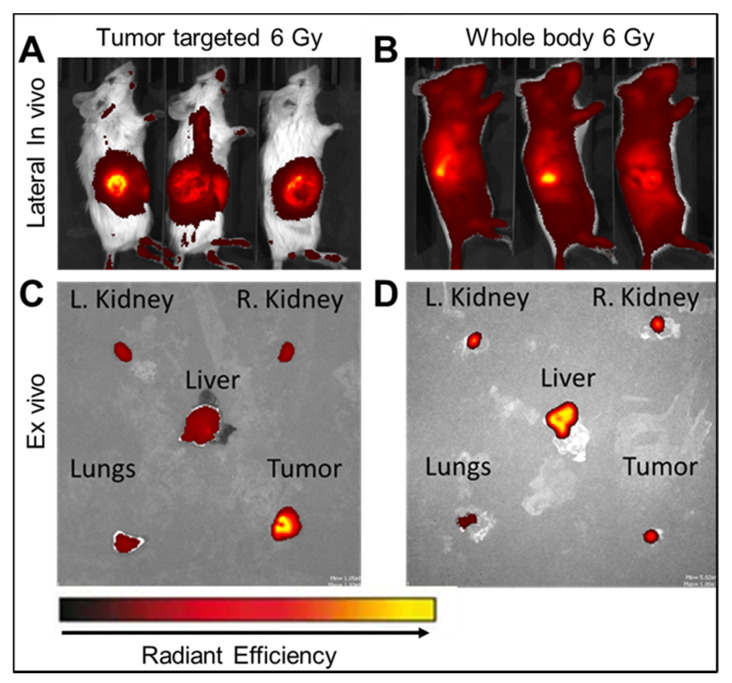
Targeted delivery of drugs or other therapeutic agents through internal or external triggers has been used to control and accelerate the release from liposomal carriers in a number of studies, but relatively few utilize energy of therapeutic X-rays as a trigger. We have synthesized liposomes that are triggered by ionizing radiation (RTLs) to release their therapeutic payload. These liposomes are composed of natural egg phosphatidylethanolamine (PE), 1,2-distearoyl-sn-glycero-3-phosphocholine (DSPC), cholesterol, and 1,2-disteroyl-sn-glycero-3-phosphoethanolamine-N-[methoxy (polyethylene glycol)-2000] (DSPE-PEG-2000), and the mean size of the RTL was in the range of 114 to 133 nm, as measured by nanoparticle tracking analysis (NTA). The trigger mechanism is the organic halogen, chloral hydrate, which is known to generate free protons upon exposure to ionizing radiation. Once protons are liberated, a drop in internal pH of the liposome promotes destabilization of the lipid bilayer and escape of the liposomal contents. In proof of principle studies, we assessed RTL radiation-release of fluorescent tracers upon exposure to a low pH extracellular environment or exposure to X-ray irradiation. Biodistribution imaging before and after irradiation demonstrated a preferential uptake and release of the liposomes and their cargo at the site of local tumor irradiation. Finally, a potent metabolite of the commonly used chemotherapy irinotecan, SN-38, was loaded into RTL along with near infrared (NIR) fluorescent dyes for imaging studies and measuring tumor cell cytotoxicity alone or combined with radiation exposure, in vitro and in vivo. Fully loaded RTLs were found to increase tumor cell killing with radiation in vitro and enhance tumor growth delay in vivo after three IV injections combined with three, 5 Gy local tumor radiation exposures compared to either treatment modality alone.
通过内部或外部触发,靶向递药或其他治疗剂,已被用于控制和加速脂质体载体的释放,这在许多研究中都有应用,但相对较少的研究利用治疗 X 射线的能量作为触发。我们已经合成了可被电离辐射(RTLs)触发的脂质体,以释放其治疗有效载荷。这些脂质体由天然卵磷酯乙醇胺(PE)、1,2-二硬脂酰-sn-甘油-3-磷酸胆碱(DSPC)、胆固醇和 1,2-二硬脂酰-sn-甘油-3-磷酸乙醇胺-N-[甲氧基(聚乙二醇)-2000](DSPE-PEG-2000)组成,RTL 的平均粒径范围为 114 至 133nm,通过纳米颗粒跟踪分析(NTA)进行测量。触发机制是有机卤化物水合氯醛,已知其在暴露于电离辐射时会产生游离质子。一旦质子被释放,脂质体内部 pH 值下降会促进脂质双层的不稳定性,并导致脂质体内容物的逃逸。在原理验证研究中,我们评估了在暴露于低 pH 细胞外环境或 X 射线照射下,荧光示踪剂的 RTL 辐射释放情况。照射前后的生物分布成像显示,局部肿瘤照射部位优先摄取和释放脂质体及其货物。最后,将一种常用化疗药物伊立替康的有效代谢物 SN-38 与近红外(NIR)荧光染料一起装载到 RTL 中,用于成像研究和单独或联合辐射暴露测量肿瘤细胞的细胞毒性,在体外和体内进行。结果发现,与单独使用任何一种治疗方法相比,完全装载的 RTLs 在体外与辐射联合使用时可增加肿瘤细胞杀伤作用,并在体内联合三次静脉注射和三次 5Gy 局部肿瘤照射后延迟肿瘤生长。