Department of Botany and Plant Biotechnology, University of Johannesburg, P.O. Box 524, Auckland Park, Johannesburg 2006, South Africa.
Central Analytical Facilities (CAF), J.C. Smuts Building Room 255, Faculty of Science, University of Stellenbosch, Private Bag X1, Matieland 7602, South Africa.
Molecules. 2022 Oct 1;27(19):6478. doi: 10.3390/molecules27196478.
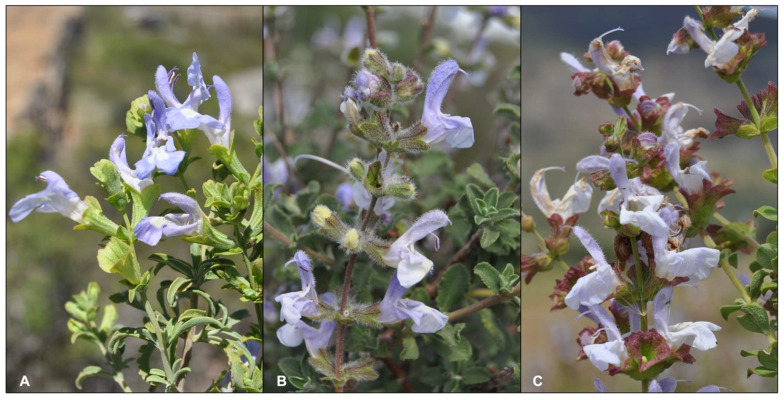
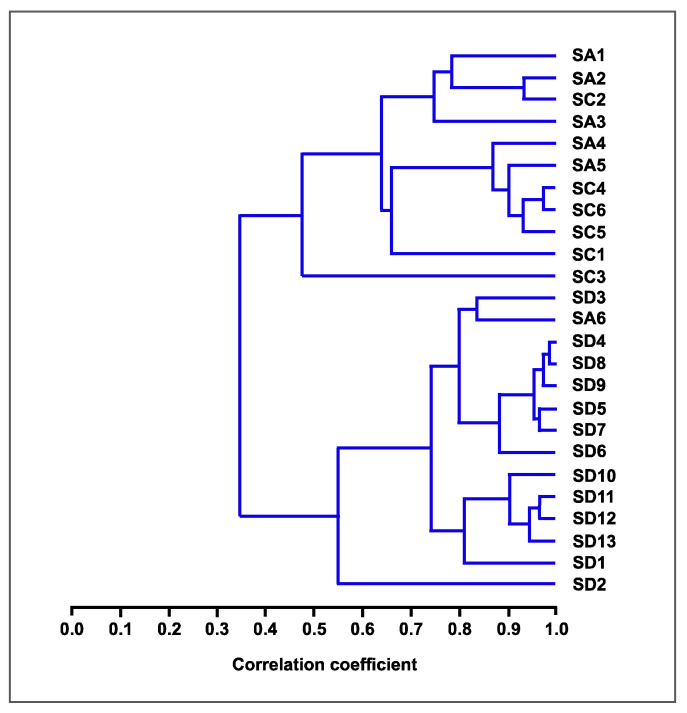
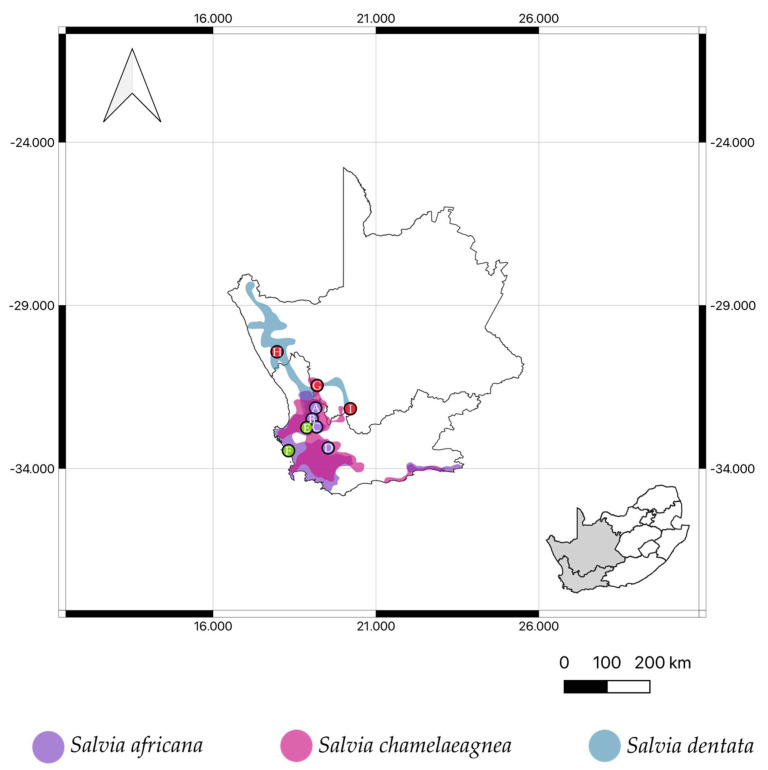
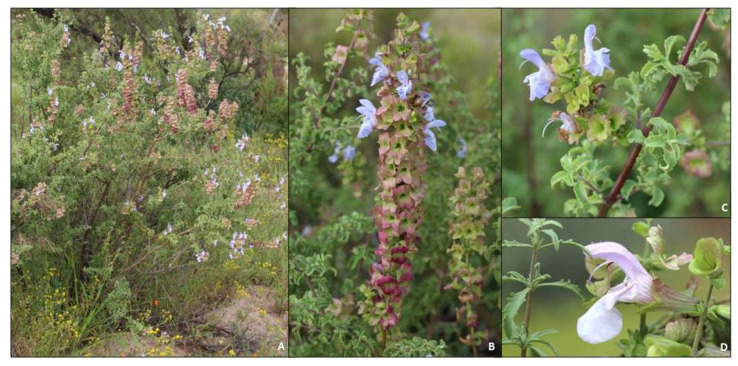
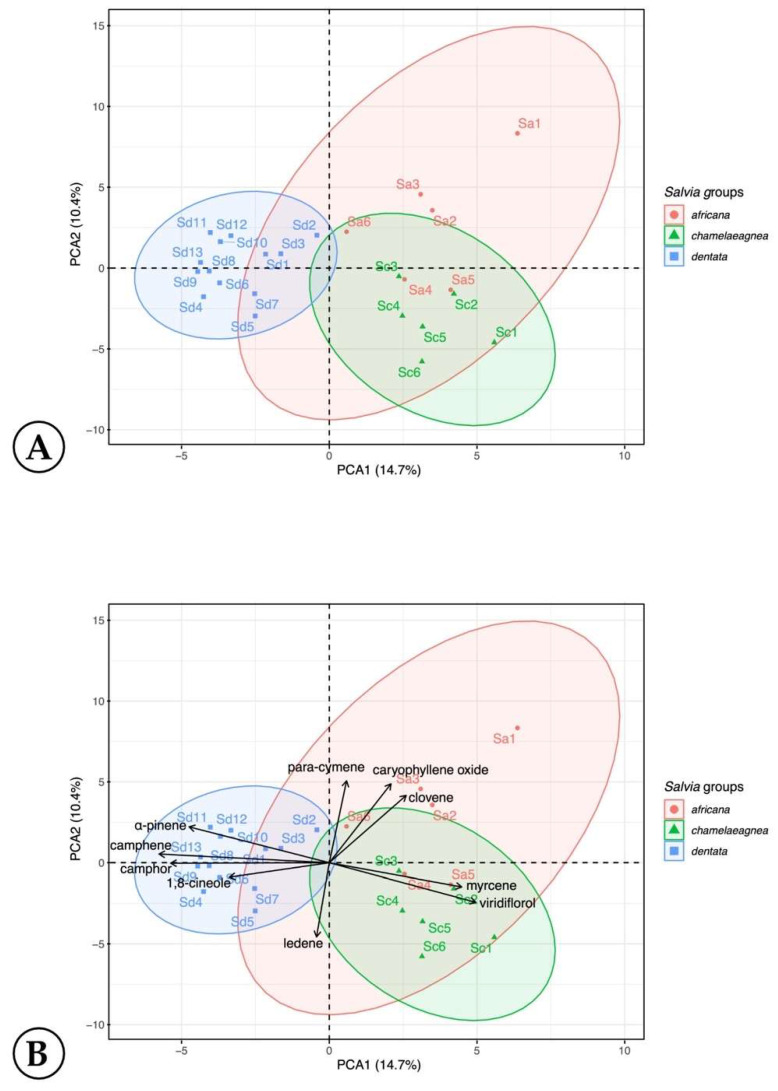
South Africa has a rich history of medicinal plant species and their documented uses as traditional medicines, and is also home to three well-known, blue-flowered sage species of ethnobotanical importance. The Namaqualand () has so far remained unstudied and apparently overlooked. Our study is the first to report on the essential oil chemistry of this medicinally relevant species and provide a comparison with the other two (well-studied) closely related Cape ( and ). The data, generated from three geographically isolated populations comprised of 13 individual plants of , revealed diagnostically high levels of camphor (14.37%), α-pinene (11.43%), camphene (10.18%), 1,8-cineole (eucalyptol) (9.42%) and bornyl acetate (8.56%) which provide a distinct chemical profile from the other two species.
南非拥有丰富的药用植物物种及其作为传统药物的文献记载,也是三种著名的、具有民族植物学重要性的蓝色开花鼠尾草物种的家园。纳马夸兰地区到目前为止还没有被研究过,显然也被忽视了。我们的研究首次报道了这种具有药用价值的物种的精油化学,并与另外两种(研究充分的)密切相关的海角鼠尾草( 和 )进行了比较。从三个地理上隔离的种群中采集的 13 株个体植物的数据显示,龙脑(14.37%)、α-蒎烯(11.43%)、莰烯(10.18%)、1,8-桉叶素(桉油醇)(9.42%)和乙酸龙脑酯(8.56%)的含量很高,这为该物种提供了一个独特的化学特征,与其他两种物种不同。