• 文献检索
  • 文档翻译
  • 深度研究
  • 学术资讯
  • Suppr Zotero 插件Zotero 插件
  • 邀请有礼
  • 套餐&价格
  • 历史记录
应用&插件
Suppr Zotero 插件Zotero 插件浏览器插件Mac 客户端Windows 客户端微信小程序
定价
高级版会员购买积分包购买API积分包
服务
文献检索文档翻译深度研究API 文档MCP 服务
关于我们
关于 Suppr公司介绍联系我们用户协议隐私条款
关注我们

Suppr 超能文献

核心技术专利:CN118964589B侵权必究
粤ICP备2023148730 号-1Suppr @ 2026

文献检索

告别复杂PubMed语法,用中文像聊天一样搜索,搜遍4000万医学文献。AI智能推荐,让科研检索更轻松。

立即免费搜索

文件翻译

保留排版,准确专业,支持PDF/Word/PPT等文件格式,支持 12+语言互译。

免费翻译文档

深度研究

AI帮你快速写综述,25分钟生成高质量综述,智能提取关键信息,辅助科研写作。

立即免费体验

美国、荷兰和瑞典报告有饮食障碍个体中 COVID-19 的长期影响。

Longer-term impact of COVID-19 among individuals with self-reported eating disorders in the United States, the Netherlands, and Sweden.

机构信息

Department of Medical Epidemiology and Biostatistics, Karolinska Institutet, Stockholm, Sweden.

GGZ Rivierduinen Eating Disorders Ursula, Leiden, South Holland, The Netherlands.

出版信息

Int J Eat Disord. 2023 Jan;56(1):80-90. doi: 10.1002/eat.23824. Epub 2022 Oct 13.

DOI:10.1002/eat.23824
PMID:36237128
原文链接:https://pmc.ncbi.nlm.nih.gov/articles/PMC9851943/
Abstract

OBJECTIVE

We assessed eating disorder (ED) illness status, symptomatology, treatment access, anxiety, and depression in the first year of the COVID-19 pandemic among individuals with a pre-existing ED in the United States (US), the Netherlands (NL), and Sweden (SE).

METHODS

Participants completed online surveys in April-July 2020, at the early stage of the pandemic, and one year later. At one-year follow-up, we added questions addressing retrospective changes in ED symptoms, treatment, and anxiety/depression since the start of the COVID-19 pandemic. We present descriptive statistics and assess change in ED symptomatology, treatment, and anxiety/depression among those with an active or lingering ED.

RESULTS

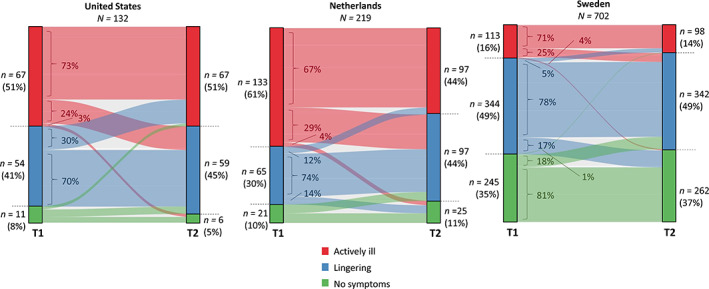
Participants (US n = 132; NL n = 219; SE n = 702) were mostly young and female with a history of anorexia nervosa (>60% in all three countries). Across countries, respondents reported impact of COVID-19 on ED symptoms at both time points, with improvement in US and NL at one-year follow-up, and stable but less impact on ED symptoms in SE. Furthermore, at one-year follow-up, roughly half of those in treatment reported reduced treatment access and quality, and the majority of the sample reported increased anxiety and depressive mood since the start of the pandemic.

DISCUSSION

Our findings suggest that the self-perceived impact of COVID-19 changed over time but remained concerning even one year after the start of the pandemic. Clinicians, community organizations, and policy makers are encouraged to address potentially changing treatment needs in the face of public health emergency events.

PUBLIC SIGNIFICANCE

Our findings suggest that the impact of COVID-19 on individuals with eating disorders decreased over time but remained concerning even one year after the start of the pandemic and that the impact differed across countries. Clinicians, community organizations, and policy makers are encouraged to incorporate this knowledge to address potentially changing treatment needs in the face of public health emergency events.

摘要

目的

本研究在美国、荷兰和瑞典评估了 COVID-19 大流行期间患有既往饮食障碍(ED)的个体的 ED 疾病状况、症状、治疗途径、焦虑和抑郁。

方法

参与者于 2020 年 4 月至 7 月(大流行早期)和一年后在线完成了调查。在一年的随访中,我们增加了一些问题,以评估自 COVID-19 大流行开始以来 ED 症状、治疗和焦虑/抑郁的变化。我们呈现了描述性统计数据,并评估了那些有活跃或持续 ED 的个体的 ED 症状、治疗和焦虑/抑郁的变化。

结果

参与者(美国 n=132;荷兰 n=219;瑞典 n=702)以年轻和女性为主,且既往有神经性厌食症病史(三国均超过 60%)。在所有三个国家,受访者都报告了 COVID-19 对 ED 症状的影响,且美国和荷兰在一年的随访中有所改善,而瑞典的 ED 症状则保持稳定但影响较小。此外,在一年的随访中,大约一半接受治疗的人报告治疗途径和质量下降,且大多数样本报告自大流行开始以来焦虑和抑郁情绪增加。

讨论

我们的研究结果表明,COVID-19 的自我感知影响随时间而变化,但即使在大流行开始一年后仍令人担忧。鼓励临床医生、社区组织和政策制定者在面对公共卫生紧急事件时解决潜在的不断变化的治疗需求。

意义

我们的研究结果表明,COVID-19 对饮食障碍患者的影响随时间推移而降低,但即使在大流行开始一年后仍令人担忧,且影响因国家而异。鼓励临床医生、社区组织和政策制定者了解这方面的知识,以便在面对公共卫生紧急事件时解决潜在的不断变化的治疗需求。
https://cdn.ncbi.nlm.nih.gov/pmc/blobs/caa6/9874791/3fbc4cbd5074/EAT-56-80-g001.jpg

相似文献

1
Longer-term impact of COVID-19 among individuals with self-reported eating disorders in the United States, the Netherlands, and Sweden.美国、荷兰和瑞典报告有饮食障碍个体中 COVID-19 的长期影响。
Int J Eat Disord. 2023 Jan;56(1):80-90. doi: 10.1002/eat.23824. Epub 2022 Oct 13.
2
Course and predictors of eating disorder symptoms, anxiety symptoms, and pandemic-related eating disorder concerns among adults with eating disorders during the first year of the COVID-19 pandemic.在 COVID-19 大流行的第一年期间,患有饮食障碍的成年人的饮食障碍症状、焦虑症状和与大流行相关的饮食障碍担忧的病程和预测因素。
Int J Eat Disord. 2023 Jan;56(1):151-168. doi: 10.1002/eat.23870. Epub 2022 Dec 12.
3
Early impact of COVID-19 on individuals with self-reported eating disorders: A survey of ~1,000 individuals in the United States and the Netherlands.COVID-19 对自述患有饮食失调症个体的早期影响:对美国和荷兰约 1000 人的调查。
Int J Eat Disord. 2020 Nov;53(11):1780-1790. doi: 10.1002/eat.23353. Epub 2020 Jul 28.
4
The impact of the COVID-19 pandemic on eating disorders: A systematic review.新冠疫情对进食障碍的影响:一项系统综述。
Int J Eat Disord. 2023 Jan;56(1):5-25. doi: 10.1002/eat.23704. Epub 2022 Apr 5.
5
The impact of the COVID-19 pandemic and associated public health response on people with eating disorder symptomatology: an Australian study.2019冠状病毒病大流行及相关公共卫生应对措施对有饮食失调症状者的影响:一项澳大利亚的研究。
J Eat Disord. 2022 Jan 17;10(1):9. doi: 10.1186/s40337-021-00527-0.
6
Longitudinal experiences and impact of the COVID-19 pandemic among people with past or current eating disorders in Sweden.瑞典过去或目前患有饮食失调症的人群中COVID-19大流行的纵向经历及影响。
Eat Disord. 2022 Nov-Dec;30(6):602-617. doi: 10.1080/10640266.2021.1985286. Epub 2021 Oct 11.
7
Perceptions and experiences with eating disorder treatment in the first year of COVID-19: A longitudinal qualitative analysis.在 COVID-19 第一年对饮食失调治疗的看法和体验:一项纵向定性分析。
Int J Eat Disord. 2023 Jan;56(1):247-256. doi: 10.1002/eat.23888. Epub 2022 Dec 27.
8
Eating disorders in the era of the COVID-19 pandemic.新冠肺炎疫情时期的饮食障碍。
Psychiatriki. 2022 Dec 7;33(4):267-270. doi: 10.22365/jpsych.2022.096. Epub 2022 Nov 17.
9
The impact of the COVID-19 pandemic on eating disorders in U.S. military veterans.新冠疫情对美国退伍军人饮食失调问题的影响。
Int J Eat Disord. 2023 Jan;56(1):108-117. doi: 10.1002/eat.23822. Epub 2022 Oct 14.
10
Review of the unprecedented impact of the COVID-19 pandemic on the occurrence of eating disorders.回顾 COVID-19 大流行对进食障碍发生的前所未有的影响。
Curr Opin Psychiatry. 2022 Nov 1;35(6):353-361. doi: 10.1097/YCO.0000000000000815. Epub 2022 Aug 5.

引用本文的文献

1
Impact of the COVID-19 Pandemic on the Incidence of Anorexia and Bulimia Nervosa in Dutch Primary Care.新冠疫情对荷兰初级医疗保健中神经性厌食症和神经性贪食症发病率的影响
Int J Eat Disord. 2025 Jun;58(6):1155-1164. doi: 10.1002/eat.24431. Epub 2025 Mar 26.
2
Anorexia nervosa during COVID-19: loss of personal control and alexithymia as important contributors to symptomatology in adolescent girls.COVID-19 期间的神经性厌食症:失去个人控制和述情障碍是青春期女孩症状的重要促成因素。
J Eat Disord. 2023 Oct 12;11(1):180. doi: 10.1186/s40337-023-00905-w.
3
The Impact of the First and Second Wave of the COVID-19 Pandemic on Eating Symptoms and Dysfunctional Eating Behaviours in the General Population: A Systematic Review and Meta-Analysis.

本文引用的文献

1
Effectiveness of an online self-help program, expert-patient support, and their combination for eating disorders: Results from a randomized controlled trial.在线自助计划、医患专家支持及其组合对进食障碍的有效性:一项随机对照试验的结果。
Int J Eat Disord. 2022 Oct;55(10):1361-1373. doi: 10.1002/eat.23785. Epub 2022 Jul 30.
2
Cost-effectiveness of three internet-based interventions for eating disorders: A randomized controlled trial.三种基于互联网的进食障碍干预措施的成本效益:一项随机对照试验。
Int J Eat Disord. 2022 Aug;55(8):1143-1155. doi: 10.1002/eat.23763. Epub 2022 Jun 23.
3
Psychological distress associated with the second COVID-19 wave: Prospective evidence from the UK Household Longitudinal Study.
新冠大流行第一波和第二波对一般人群进食症状和不良进食行为的影响:系统评价和荟萃分析。
Nutrients. 2023 Aug 17;15(16):3607. doi: 10.3390/nu15163607.
4
Trends in the effect of COVID-19 on consultations for persons with clinical and subclinical eating disorders.新型冠状病毒肺炎对临床及亚临床饮食失调患者诊疗影响的趋势
Biopsychosoc Med. 2023 Aug 9;17(1):29. doi: 10.1186/s13030-023-00285-2.
与第二波新冠疫情相关的心理困扰:来自英国家庭纵向研究的前瞻性证据。
J Affect Disord. 2022 Aug 1;310:274-278. doi: 10.1016/j.jad.2022.05.025. Epub 2022 May 11.
4
Policy stringency and mental health during the COVID-19 pandemic: a longitudinal analysis of data from 15 countries.政策严格程度与新冠大流行期间的心理健康:来自 15 个国家的纵向数据分析。
Lancet Public Health. 2022 May;7(5):e417-e426. doi: 10.1016/S2468-2667(22)00060-3. Epub 2022 Apr 21.
5
A systematic scoping review of research on COVID-19 impacts on eating disorders: A critical appraisal of the evidence and recommendations for the field.系统范围综述研究 COVID-19 对饮食失调的影响:对证据的批判性评估和对该领域的建议。
Int J Eat Disord. 2022 Jan;55(1):3-38. doi: 10.1002/eat.23640. Epub 2021 Nov 13.
6
COVID-19 Pandemic and Eating Disorders: What Can We Learn About Psychopathology and Treatment? A Systematic Review.COVID-19 大流行与进食障碍:我们能从精神病理学和治疗中学到什么?系统评价。
Curr Psychiatry Rep. 2021 Oct 21;23(12):83. doi: 10.1007/s11920-021-01294-0.
7
Long-Term Impact of Economic Downturn and Loneliness on Psychological Distress: Triple Crises of COVID-19 Pandemic.经济衰退与孤独对心理困扰的长期影响:新冠疫情的三重危机
J Clin Med. 2021 Oct 6;10(19):4596. doi: 10.3390/jcm10194596.
8
Global prevalence and burden of depressive and anxiety disorders in 204 countries and territories in 2020 due to the COVID-19 pandemic.2020 年 COVID-19 大流行期间 204 个国家和地区的抑郁和焦虑障碍的全球患病率和负担。
Lancet. 2021 Nov 6;398(10312):1700-1712. doi: 10.1016/S0140-6736(21)02143-7. Epub 2021 Oct 8.
9
Longitudinal experiences and impact of the COVID-19 pandemic among people with past or current eating disorders in Sweden.瑞典过去或目前患有饮食失调症的人群中COVID-19大流行的纵向经历及影响。
Eat Disord. 2022 Nov-Dec;30(6):602-617. doi: 10.1080/10640266.2021.1985286. Epub 2021 Oct 11.
10
Effects of COVID-19 lockdown on eating disorders and obesity: A systematic review and meta-analysis.2019冠状病毒病封锁措施对饮食失调和肥胖的影响:一项系统综述和荟萃分析
Eur Eat Disord Rev. 2021 Nov;29(6):826-841. doi: 10.1002/erv.2861. Epub 2021 Aug 30.