Yu Yonghui, Zhang Jingjie, Wang Jing, Wang Jing, Chai Jiake
China-Canada Joint Lab of Food Nutrition and Health (Beijing), Beijing Advanced Innovation Center for Food Nutrition and Human Health, Beijing Technology and Business University, Beijing 100048, China.
Institute of Food and Nutrition Development, Ministry of Agriculture and Rural Affairs, Beijing 100081, China.
Nutr Res Pract. 2022 Oct;16(5):589-603. doi: 10.4162/nrp.2022.16.5.589. Epub 2022 Apr 12.
BACKGROUND/OBJECTIVES: Previous studies have reported that protein supplementation contributes to the attenuation of inflammation. Serious trauma such as burn injury usually results in the excessive release of inflammatory factors and organs dysfunction. However, a few reports continued to focus on the function of protein ingestion in regulating burn-induced inflammation and organ dysfunction.
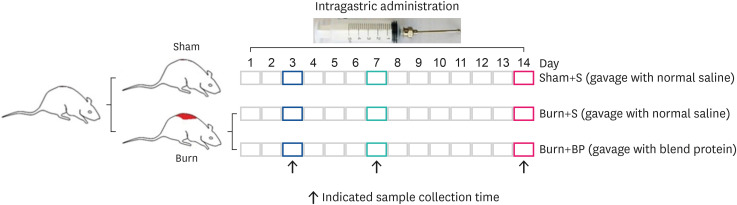
MATERIALS/METHODS: This study established the rat model of 30% total body surface area burn injury, and evaluated the function of blended protein (mixture of whey and soybean proteins). Blood routine examination, inflammatory factors, blood biochemistry, and immunohistochemical assays were employed to analyze the samples from different treatment groups.
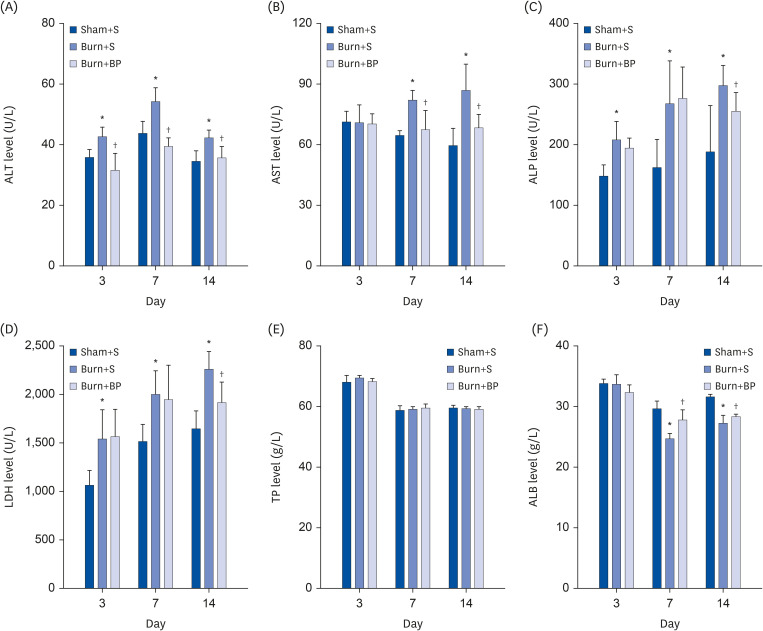
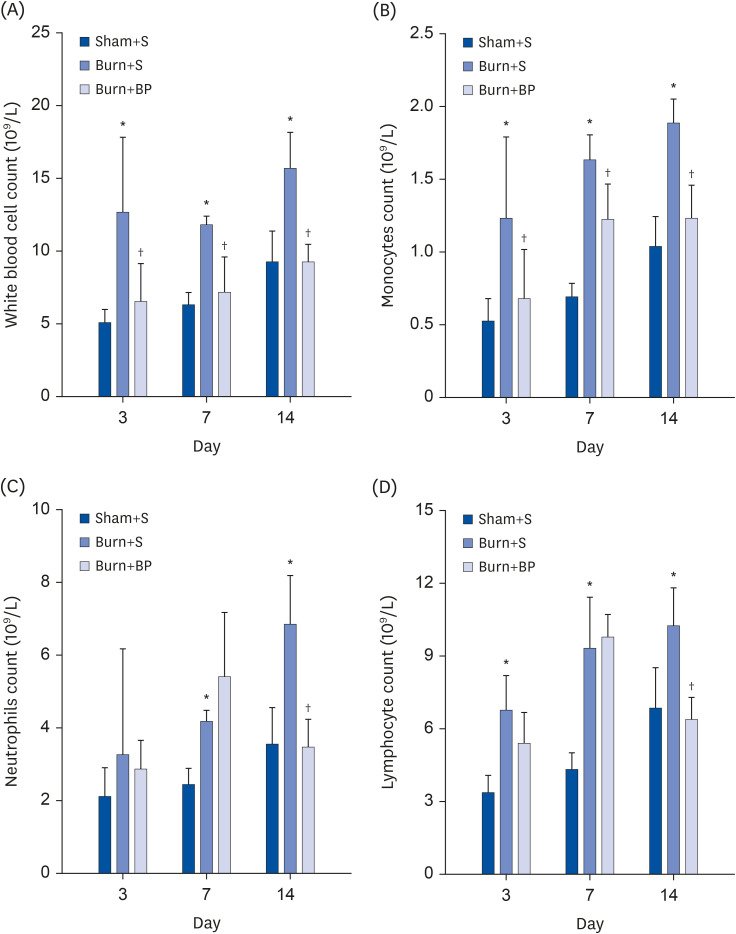
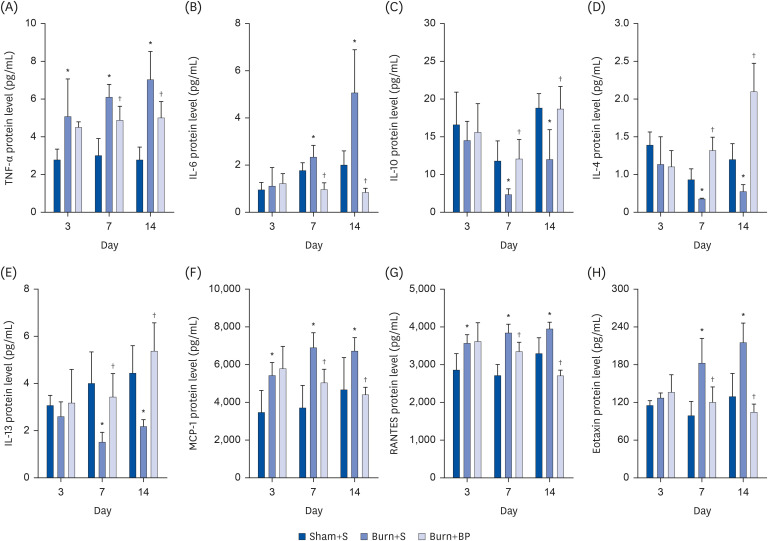
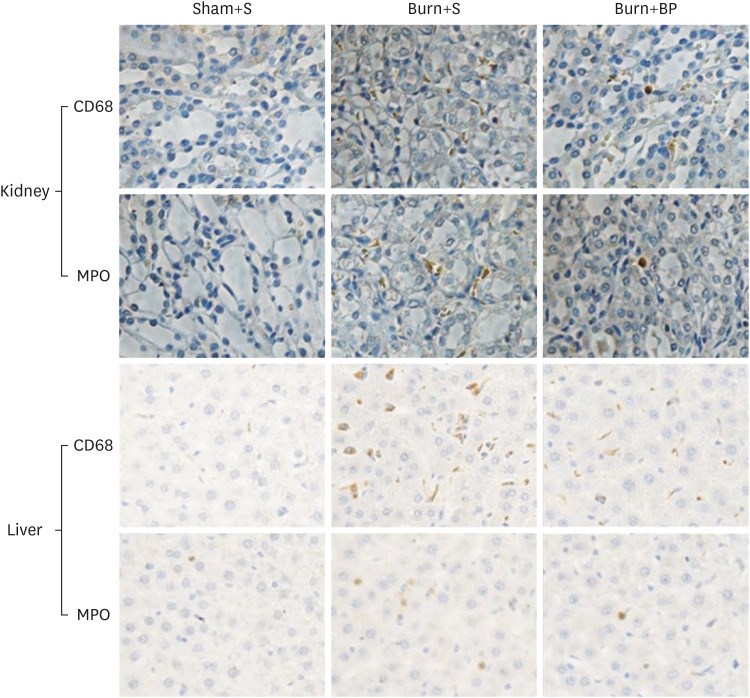
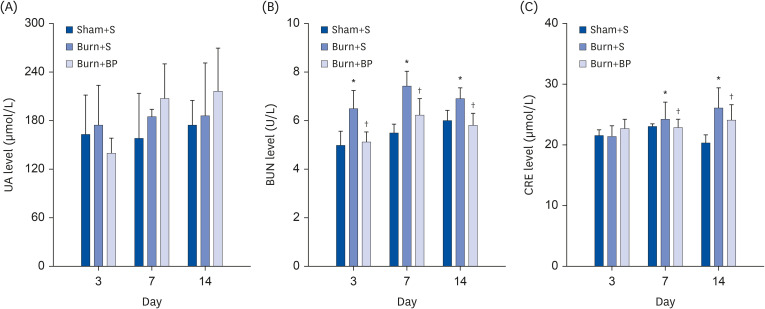
Our results indicated a decrease in the numbers of white blood cells, monocytes, and neutrophils in the burn injury group administered with the blended protein nutritional support (Burn+BP), as compared to the burn injury group administered normal saline supplementation (Burn+S). Expressions of the pro-inflammatory factors (tumor necrosis factor-α and interleukin-6 [IL-6]) and chemokines (macrophage chemoattractant protein-1, regulated upon activation normal T cell expressed and secreted factor, and C-C motif chemokine 11) were dramatically decreased, whereas anti-inflammatory factors (IL-4, IL-10, and IL-13) were significantly increased in the Burn+BP group. Kidney function related markers blood urea nitrogen and serum creatinine, and the liver function related markers alanine transaminase, aspartate aminotransferase, alkaline phosphatase, and lactate dehydrogenase were remarkably reduced, whereas albumin levels were elevated in the Burn+BP group as compared to levels obtained in the Burn+S group. Furthermore, inflammatory cells infiltration of the kidney and liver was also attenuated after burn injury administered with blended protein supplementation.
In summary, nutritional support with blended proteins dramatically attenuates the burn-induced inflammatory reaction and protects organ functions. We believe this is a new insight into a potential therapeutic strategy for nutritional support of burn patients.
背景/目的:既往研究报道蛋白质补充有助于减轻炎症。严重创伤如烧伤通常会导致炎症因子过度释放和器官功能障碍。然而,少数报道仍聚焦于蛋白质摄入在调节烧伤诱导的炎症和器官功能障碍中的作用。
材料/方法:本研究建立了30%体表面积烧伤的大鼠模型,并评估了混合蛋白(乳清蛋白和大豆蛋白的混合物)的功能。采用血常规检查、炎症因子检测、血液生化检测和免疫组化分析等方法对不同治疗组的样本进行分析。
我们的结果表明,与给予生理盐水补充的烧伤组(Burn+S)相比,给予混合蛋白营养支持的烧伤组(Burn+BP)中白细胞、单核细胞和中性粒细胞数量减少。促炎因子(肿瘤坏死因子-α和白细胞介素-6 [IL-6])和趋化因子(巨噬细胞趋化蛋白-1、活化正常T细胞表达和分泌因子以及C-C基序趋化因子11)的表达显著降低,而抗炎因子(IL-4、IL-10和IL-13)在Burn+BP组中显著增加。与Burn+S组相比,Burn+BP组中肾功能相关指标血尿素氮和血清肌酐以及肝功能相关指标谷丙转氨酶、谷草转氨酶、碱性磷酸酶和乳酸脱氢酶显著降低,而白蛋白水平升高。此外,给予混合蛋白补充后,烧伤后肾脏和肝脏的炎症细胞浸润也减轻。
总之,混合蛋白营养支持显著减轻烧伤诱导的炎症反应并保护器官功能。我们认为这为烧伤患者营养支持的潜在治疗策略提供了新的见解。