Department of Veterinary Surgery, School of Veterinary Medicine, Shiraz University, Shiraz, Iran.
Department of Veterinary Surgery and Radiology, School of Veterinary Medicine, Shiraz University, Shiraz, Iran.
Vet Med Sci. 2022 Nov;8(6):2726-2737. doi: 10.1002/vms3.961. Epub 2022 Oct 14.
The skin has several functions, one of the most important of which is to protect the internal organs from external damage and the entry of germs. Since skin and wound healing is one of the mostly concerned issues worldwide, the development of wound healing remedies is one of the main fields in modern medical research.
To evaluate the effect of the hydroalcoholic extract of Cumin carvi L. seed as one of the traditional medicinal plants used for wound healing through an in vivo model.
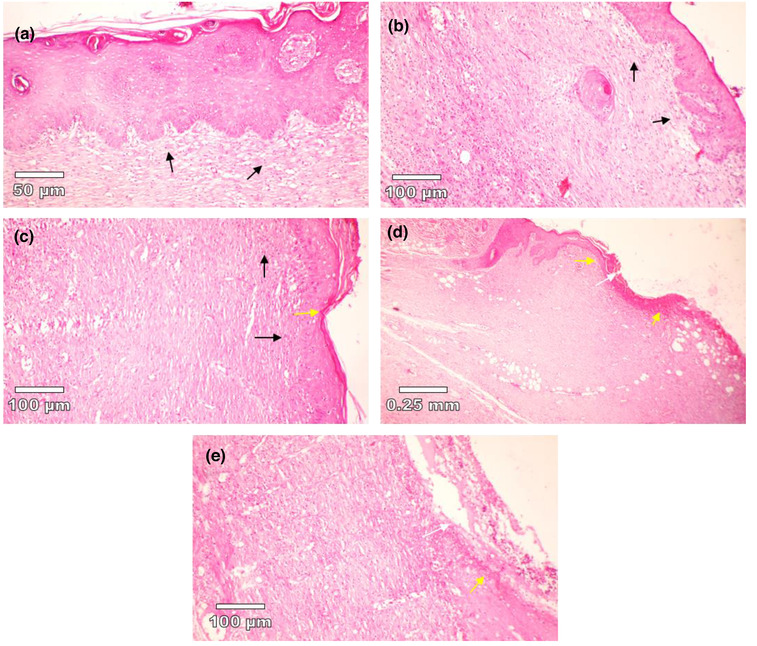
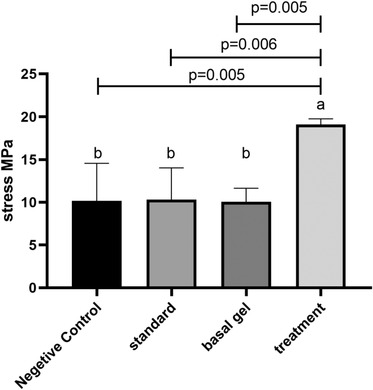
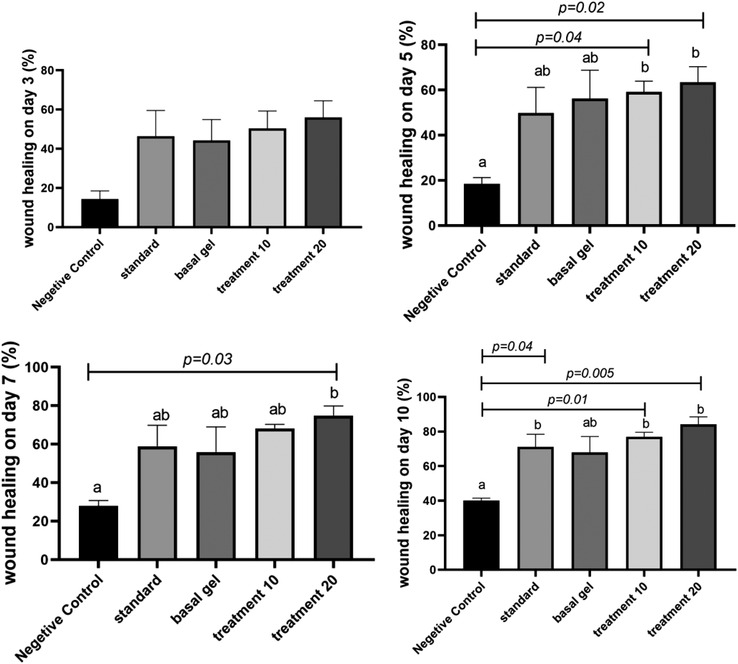
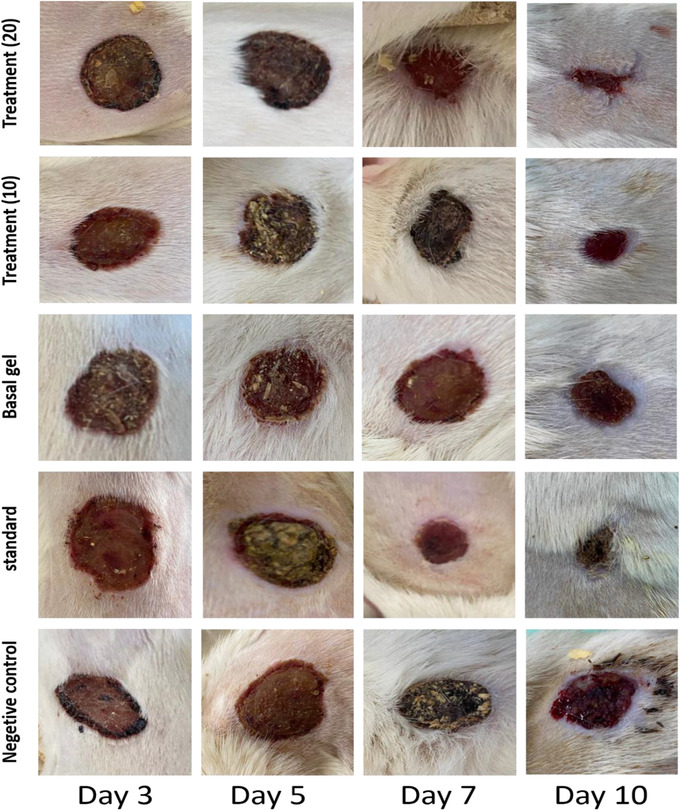
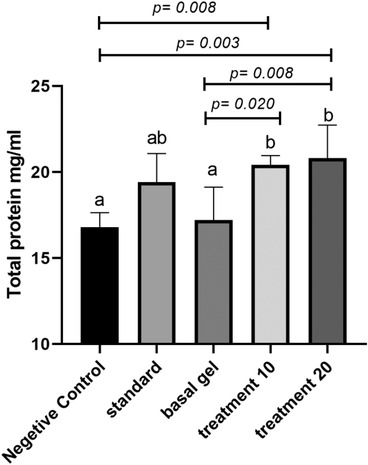
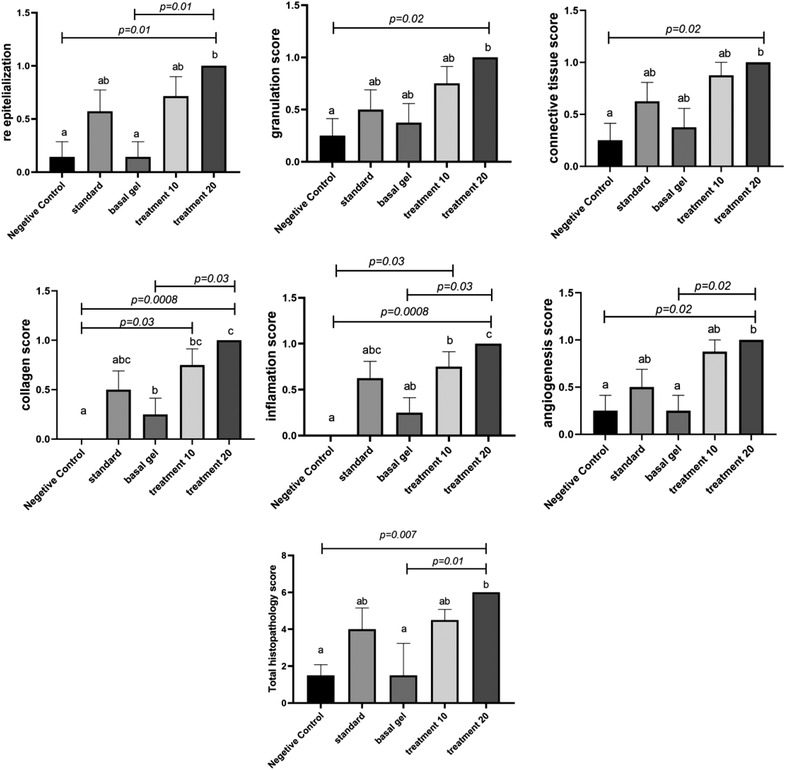
Wide circular skin wounds (2 × 2 cm) were created on the dorsal area of 50 Sprague-Dawley male rats following ethical principles. The animals were divided into five groups including no treatment, base gel, tetracycline treatment, 10% v/v hydroalcoholic extract of Cumin carvi L. seed treatment and 20% v/v hydroalcoholic extract of Cumin carvi L. seed treatment group. Treatment was performed within 20 days. On days 1, 3, 5, 7 and 10, photographs were taken, and the percentage of wound healing was calculated. Also, on the 10th day, the skin area was sampled for histopathology and on the 20 day, the skin was sampled for biomechanical and total protein assessments.
The results of wound healing percentage showed that from day 3 onwards, there was a significant improvement between the group treated with 20% v/v hydroalcoholic extract of Cumin carvi L. and the negative control and basal gel groups (p < 0.05). According to histopathological and total protein content evaluations, the amount of collagen production and inflammation score in the Cumin carvi-treated groups confirmed the healing process compared to other groups.
According to the results of this project, 20% v/v ethanolic extract of Cumin carvi L. has potential therapeutic effects in the treatment of skin wounds. Wounds are one of the health concerns, and the economic burden of wound care and healing has continued to increase over the past years. The healing effects of C. carvi. ethanolic extract on the wound were investigated. The histopathological and macroscopical evaluations, as well as total protein content, were measured to investigate its wound healing properties.
皮肤具有多种功能,其中最重要的功能之一是保护内部器官免受外部伤害和细菌入侵。由于皮肤和伤口愈合是全球最受关注的问题之一,因此开发伤口愈合疗法是现代医学研究的主要领域之一。
通过体内模型评估孜然芹种子水醇提取物作为用于伤口愈合的传统药用植物之一的效果。
按照伦理原则,在 50 只 Sprague-Dawley 雄性大鼠的背部区域创建宽圆形皮肤伤口(2×2cm)。将动物分为 5 组,包括无治疗组、基础凝胶组、四环素治疗组、10%v/v 孜然芹种子水醇提取物治疗组和 20%v/v 孜然芹种子水醇提取物治疗组。在 20 天内进行治疗。在第 1、3、5、7 和 10 天拍摄照片,并计算伤口愈合百分比。此外,在第 10 天取样皮肤区域进行组织病理学检查,在第 20 天取样皮肤进行生物力学和总蛋白评估。
伤口愈合百分比的结果表明,从第 3 天开始,20%v/v 水醇孜然芹种子提取物组与阴性对照组和基础凝胶组之间的伤口愈合有显著改善(p<0.05)。根据组织病理学和总蛋白含量评估,与其他组相比,孜然芹处理组的胶原蛋白产生量和炎症评分证实了愈合过程。
根据本项目的结果,20%v/v 孜然芹 L.乙醇提取物在皮肤伤口治疗中具有潜在的治疗效果。伤口是健康关注之一,过去几年伤口护理和愈合的经济负担持续增加。研究了 C. carvi.乙醇提取物对伤口的愈合作用。测量了组织病理学和宏观评估以及总蛋白含量,以研究其伤口愈合特性。