Thongsepee Nattaya, Martviset Pongsakorn, Chantree Pathanin, Sornchuer Phornphan, Sangpairoj Kant, Prathaphan Parisa, Ruangtong Jittiporn, Hiranyachattada Siriphun
Department of Preclinical Science, Faculty of Medicine, Thammasat University, Pathum Thani, 12120, Thailand.
Research Unit in Nutraceuticals and Food Safety, Thammasat University, Pathum Thani, 12120, Thailand.
Heliyon. 2022 Oct 5;8(10):e10972. doi: 10.1016/j.heliyon.2022.e10972. eCollection 2022 Oct.
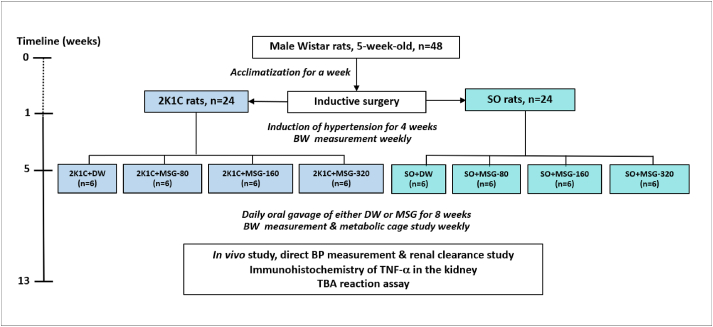
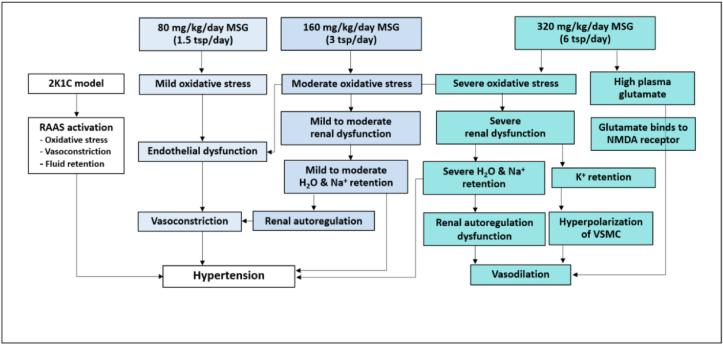
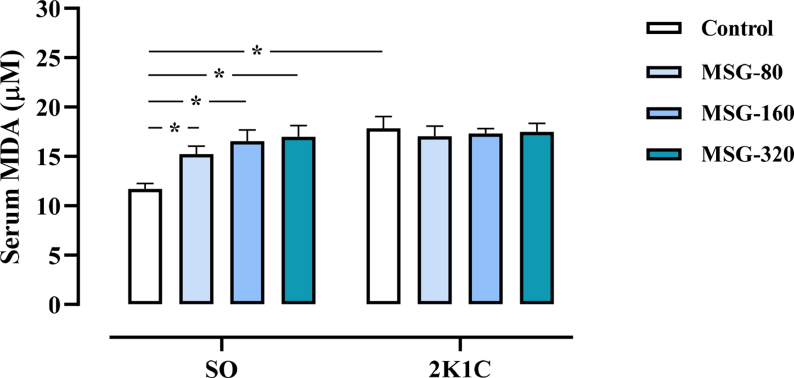
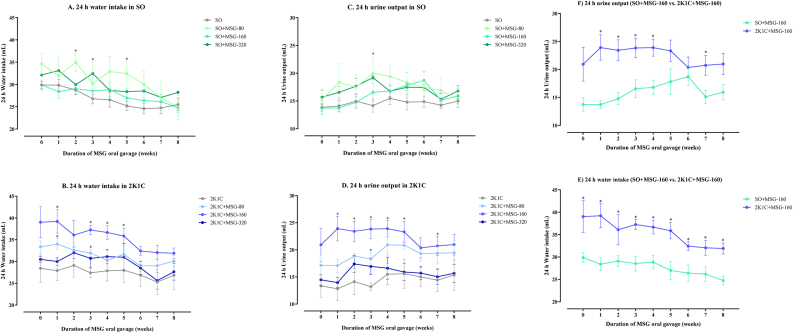
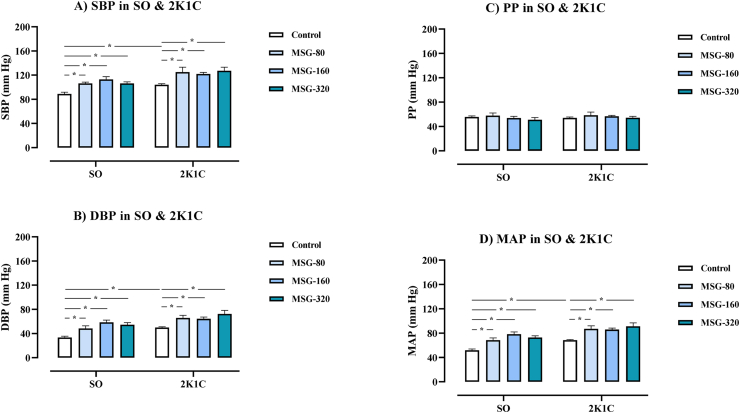
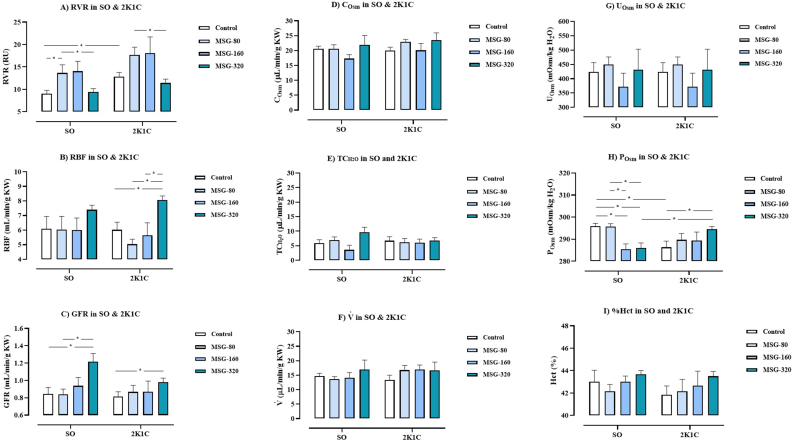
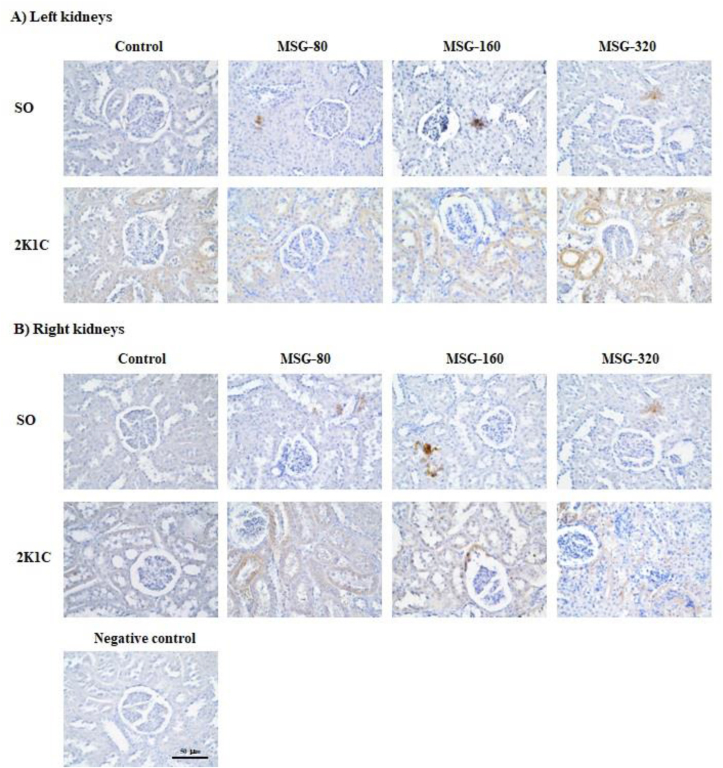
This study aimed to investigate the effects of monosodium glutamate (MSG) on the levels of arterial blood pressure (ABP) and renal excretory function. Male Wistar rats were divided into 2 groups (n = 24 each) namely sham operation (SO) and 2-kidneys-1-clip (2K1C) to develop the normotensive and hypertensive model, respectively. Four weeks after the operation, each group of rats were further divided into 4 subgroups (n = 6 each) which were orally administered of either distilled water or MSG at the doses of 80, 160, or 320 mg/kg BW/day once a day for 8 weeks. The body weight, the 24-hour water intake, and the 24-hour urine output were recorded weekly. Then, each rat was anesthetized and the ABP was measured via carotid artery. The renal excretory function was examined by using the clearance technique to measure the levels of the glomerular filtration rate and the renal blood flow. The levels of serum malondialdehyde (MDA) as a marker of oxidative stress were analyzed. The expression of tumor necrosis factor alpha (TNF-α) in the kidneys was also investigated using immunohistochemistry. It was found that all doses of MSG significantly increased the ABP in both SO and 2K1C groups. All doses of MSG significantly increased the serum MDA levels and the expression of TNF-α in the kidneys of the SO groups. Long-term intake of 320 mg/kg BW MSG significantly decreased the renal excretion of salt and water in both SO and 2K1C groups. As a whole, this study demonstrated that MSG consumption contributed to an increase in oxidative stress which could lead to alterations in the cardiovascular and renal function.
本研究旨在探讨味精(MSG)对动脉血压(ABP)水平和肾脏排泄功能的影响。将雄性Wistar大鼠分为2组(每组n = 24),即假手术组(SO)和二肾一夹组(2K1C),分别建立正常血压和高血压模型。手术后4周,每组大鼠进一步分为4个亚组(每组n = 6),分别口服蒸馏水或剂量为80、160或320 mg/kg体重/天的味精,每天1次,持续8周。每周记录体重、24小时饮水量和24小时尿量。然后,将每只大鼠麻醉,通过颈动脉测量ABP。采用清除技术检测肾小球滤过率和肾血流量水平,以检查肾脏排泄功能。分析血清丙二醛(MDA)水平作为氧化应激标志物。还采用免疫组织化学法研究肾脏中肿瘤坏死因子α(TNF-α)的表达。结果发现,所有剂量的味精均显著升高了SO组和2K1C组的ABP。所有剂量的味精均显著升高了SO组大鼠血清MDA水平和肾脏中TNF-α的表达。长期摄入320 mg/kg体重的味精显著降低了SO组和2K1C组大鼠的盐和水的肾脏排泄量。总体而言,本研究表明,食用味精会导致氧化应激增加,进而可能导致心血管和肾脏功能改变。