Scorr Laura M, Cho Hyun Joo, Kilic-Berkmen Gamze, McKay J Lucas, Hallett Mark, Klein Christine, Baumer Tobias, Berman Brian D, Feuerstein Jeanne S, Perlmutter Joel S, Berardelli Alfredo, Ferrazzano Gina, Wagle-Shukla Aparna, Malaty Irene A, Jankovic Joseph, Bellows Steven T, Barbano Richard L, Vidailhet Marie, Roze Emmanuel, Bonnet Cecilia, Mahajan Abhimanyu, LeDoux Mark S, Fung Victor S C, Chang Florence C F, Defazio Giovanni, Ercoli Tomaso, Factor Stewart, Wojno Ted, Jinnah H A
Department of Neurology, School of Medicine, Emory University, Atlanta, GA, United States.
Human Motor Control Section, National Institute of Neurological Disorders and Stroke, National Institutes of Health, Bethesda, MD, United States.
Dystonia. 2022;1. doi: 10.3389/dyst.2022.10359. Epub 2022 May 16.
Blepharospasm is a type of dystonia where the diagnosis is often delayed because its varied clinical manifestations are not well recognized. The purpose of this study was to provide a comprehensive picture of its clinical features including presenting features, motor features, and non-motor features.
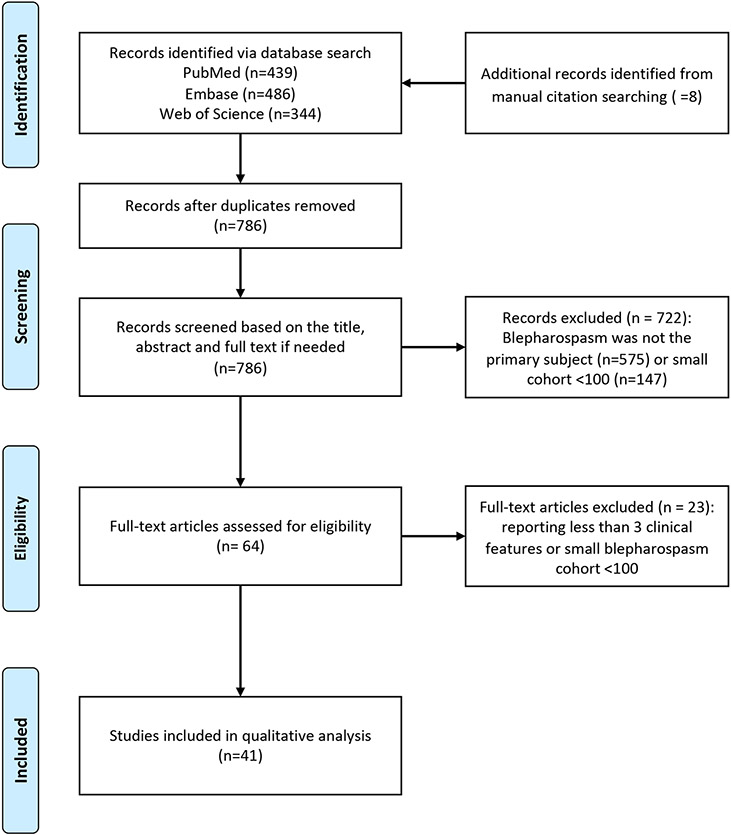
This was a two-part study. The first part involved a systematic literature review that summarized clinical features for 10,324 cases taken from 41 prior reports. The second part involved a summary of clinical features for 884 cases enrolled in a large multicenter cohort collected by the Dystonia Coalition investigators, along with an analysis of the factors that contribute to the spread of dystonia beyond the periocular region.
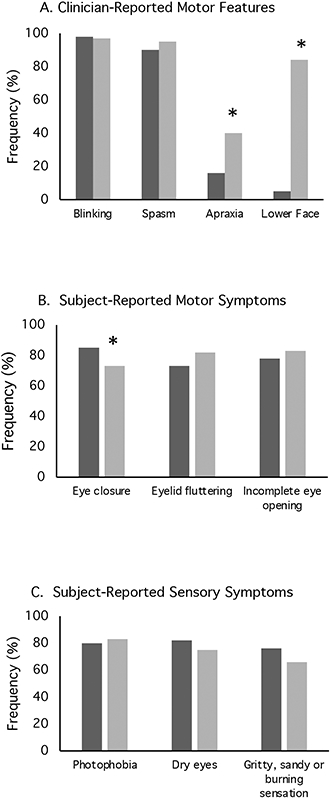
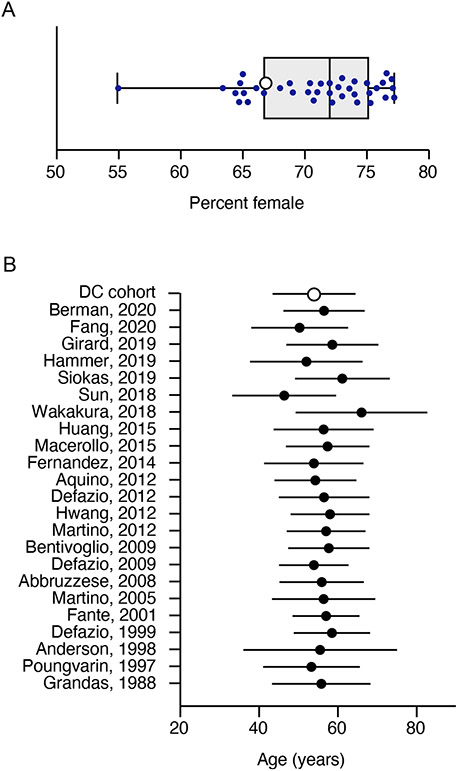
For cases in the literature and the Dystonia Coalition, blepharospasm emerged in the 50s and was more frequent in women. Many presented with non-specific motor symptoms such as increased blinking (51.9%) or non-motor sensory features such as eye soreness or pain (38.7%), photophobia (35.5%), or dry eyes (10.7%). Non-motor psychiatric features were also common including anxiety disorders (34-40%) and depression (21-24%). Among cases presenting with blepharospasm in the Dystonia Coalition cohort, 61% experienced spread of dystonia to other regions, most commonly the oromandibular region and neck. Features associated with spread included severity of blepharospasm, family history of dystonia, depression, and anxiety.
This study provides a comprehensive summary of motor and non-motor features of blepharospasm, along with novel insights into factors that may be responsible for its poor diagnostic recognition and natural history.
眼睑痉挛是肌张力障碍的一种类型,由于其多样的临床表现未得到充分认识,诊断往往延迟。本研究的目的是全面描述其临床特征,包括起病特征、运动特征和非运动特征。
本研究分为两部分。第一部分是系统的文献综述,总结了从41篇既往报告中选取的10324例病例的临床特征。第二部分总结了肌张力障碍联盟研究人员收集的一个大型多中心队列中884例病例的临床特征,并分析了导致肌张力障碍蔓延至眼周区域以外的因素。
对于文献中的病例和肌张力障碍联盟的病例,眼睑痉挛多在50多岁出现,女性更为常见。许多患者表现出非特异性运动症状,如眨眼增多(51.9%),或非运动性感觉特征,如眼痛或疼痛(38.7%)、畏光(35.5%)或干眼(10.7%)。非运动性精神特征也很常见,包括焦虑症(34 - 40%)和抑郁症(21 - 24%)。在肌张力障碍联盟队列中出现眼睑痉挛的病例中,61%的患者肌张力障碍蔓延至其他区域,最常见的是口下颌区域和颈部。与蔓延相关的特征包括眼睑痉挛的严重程度、肌张力障碍家族史、抑郁症和焦虑症。
本研究全面总结了眼睑痉挛的运动和非运动特征,以及对可能导致其诊断识别不佳和自然病史的因素的新见解。