ZIK plasmatis, Leibniz Institute for Plasma Science and Technology (INP), Greifswald, Germany.
Department of General, Thoracic, Vascular, and Visceral Surgery, Greifswald University Medical Center, Greifswald, Germany.
Front Immunol. 2022 Sep 29;13:1006064. doi: 10.3389/fimmu.2022.1006064. eCollection 2022.
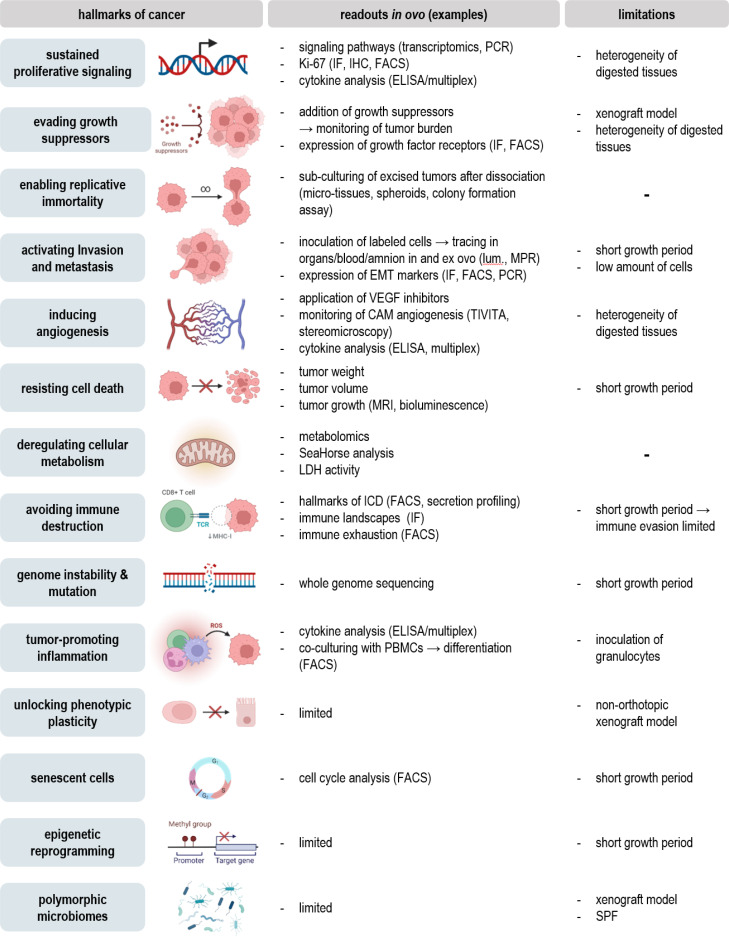
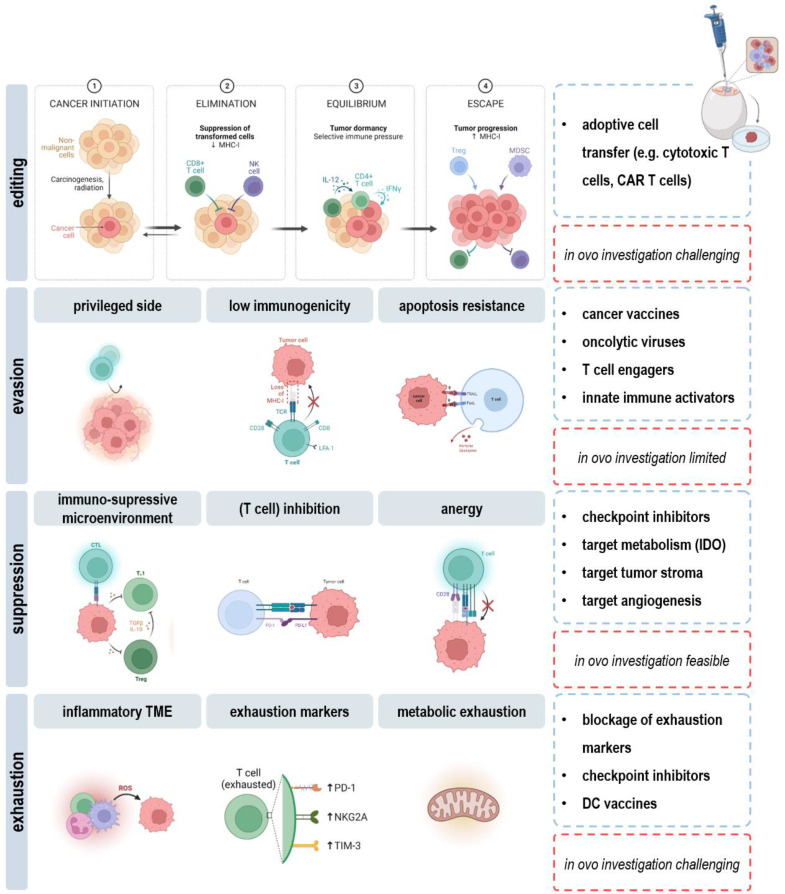
Considering cancer not only as malignant cells on their own but as a complex disease in which tumor cells interact and communicate with their microenvironment has motivated the establishment of clinically relevant 3D models in past years. Technological advances gave rise to novel bioengineered models, improved organoid systems, and microfabrication approaches, increasing scientific importance in preclinical research. Notwithstanding, mammalian models remain closest to mimic the patient's situation but are limited by cost, time, and ethical constraints. Herein, the model bridges the gap as an advanced model for basic and translational cancer research without the need for ethical approval. With the avian embryo being a naturally immunodeficient host, tumor cells and primary tissues can be engrafted on the vascularized chorioallantoic membrane (CAM) with high efficiencies regardless of species-specific restrictions. The extraembryonic membranes are connected to the embryo through a continuous circulatory system, readily accessible for manipulation or longitudinal monitoring of tumor growth, metastasis, angiogenesis, and matrix remodeling. However, its applicability in immunoncological research is largely underexplored. Dual engrafting of malignant and immune cells could provide a platform to study tumor-immune cell interactions in a complex, heterogenic and dynamic microenvironment with high reproducibility. With some caveats to keep in mind, versatile methods for and monitoring of cellular and molecular dynamics already established are applicable alike. In this view, the present review aims to emphasize and discuss opportunities and limitations of the chicken embryo model for pre-clinical research in cancer and cancer immunology.
考虑到癌症不仅是自身的恶性细胞,而且是一种肿瘤细胞与其微环境相互作用和交流的复杂疾病,这促使近年来建立了具有临床相关性的 3D 模型。技术进步催生了新型的生物工程模型、改进的类器官系统和微制造方法,这使得临床前研究的科学意义更加重大。尽管如此,哺乳动物模型仍然最接近模拟患者的情况,但受到成本、时间和伦理限制的限制。在此,该模型作为一种无需伦理批准即可进行基础和转化癌症研究的先进模型,弥补了这一空白。由于禽类胚胎是天然免疫缺陷宿主,肿瘤细胞和原代组织可以高效地种植在血管化的尿囊膜(CAM)上,而不受物种特异性限制。胚胎外膜通过连续的循环系统与胚胎相连,便于进行操作或对肿瘤生长、转移、血管生成和基质重塑进行纵向监测。然而,其在免疫肿瘤学研究中的应用在很大程度上尚未得到探索。恶性和免疫细胞的双重植入可以为研究肿瘤-免疫细胞相互作用提供一个平台,该平台具有复杂、异质和动态的微环境,具有高度的可重复性。尽管存在一些需要注意的问题,但已经建立了适用于细胞和分子动力学的 和 监测的多种方法,同样适用于该模型。有鉴于此,本综述旨在强调和讨论鸡胚模型在癌症和癌症免疫学临床前研究中的机遇和局限性。