Division of Computational Biomedicine, Boston University School of Medicine, Boston, MA, United States.
Bioinformatics Program, Boston University, Boston, MA, United States.
Front Immunol. 2022 Sep 28;13:1011166. doi: 10.3389/fimmu.2022.1011166. eCollection 2022.
Most individuals exposed to (Mtb) develop latent tuberculosis infection (LTBI) and remain at risk for progressing to active tuberculosis disease (TB). Malnutrition is an important risk factor driving progression from LTBI to TB. However, the performance of blood-based TB risk signatures in malnourished individuals with LTBI remains unexplored. The aim of this study was to determine if malnourished and control individuals had differences in gene expression, immune pathways and TB risk signatures.
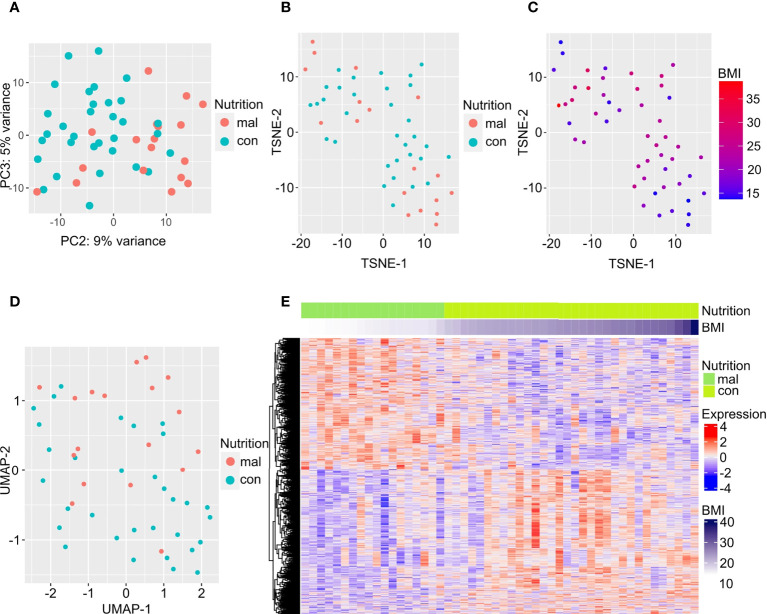
We utilized data from 50 tuberculin skin test positive household contacts of persons with TB - 18 malnourished participants (body mass index [BMI] < 18.5 kg/m2) and 32 controls (individuals with BMI ≥ 18.5 kg/m2). Whole blood RNA-sequencing was conducted to identify differentially expressed genes (DEGs). Ingenuity Pathway Analysis was applied to the DEGs to identify top canonical pathways and gene regulators. Gene enrichment methods were then employed to score the performance of published gene signatures associated with progression from LTBI to TB.
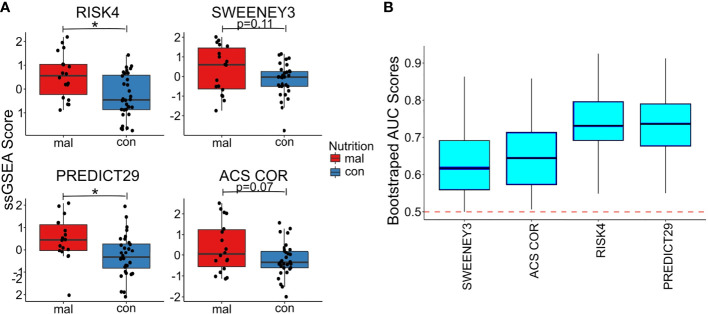
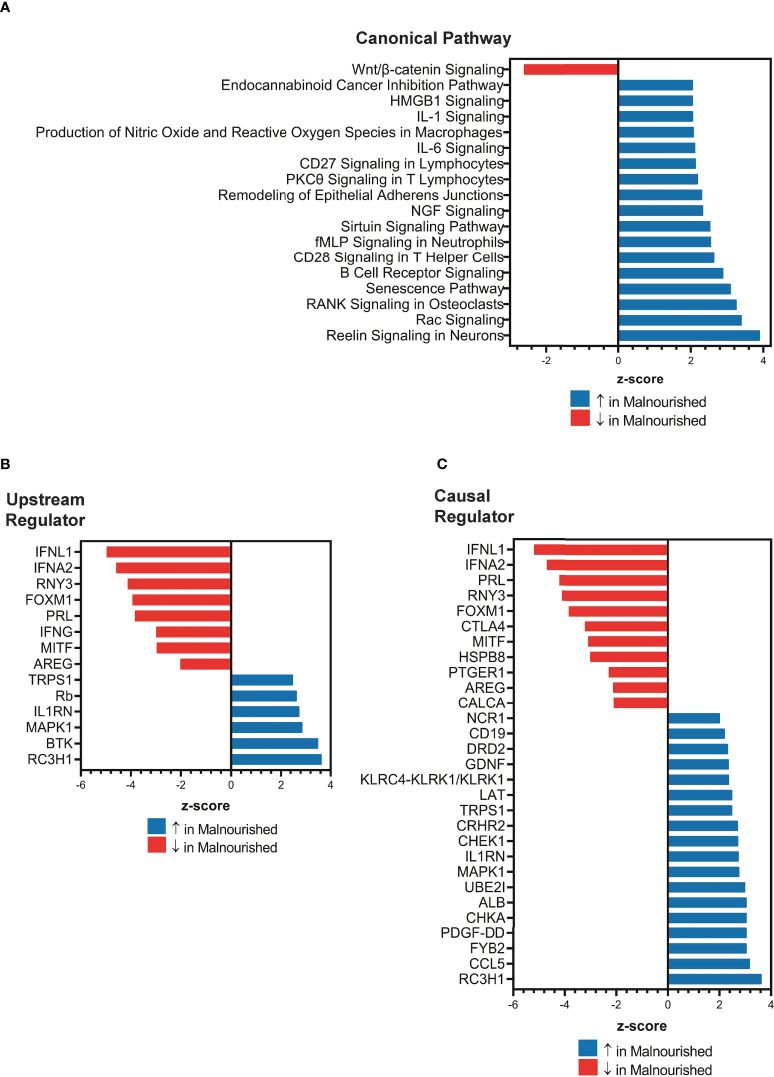
Malnourished individuals had increased activation of inflammatory pathways, including pathways involved in neutrophil activation, T-cell activation and proinflammatory IL-1 and IL-6 cytokine signaling. Consistent with known association of inflammatory pathway activation with progression to TB disease, we found significantly increased expression of the RISK4 (area under the curve [AUC] = 0.734) and PREDICT29 (AUC = 0.736) progression signatures in malnourished individuals.
Malnourished individuals display a peripheral immune response profile reflective of increased inflammation and a concomitant increased expression of risk signatures predicting progression to TB. With validation in prospective clinical cohorts, TB risk biomarkers have the potential to identify malnourished LTBI for targeted therapy.
大多数接触结核分枝杆菌(Mtb)的个体都会发展为潜伏性结核感染(LTBI),并仍然有发展为活动性结核病(TB)的风险。营养不良是导致 LTBI 向 TB 进展的一个重要危险因素。然而,基于血液的 TB 风险标志物在 LTBI 伴营养不良个体中的表现仍未得到探索。本研究旨在确定营养不良和对照组个体在基因表达、免疫途径和 TB 风险标志物方面是否存在差异。
我们利用了 50 名结核菌素皮肤试验阳性的 TB 患者的家庭接触者的数据——18 名营养不良参与者(体重指数 [BMI] < 18.5 kg/m2)和 32 名对照组(BMI≥18.5 kg/m2 的个体)。进行全血 RNA 测序以鉴定差异表达基因(DEGs)。应用 Ingenuity 通路分析对 DEGs 进行分析,以确定顶级经典通路和基因调控因子。然后采用基因富集方法对与 LTBI 向 TB 进展相关的已发表基因标志物的性能进行评分。
营养不良个体的炎症途径激活增加,包括涉及中性粒细胞激活、T 细胞激活和促炎细胞因子 IL-1 和 IL-6 信号的途径。与炎症途径激活与向 TB 疾病进展的已知关联一致,我们发现营养不良个体 RISK4(曲线下面积 [AUC] = 0.734)和 PREDICT29(AUC = 0.736)进展标志物的表达显著增加。
营养不良个体表现出反映炎症增加的外周免疫反应特征,同时表达预测向 TB 进展的风险标志物增加。在前瞻性临床队列中进行验证后,TB 风险生物标志物有可能识别出营养不良的 LTBI 患者,以进行靶向治疗。