Rose Nadia, Chandra Mahesh, Nishanth Chris C, Srinivasan Rangalakshmi
Department of Anaesthesia, Rajarajeshwari Medical College and Hospital, Bengaluru, Karnataka, India.
Anesth Essays Res. 2022 Jan-Mar;16(1):54-59. doi: 10.4103/aer.aer_9_22. Epub 2022 Jun 27.
Induction of general anesthesia is often associated with hypotension and is a common scenario faced by anesthesiologists. Intraoperative hypotension can have detrimental effects and cause various adverse effects leading to an extended hospital stay. Patients' preinduction volume status can have an effect on postinduction blood pressure. Ultrasonography is a useful tool for measuring intravascular volume status. We studied the ability of ultrasonographic measurement of subclavian vein (SCV) and inferior vena cava (IVC) diameter, collapsibility index (CI) to predict hypotension after induction of general anesthesia.
We included 120 patients in our study. SCV measurements during spontaneous and deep inspiration and IVC measurements were taken before induction and postinduction blood pressure was monitored. Patients with mean arterial blood pressure <60 mmHg or with a 30% decrease from baseline were considered to be having hypotension.
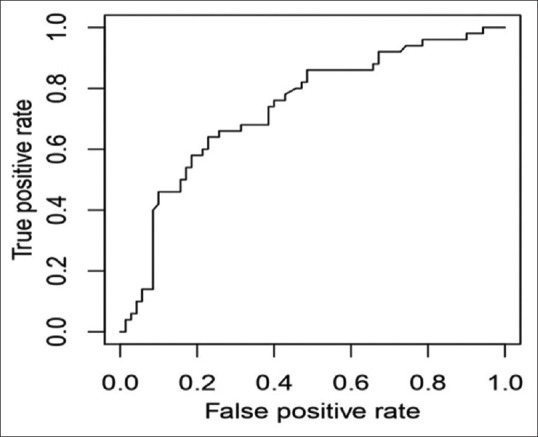
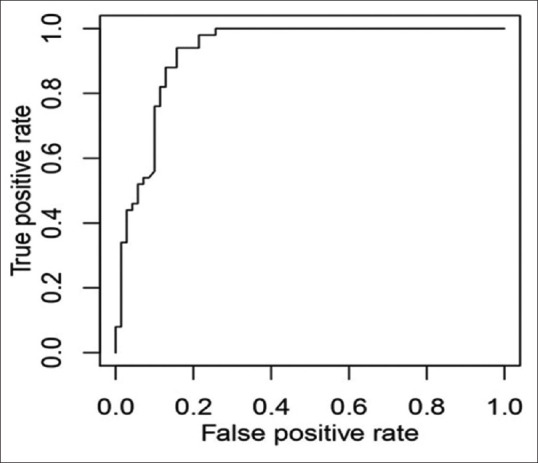
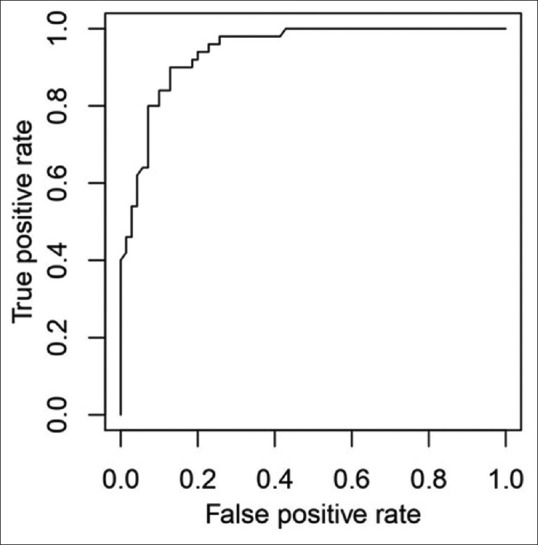
The CI of IVC with a cutoff 37% showed sensitivity of 94% and specificity of 84% which was statistically significant. The CI of 36% of SCV during deep breathing was found to have high sensitivity and specificity of 90% and 87%.
Our study in spontaneously breathing preoperative patients shows that SCV CI in deep breathing and IVC CI is very sensitive and reliable in predicting postinduction hypotension. Bedside ultrasound measurements can be easily done to obtain valuable information to recognize patients who could be at risk from postinduction hypotension.
全身麻醉诱导常伴有低血压,这是麻醉医生常见的情况。术中低血压可能产生有害影响,并导致各种不良反应,从而延长住院时间。患者诱导前的容量状态会对诱导后的血压产生影响。超声检查是测量血管内容量状态的有用工具。我们研究了超声测量锁骨下静脉(SCV)和下腔静脉(IVC)直径、塌陷指数(CI)预测全身麻醉诱导后低血压的能力。
我们的研究纳入了120例患者。在自主呼吸和深吸气时测量SCV,并在诱导前测量IVC,同时监测诱导后的血压。平均动脉血压<60 mmHg或较基线下降30%的患者被认为发生了低血压。
IVC的CI以37%为临界值时,敏感性为94%,特异性为84%,具有统计学意义。深吸气时SCV的CI为36%时,敏感性和特异性较高,分别为90%和87%。
我们对术前自主呼吸患者的研究表明,深吸气时SCV的CI和IVC的CI在预测诱导后低血压方面非常敏感且可靠。床边超声测量可轻松完成,以获取有价值的信息,识别可能有诱导后低血压风险的患者。