Senckenberg Institute of Neurooncology, Goethe University, Frankfurt, Germany.
German Cancer Consortium (DKTK), partner site Frankfurt/Mainz, Frankfurt, Germany.
Oncoimmunology. 2022 Oct 11;11(1):2127508. doi: 10.1080/2162402X.2022.2127508. eCollection 2022.
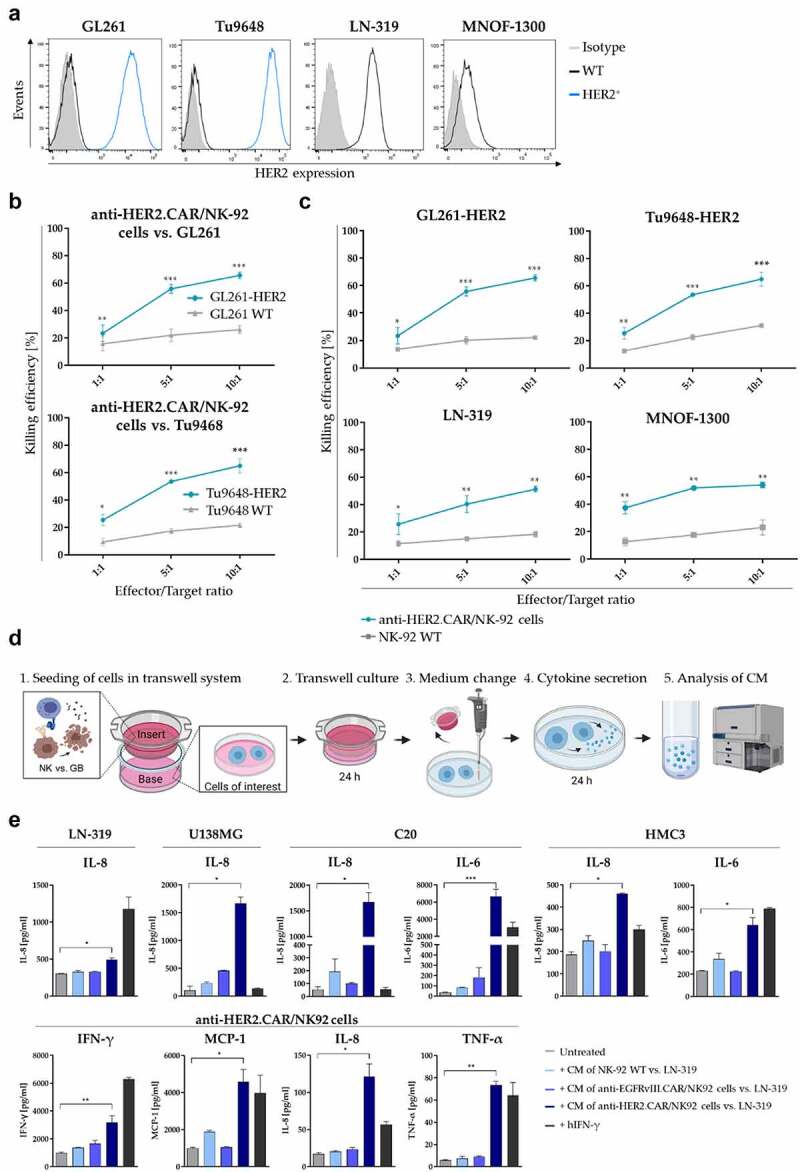
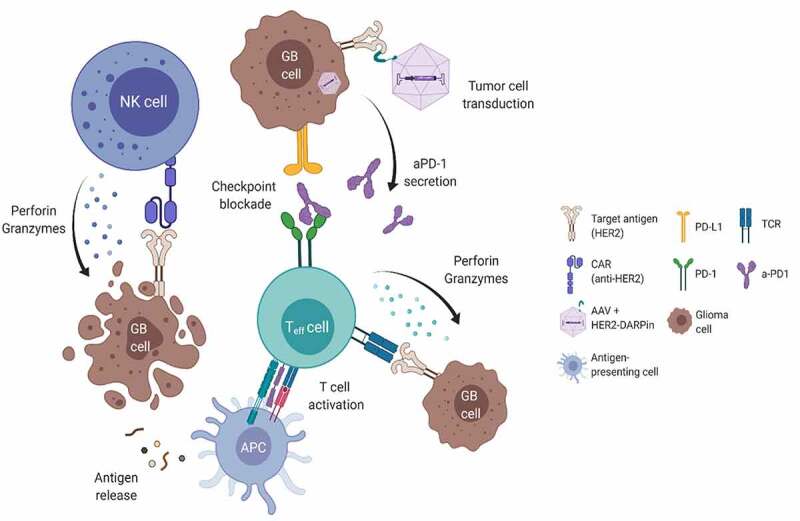
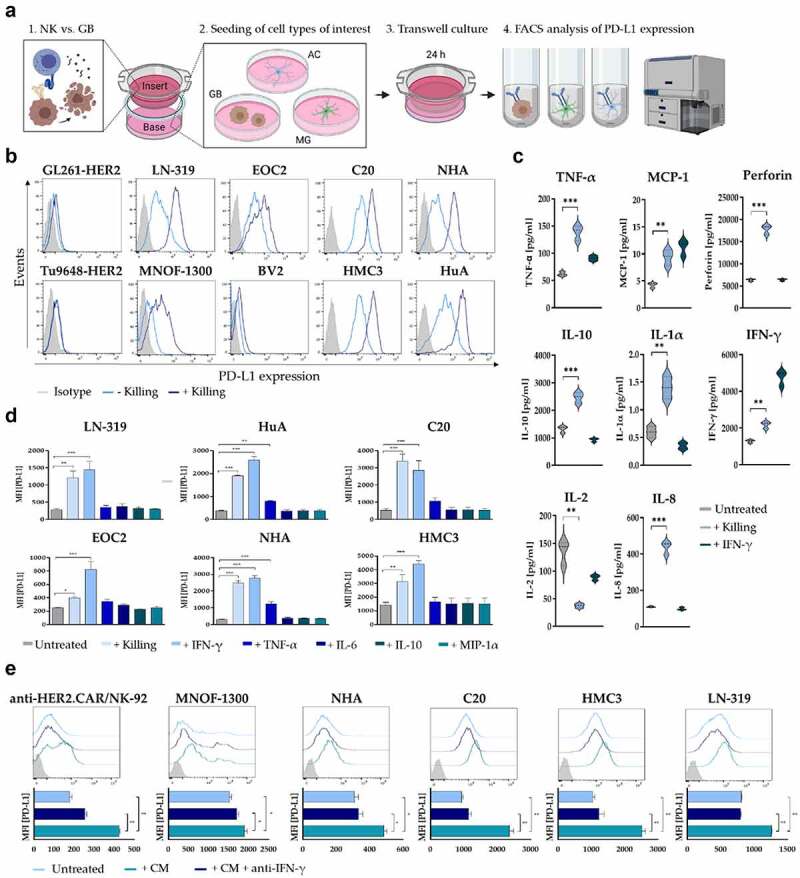
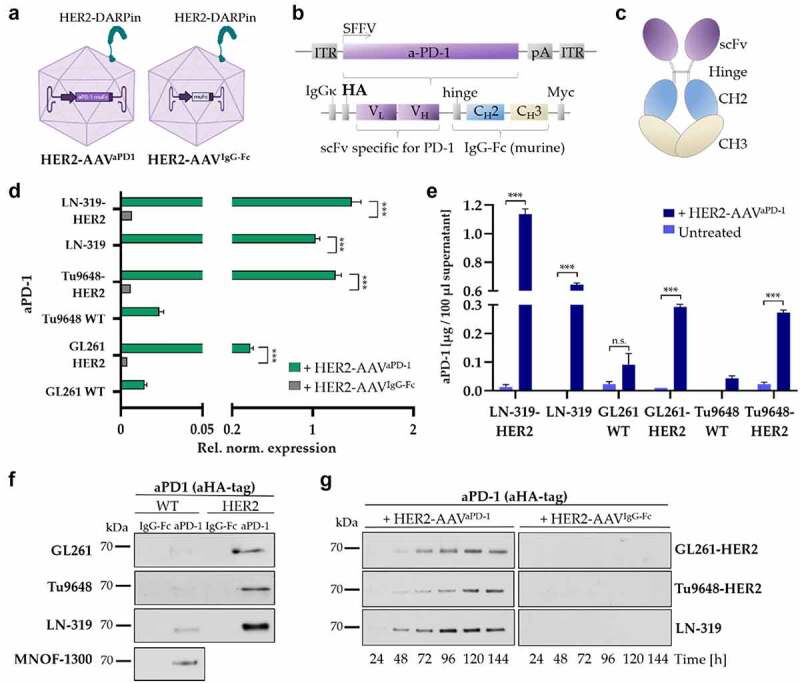
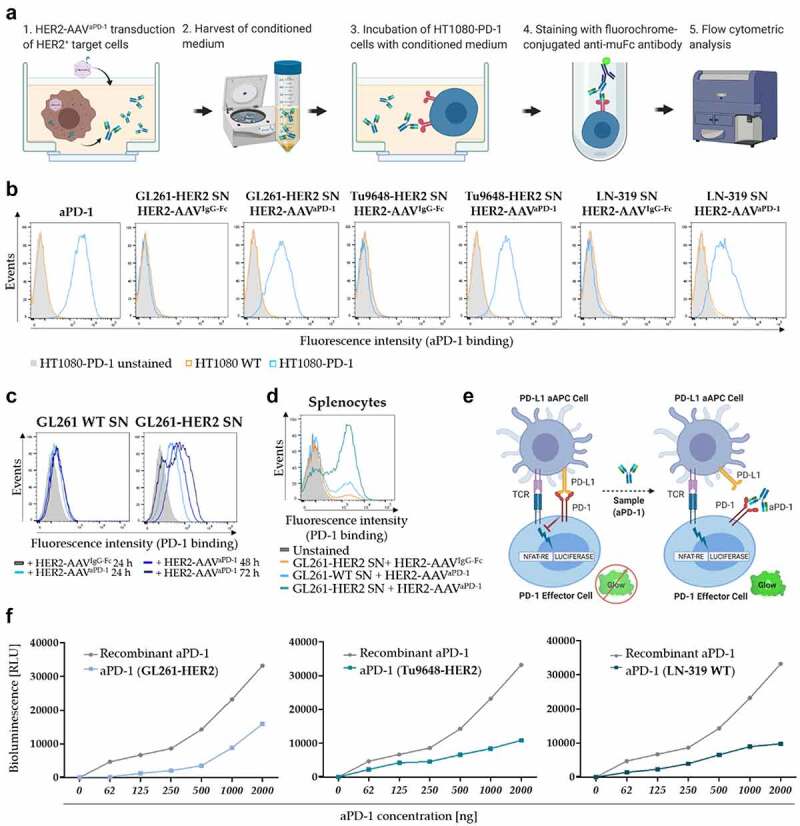
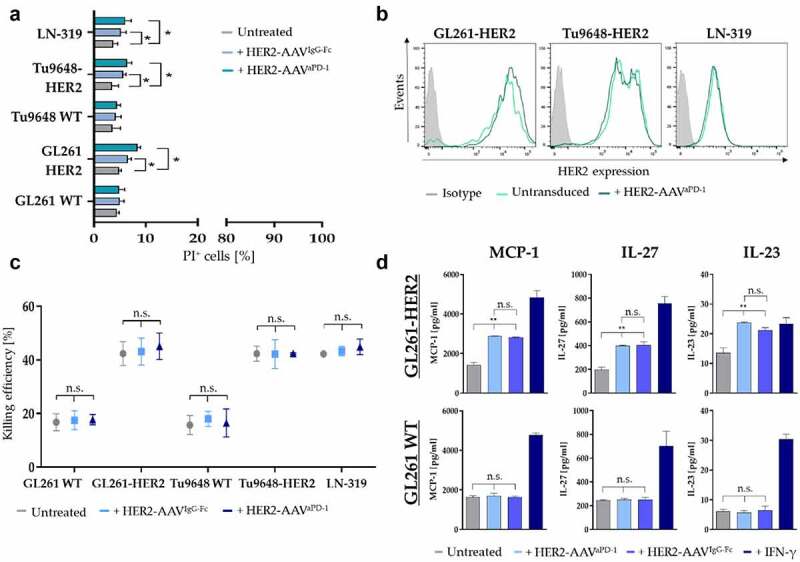
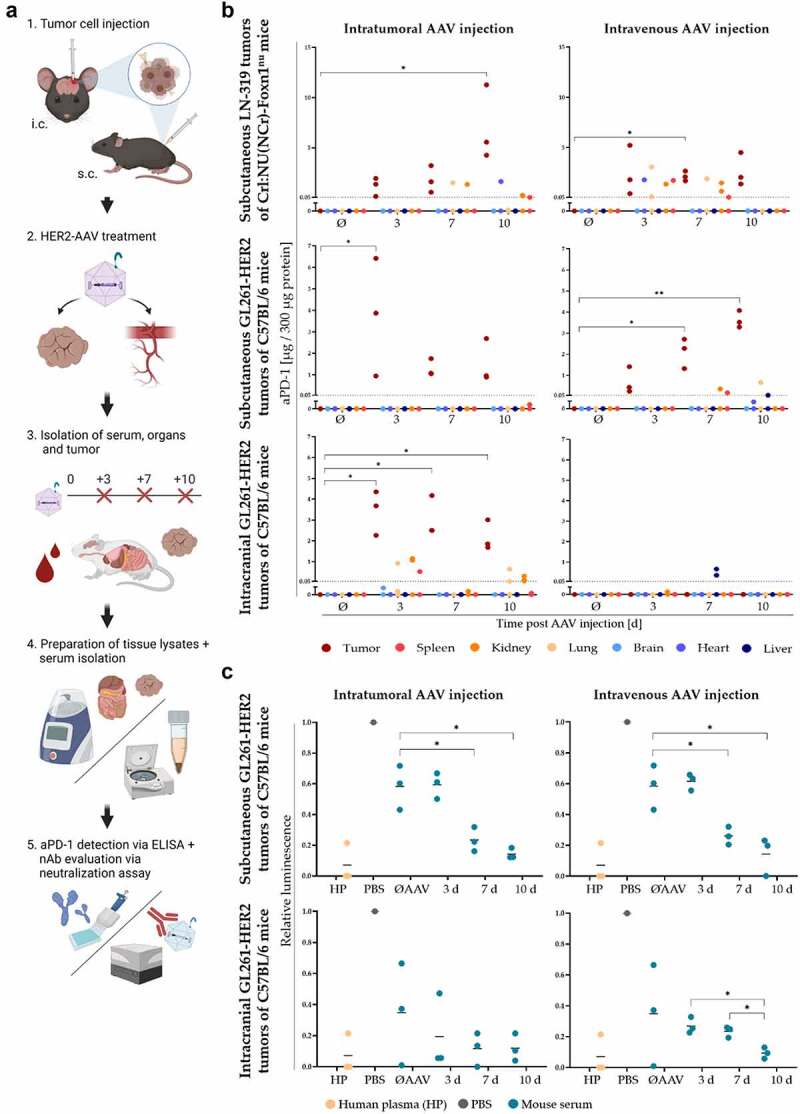
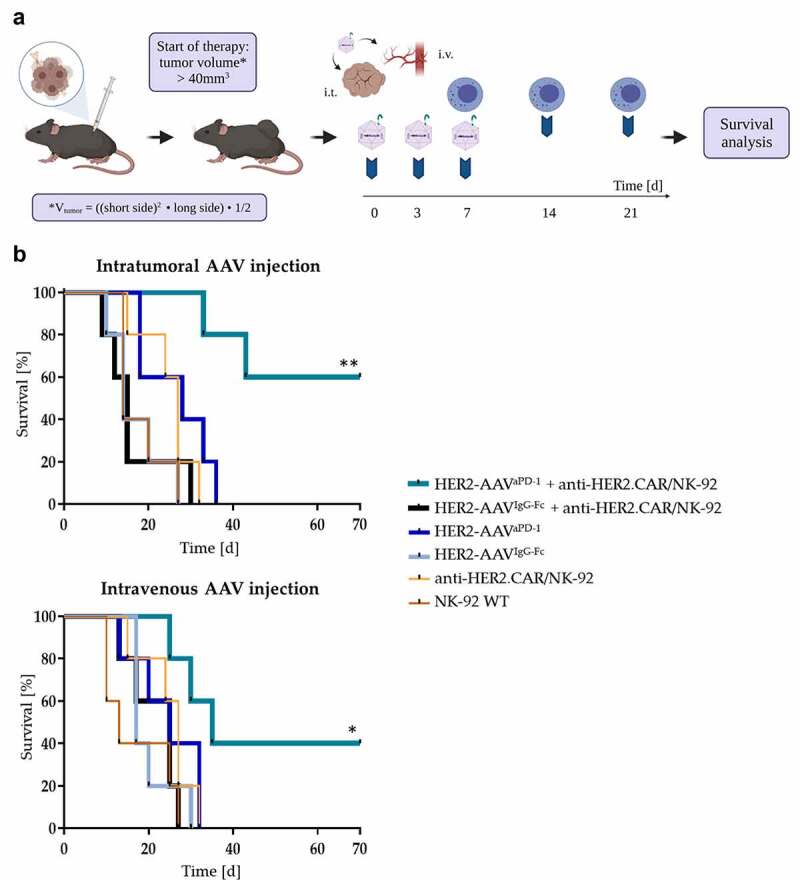
Glioblastoma (GB) is the most common primary brain tumor, which is characterized by low immunogenicity of tumor cells and prevalent immunosuppression in the tumor microenvironment (TME). Targeted local combination immunotherapy is a promising strategy to overcome these obstacles. Here, we evaluated tumor-cell specific delivery of an anti-PD-1 immunoadhesin (aPD-1) via a targeted adeno-associated viral vector (AAV) as well as HER2-specific NK-92/5.28.z (anti-HER2.CAR/NK-92) cells as components for a combination immunotherapy. In co-culture experiments, target-activated anti-HER2.CAR/NK-92 cells modified surrounding tumor cells and bystander immune cells by triggering the release of inflammatory cytokines and upregulation of PD-L1. Tumor cell-specific delivery of aPD-1 was achieved by displaying a HER2-specific designed ankyrin repeat protein (DARPin) on the AAV surface. HER2-AAV mediated gene transfer into GB cells correlated with HER2 expression levels, without inducing anti-viral responses in transduced cells. Furthermore, AAV-transduction did not interfere with anti-HER2.CAR/NK-92 cell-mediated tumor cell lysis. After selective transduction of HER2 cells, aPD-1 expression was detected at the mRNA and protein level. The aPD-1 immunoadhesin was secreted in a time-dependent manner, bound its target on PD-1-expressing cells and was able to re-activate T cells by efficiently disrupting the PD-1/PD-L1 axis. Moreover, high intratumoral and low systemic aPD-1 concentrations were achieved following local injection of HER2-AAV into orthotopic tumor grafts . aPD-1 was selectively produced in tumor tissue and could be detected up to 10 days after a single HER2-AAV injection. In subcutaneous GL261-HER2 and Tu2449-HER2 immunocompetent mouse models, administration of the combination therapy significantly prolonged survival, including complete tumor control in several animals in the GL261-HER2 model. In summary, local therapy with aPD-1 encoding HER2-AAVs in combination with anti-HER2.CAR/NK-92 cells may be a promising novel strategy for GB immunotherapy with the potential to enhance efficacy and reduce systemic side effects of immune-checkpoint inhibitors.
胶质母细胞瘤(GB)是最常见的原发性脑肿瘤,其特征为肿瘤细胞的免疫原性低和肿瘤微环境(TME)中普遍存在的免疫抑制。靶向局部联合免疫疗法是克服这些障碍的一种很有前途的策略。在这里,我们通过靶向腺相关病毒载体(AAV)评估了针对 PD-1 的免疫黏附蛋白(aPD-1)的肿瘤细胞特异性传递,以及作为联合免疫疗法的组成部分的 HER2 特异性 NK-92/5.28.z(抗 HER2.CAR/NK-92)细胞。在共培养实验中,靶向激活的抗 HER2.CAR/NK-92 细胞通过触发炎症细胞因子的释放和 PD-L1 的上调来修饰周围的肿瘤细胞和旁观者免疫细胞。通过在 AAV 表面展示 HER2 特异性设计的锚蛋白重复蛋白(DARPin)来实现对 aPD-1 的肿瘤细胞特异性传递。GB 细胞中 HER2-AAV 介导的基因转移与 HER2 表达水平相关,而不会在转导细胞中诱导抗病毒反应。此外,AAV 转导不会干扰抗 HER2.CAR/NK-92 细胞介导的肿瘤细胞裂解。在选择性转导 HER2 细胞后,在 mRNA 和蛋白质水平上检测到 aPD-1 的表达。aPD-1 免疫黏附蛋白呈时间依赖性方式分泌,与表达 PD-1 的细胞上的靶标结合,并通过有效破坏 PD-1/PD-L1 轴来重新激活 T 细胞。此外,通过将 HER2-AAV 局部注射到原位肿瘤移植物中,可实现高肿瘤内和低系统内 aPD-1 浓度。aPD-1 仅在肿瘤组织中选择性产生,并且可以在单次 HER2-AAV 注射后 10 天内检测到。在皮下 GL261-HER2 和 Tu2449-HER2 免疫活性小鼠模型中,联合治疗的给药显著延长了生存期,包括在 GL261-HER2 模型中一些动物的完全肿瘤控制。总之,用 HER2-AAV 编码的 aPD-1 进行局部治疗,联合抗 HER2.CAR/NK-92 细胞可能是胶质母细胞瘤免疫治疗的一种很有前途的新策略,具有增强疗效和降低免疫检查点抑制剂全身副作用的潜力。