Department of Neurology with Institute of Translational Neurology, Universitätsklinikum Münster, 48149 Münster, Germany.
Department of Cell and Developmental Biology, Max Planck Institute for Molecular Biomedicine, 48149 Münster, Germany.
Proc Natl Acad Sci U S A. 2022 Oct 25;119(43):e2123476119. doi: 10.1073/pnas.2123476119. Epub 2022 Oct 17.
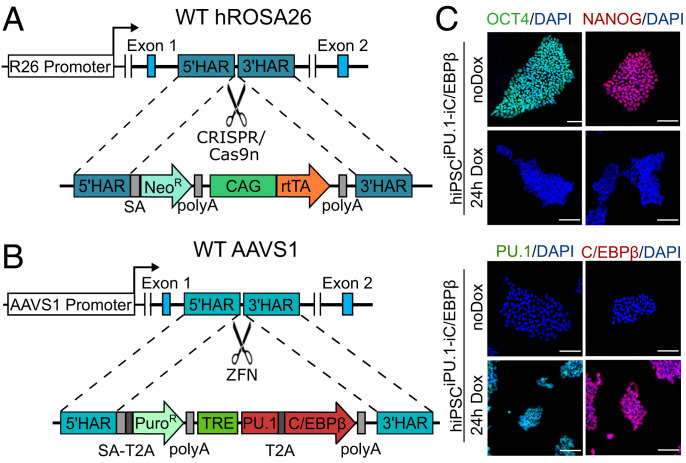
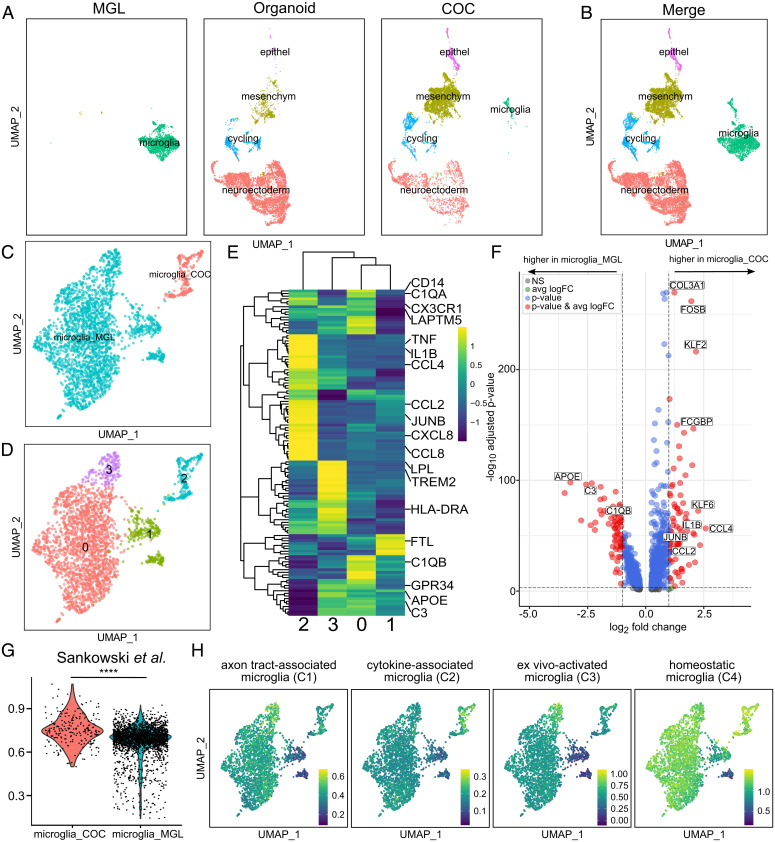
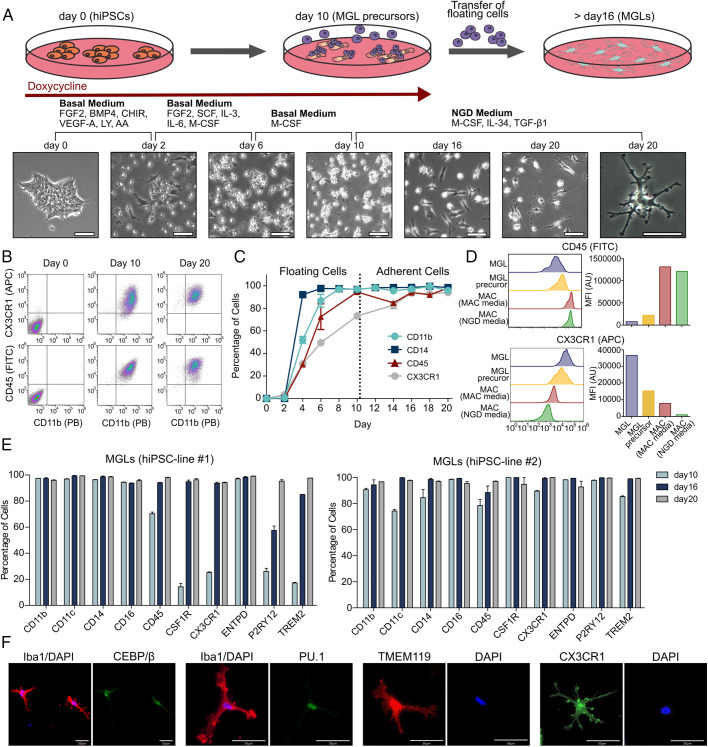
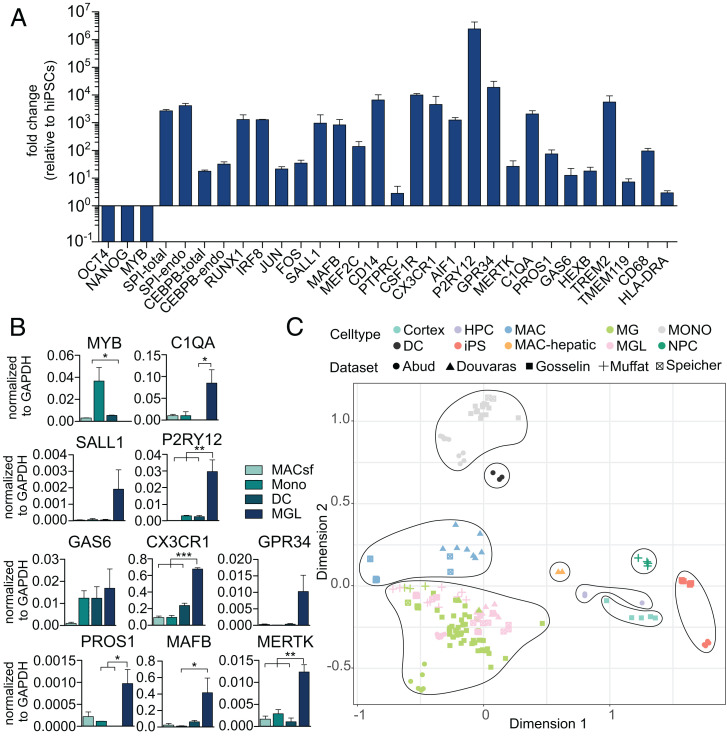
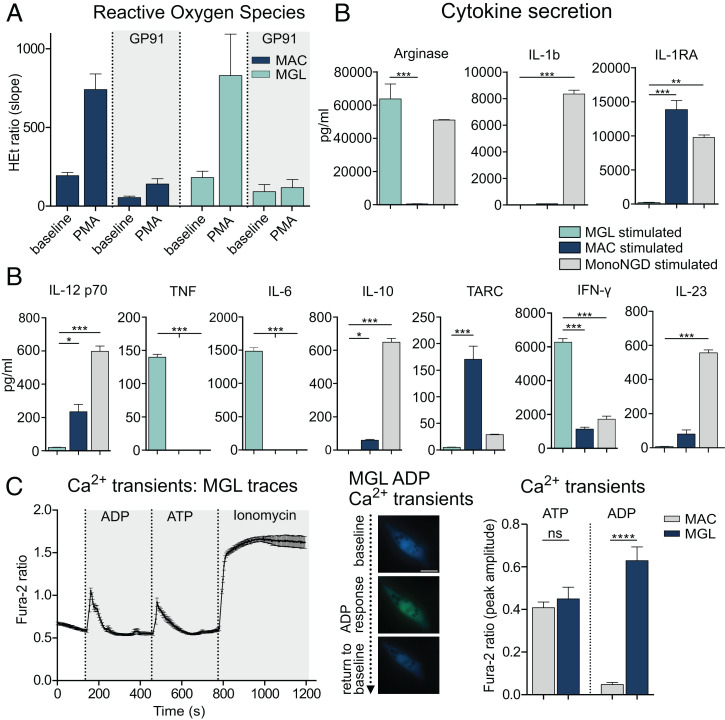
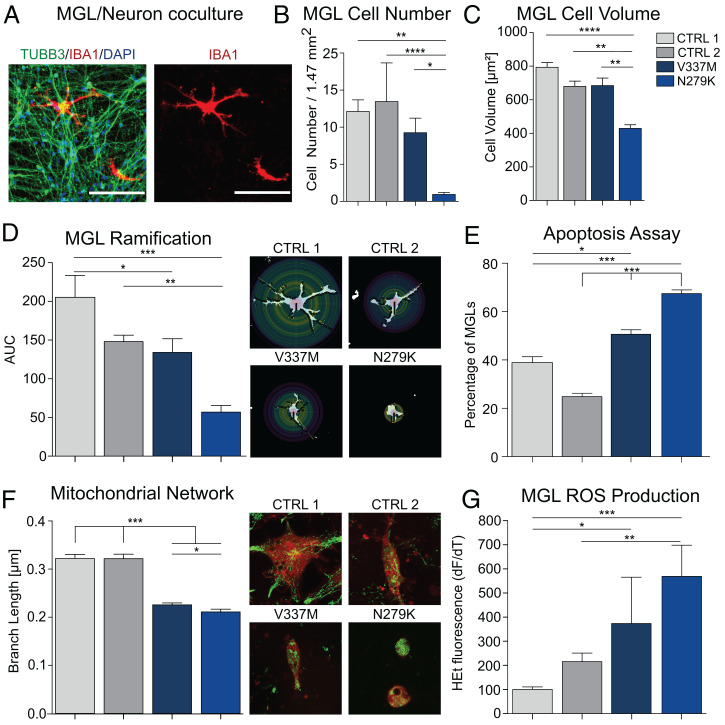
Microglia, the resident immune cells of the central nervous system (CNS), are derived from yolk-sac macrophages that populate the developing CNS during early embryonic development. Once established, the microglia population is self-maintained throughout life by local proliferation. As a scalable source of microglia-like cells (MGLs), we here present a forward programming protocol for their generation from human pluripotent stem cells (hPSCs). The transient overexpression of PU.1 and C/EBPβ in hPSCs led to a homogenous population of mature microglia within 16 d. MGLs met microglia characteristics on a morphological, transcriptional, and functional level. MGLs facilitated the investigation of a human tauopathy model in cortical neuron-microglia cocultures, revealing a secondary dystrophic microglia phenotype. Single-cell RNA sequencing of microglia integrated into hPSC-derived cortical brain organoids demonstrated a shift of microglia signatures toward a more-developmental in vivo-like phenotype, inducing intercellular interactions promoting neurogenesis and arborization. Taken together, our microglia forward programming platform represents a tool for both reductionist studies in monocultures and complex coculture systems, including 3D brain organoids for the study of cellular interactions in healthy or diseased environments.
小胶质细胞是中枢神经系统 (CNS) 的固有免疫细胞,来源于卵黄囊巨噬细胞,在胚胎早期发育过程中遍布发育中的 CNS。一旦建立,小胶质细胞群体通过局部增殖在整个生命过程中自我维持。作为一种可扩展的小胶质样细胞 (MGL) 来源,我们在此提出了一种从小鼠多能干细胞 (hPSC) 中生成 MGL 的正向编程方案。在 hPSC 中转染 PU.1 和 C/EBPβ 的瞬时过表达导致在 16 天内产生均匀的成熟小胶质细胞群体。MGL 在形态、转录和功能水平上符合小胶质细胞的特征。MGL 促进了皮质神经元-小胶质细胞共培养物中人类 tau 病模型的研究,揭示了继发性营养不良小胶质细胞表型。整合到 hPSC 衍生的皮质脑类器官中的小胶质细胞的单细胞 RNA 测序表明,小胶质细胞特征向更具发育性的体内样表型转变,诱导细胞间相互作用促进神经发生和分枝。总之,我们的小胶质细胞正向编程平台代表了一种工具,可用于简化培养物和复杂共培养系统的研究,包括用于研究健康或患病环境中细胞相互作用的 3D 脑类器官。