College of Animal Science and Technology, Luoyang Key Laboratory of Live Carrier Biomaterial and Animal Disease Prevention and Control, Henan University of Science and Technology, Henan, Luoyang, China.
State Key Laboratory of Respiratory Disease & National Clinical Research Center for Respiratory Disease, Guangzhou Institute of Respiratory Health, The First Affiliated Hospital of Guangzhou Medical University, Guangzhou Medical University, Guangzhou, China.
J Med Virol. 2023 Jan;95(1):e28237. doi: 10.1002/jmv.28237. Epub 2022 Oct 28.
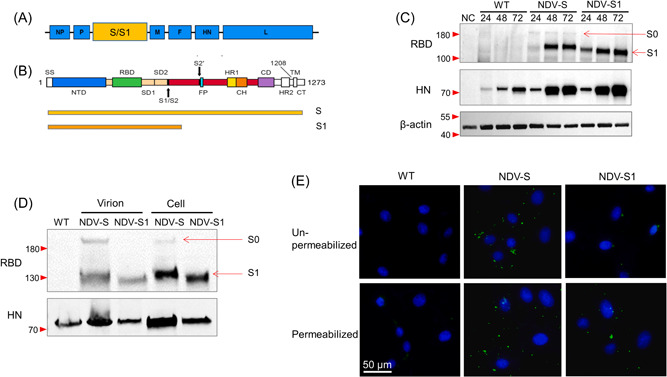
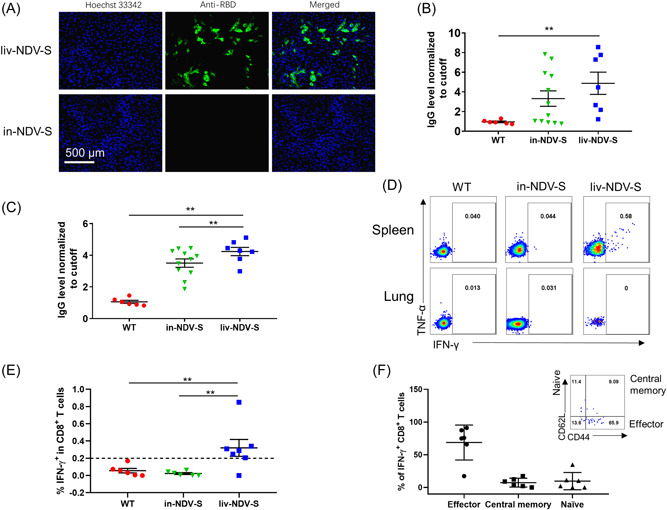
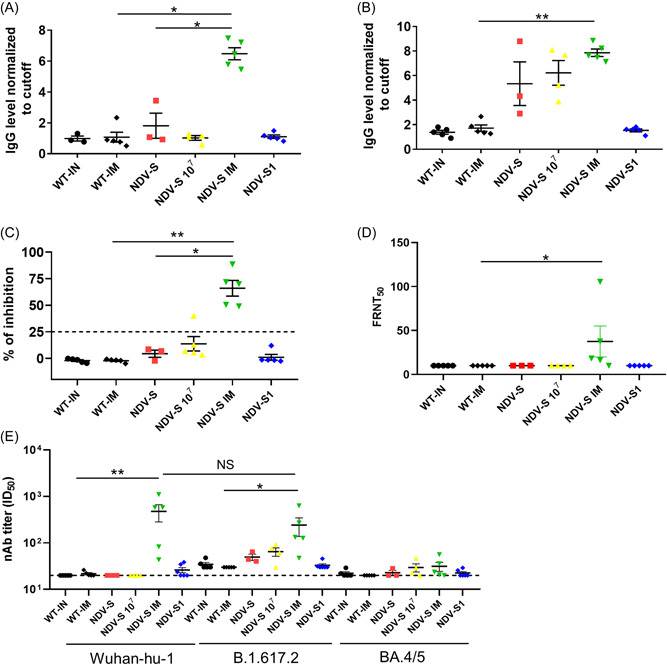
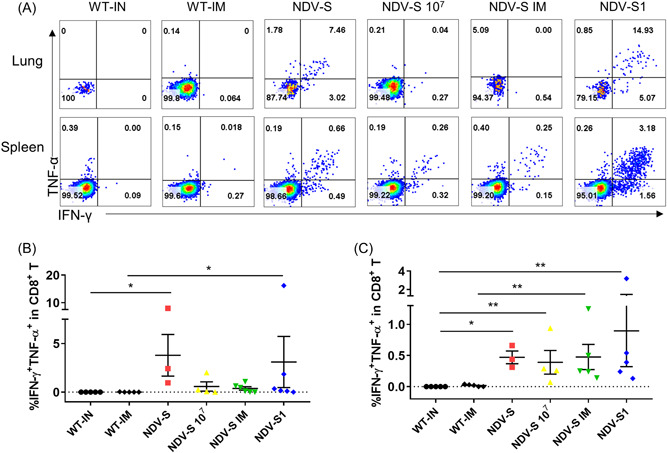
With the continuation of the coronavirus disease 2019 pandemic and the emergence of new severe acute respiratory syndrome coronavirus-2 (SARS-CoV-2) variants, the control of the spread of the virus remains urgent. Various animals, including cats, ferrets, hamsters, nonhuman primates, minks, tree shrews, fruit bats, and rabbits, are susceptible to SARS-CoV-2 infection naturally or experimentally. Therefore, to avoid animals from becoming mixing vessels of the virus, vaccination of animals should be considered. In the present study, we report the establishment of an efficient and stable system using Newcastle disease virus (NDV) as a vector to express SARS-CoV-2 spike protein/subunit for the rapid generation of vaccines against SARS-CoV-2 in animals. Our data showed that the S and S1 protein was sufficiently expressed in rNDV-S and rNDV-S1-infected cells, respectively. The S protein was incorporated into and displayed on the surface of rNDV-S viral particles. Intramuscular immunization with rNDV-S was found to induce the highest level of binding and neutralizing antibodies, as well as strong S-specific T-cell response in mice. Intranasal immunization with rNDV-S1 provoked a robust T-cell response but barely any detectable antibodies. Overall, the NDV-vectored vaccine candidates were able to induce profound humoral and cellular immunity, which will provide a good system for developing vaccines targeting both T-cell and antibody responses.
随着 2019 年冠状病毒病疫情的持续以及新型严重急性呼吸综合征冠状病毒 2(SARS-CoV-2)变种的出现,病毒传播的控制仍然迫在眉睫。各种动物,包括猫、雪貂、仓鼠、非人灵长类动物、水貂、树鼩、果蝠和兔子,自然或实验感染 SARS-CoV-2。因此,为避免动物成为病毒的混合容器,应考虑对动物进行疫苗接种。在本研究中,我们报告了使用新城疫病毒(NDV)作为载体表达 SARS-CoV-2 刺突蛋白/亚单位的有效且稳定的系统,用于快速在动物中生成针对 SARS-CoV-2 的疫苗。我们的数据表明,S 和 S1 蛋白分别在感染 rNDV-S 和 rNDV-S1 的细胞中得到充分表达。S 蛋白被整合并显示在 rNDV-S 病毒颗粒的表面。在小鼠中,肌肉内免疫 rNDV-S 被发现诱导最高水平的结合和中和抗体以及强烈的 S 特异性 T 细胞反应。鼻内免疫 rNDV-S1 引起强烈的 T 细胞反应,但几乎检测不到任何抗体。总的来说,NDV 载体疫苗候选物能够诱导深刻的体液和细胞免疫,这将为开发针对 T 细胞和抗体反应的疫苗提供良好的系统。