Department of Anatomy and Histology, College of Veterinary Medicine, Gyeongsang National University, Jinju 52828, Korea.
Division of Life Science and Applied Life Science, College of Natural Sciences, Gyeongsang National University, Jinju 52828, Korea.
J Vet Sci. 2022 Nov;23(6):e84. doi: 10.4142/jvs.22200. Epub 2022 Sep 30.
Stroke is caused by disruption of blood supply and results in permanent disabilities as well as death. Chlorogenic acid is a phenolic compound found in various fruits and coffee and exerts antioxidant, anti-inflammatory, and anti-apoptotic effects.
The purpose of this study was to investigate whether chlorogenic acid regulates the PI3K-Akt-Bad signaling pathway in middle cerebral artery occlusion (MCAO)-induced damage.
Chlorogenic acid (30 mg/kg) or vehicle was administered peritoneally to adult male rats 2 h after MCAO surgery, and animals were sacrificed 24 h after MCAO surgery. Neurobehavioral tests were performed, and brain tissues were isolated. The cerebral cortex was collected for Western blot and immunoprecipitation analyses.
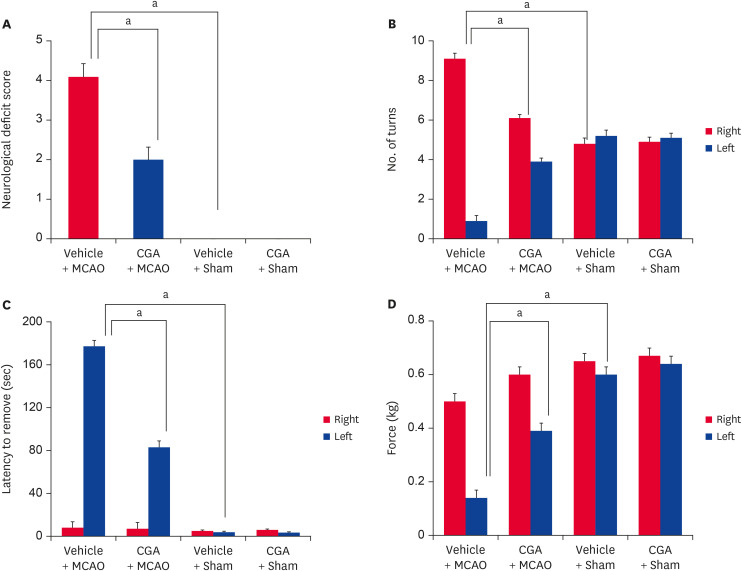
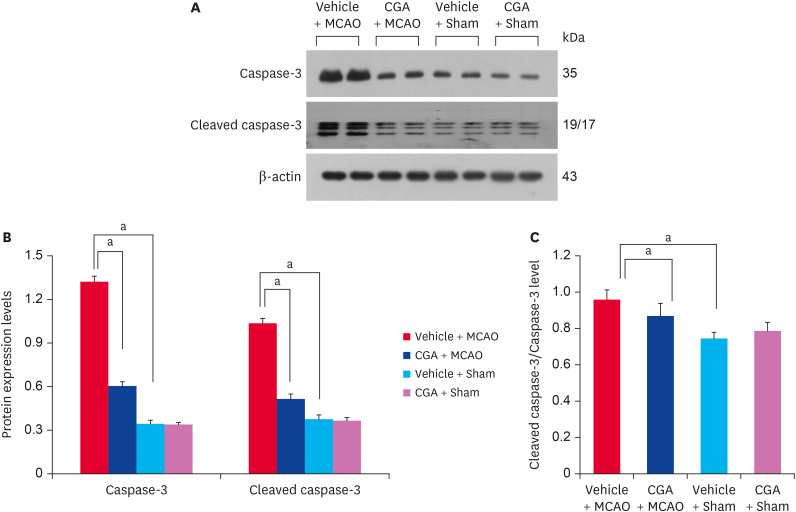
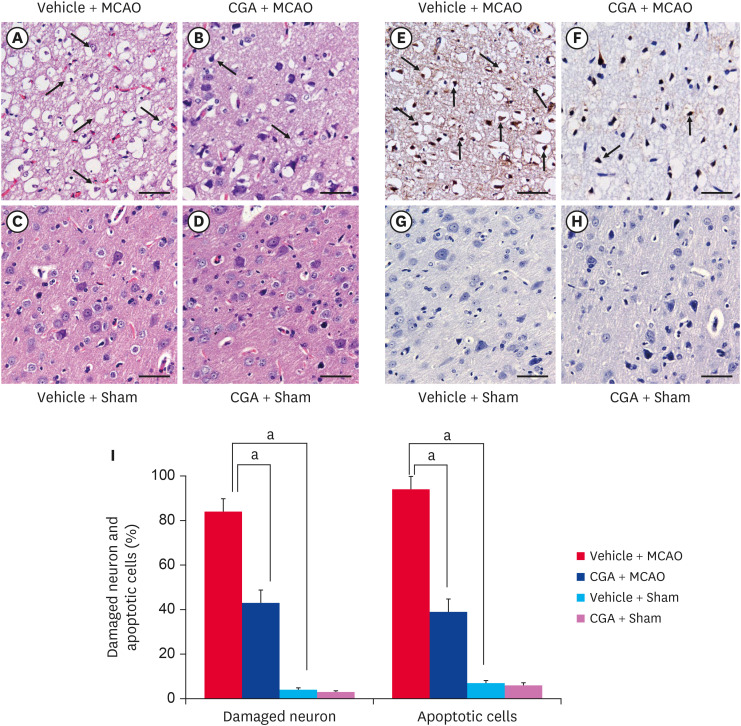
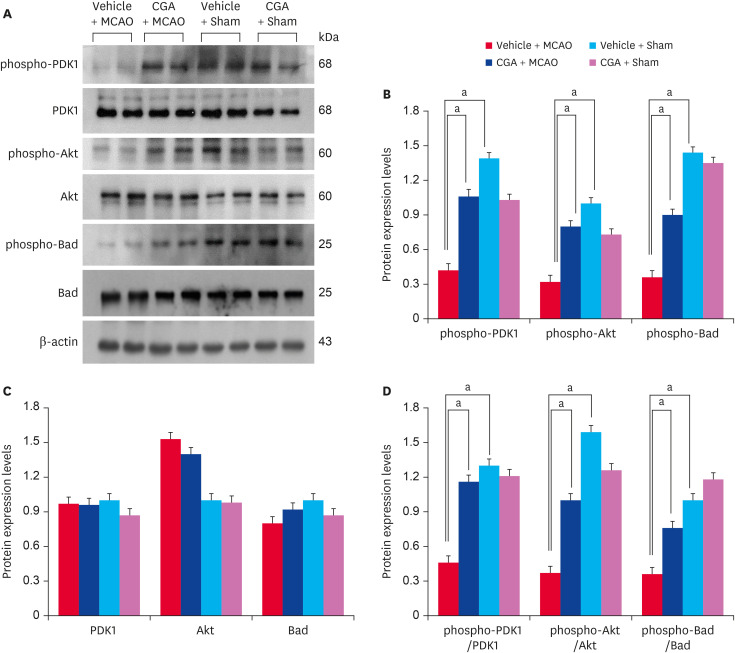
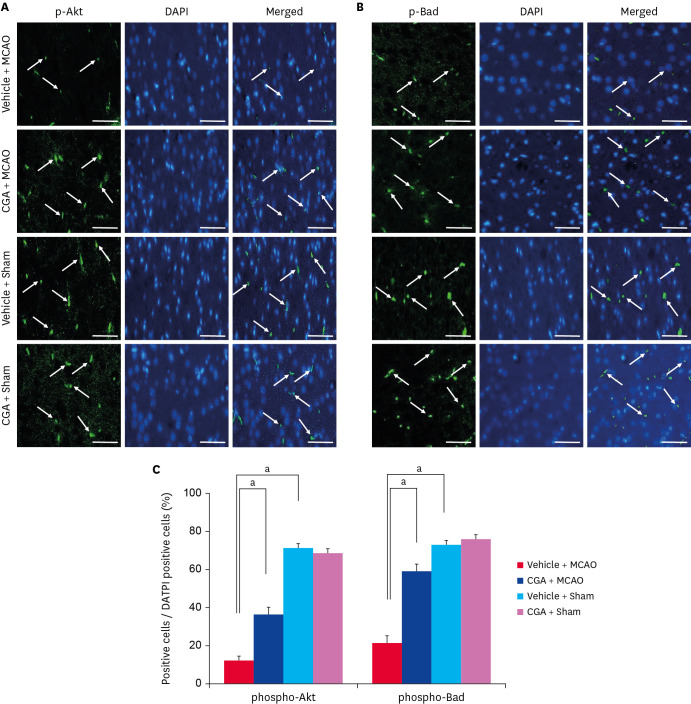
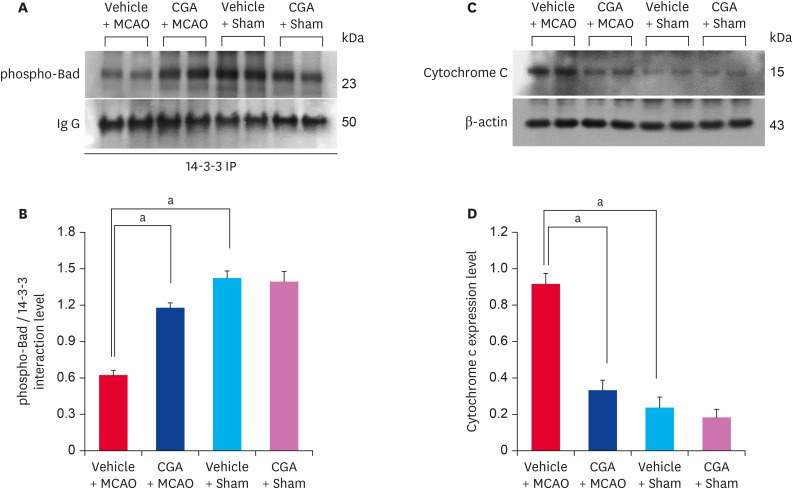
MCAO damage caused severe neurobehavioral disorders and chlorogenic acid improved the neurological disorders. Chlorogenic acid alleviated the MCAO-induced histopathological changes and decreased the number of terminal deoxynucleotidyl transferase dUTP nick end labeling-positive cells. Furthermore, MCAO-induced damage reduced the expression of phospho-PDK1, phospho-Akt, and phospho-Bad, which was alleviated with administration of chlorogenic acid. The interaction between phospho-Bad and 14-3-3 levels was reduced in MCAO animals, which was attenuated by chlorogenic acid treatment. In addition, chlorogenic acid alleviated the increase of cytochrome c and caspase-3 expression caused by MCAO damage.
The results of the present study showed that chlorogenic acid activates phospho-Akt and phospho-Bad and promotes the interaction between phospho-Bad and 14-3-3 during MCAO damage. In conclusion, chlorogenic acid exerts neuroprotective effects by activating the Akt-Bad signaling pathway and maintaining the interaction between phospho-Bad and 14-3-3 in ischemic stroke model.
中风是由血液供应中断引起的,会导致永久性残疾和死亡。绿原酸是一种存在于各种水果和咖啡中的酚类化合物,具有抗氧化、抗炎和抗细胞凋亡作用。
本研究旨在探讨绿原酸是否调节大脑中动脉闭塞(MCAO)诱导损伤中的 PI3K-Akt-Bad 信号通路。
MCAO 手术后 2 小时,绿原酸(30mg/kg)或载体通过腹腔注射给药,MCAO 手术后 24 小时处死动物。进行神经行为学测试,并分离脑组织。采集大脑皮质进行 Western blot 和免疫沉淀分析。
MCAO 损伤导致严重的神经行为障碍,而绿原酸改善了神经障碍。绿原酸减轻了 MCAO 诱导的组织病理学变化,减少了末端脱氧核苷酸转移酶 dUTP 缺口末端标记阳性细胞的数量。此外,MCAO 诱导的损伤降低了磷酸化 PDK1、磷酸化 Akt 和磷酸化 Bad 的表达,而绿原酸的给药缓解了这一损伤。MCAO 动物中磷酸化 Bad 与 14-3-3 水平的相互作用减少,而绿原酸处理可减轻这一作用。此外,绿原酸减轻了 MCAO 损伤引起的细胞色素 c 和半胱天冬酶-3 表达的增加。
本研究结果表明,绿原酸在 MCAO 损伤过程中激活磷酸化 Akt 和磷酸化 Bad,并促进磷酸化 Bad 与 14-3-3 之间的相互作用。总之,绿原酸通过激活 Akt-Bad 信号通路并维持缺血性中风模型中磷酸化 Bad 与 14-3-3 之间的相互作用发挥神经保护作用。