Department of Hepatobiliary and Pancreatic Surgery, Zhongnan Hospital of Wuhan University, Wuhan 430071, Hubei, People's Republic of China.
Department of Gastrointestinal Surgery, Zhongnan Hospital of Wuhan University, Wuhan 430071, Hubei, People's Republic of China.
Int J Biol Sci. 2022 Oct 3;18(15):5963-5977. doi: 10.7150/ijbs.72982. eCollection 2022.
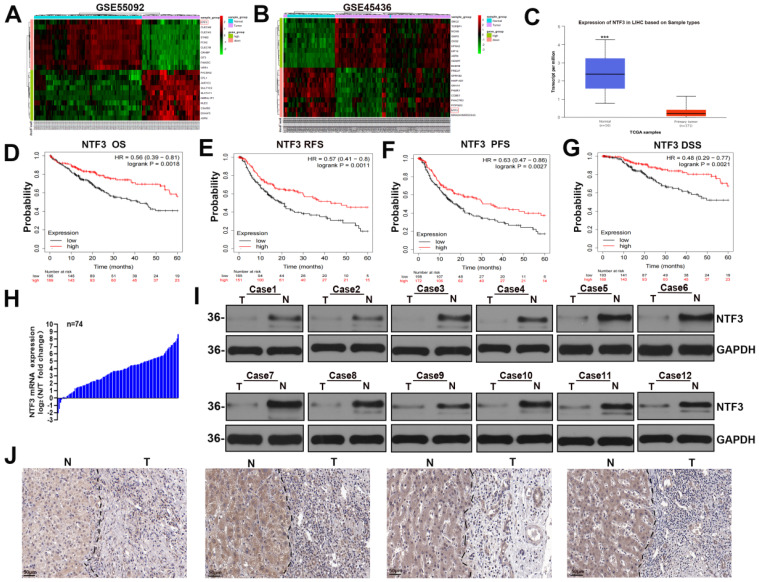
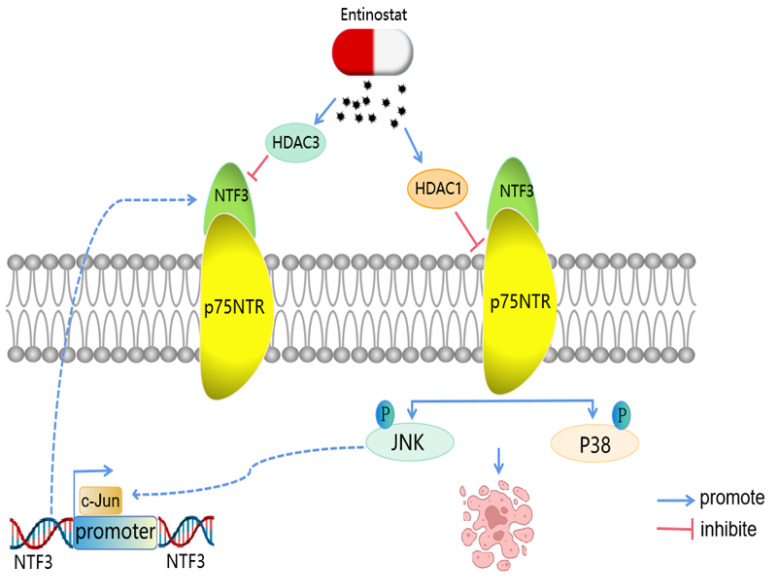
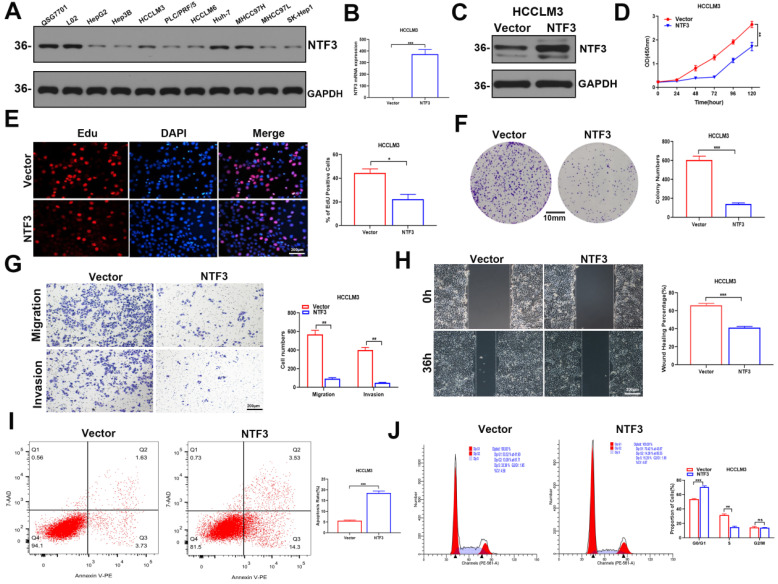
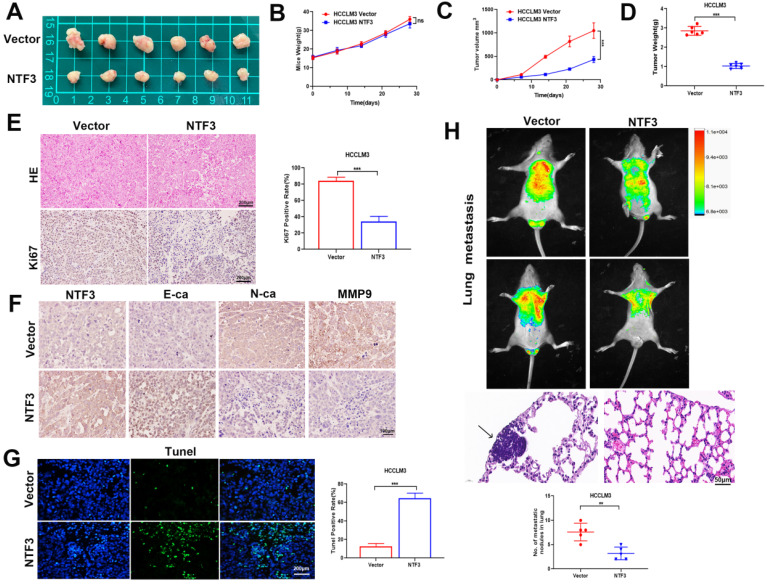
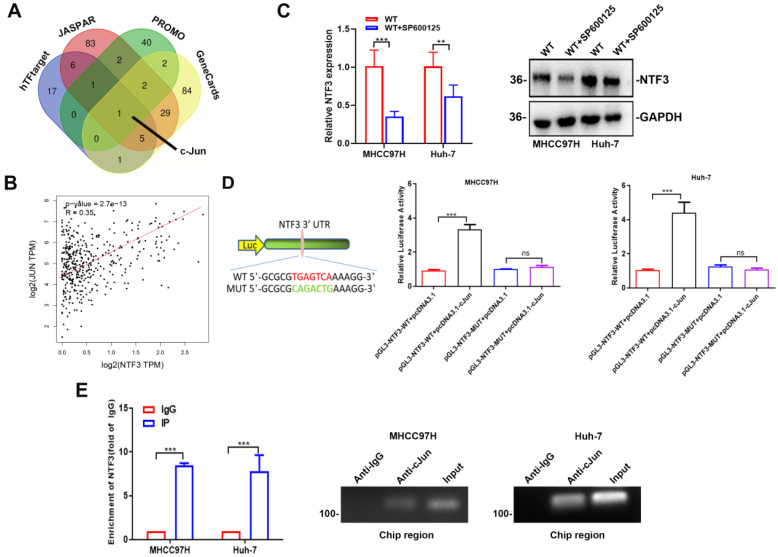
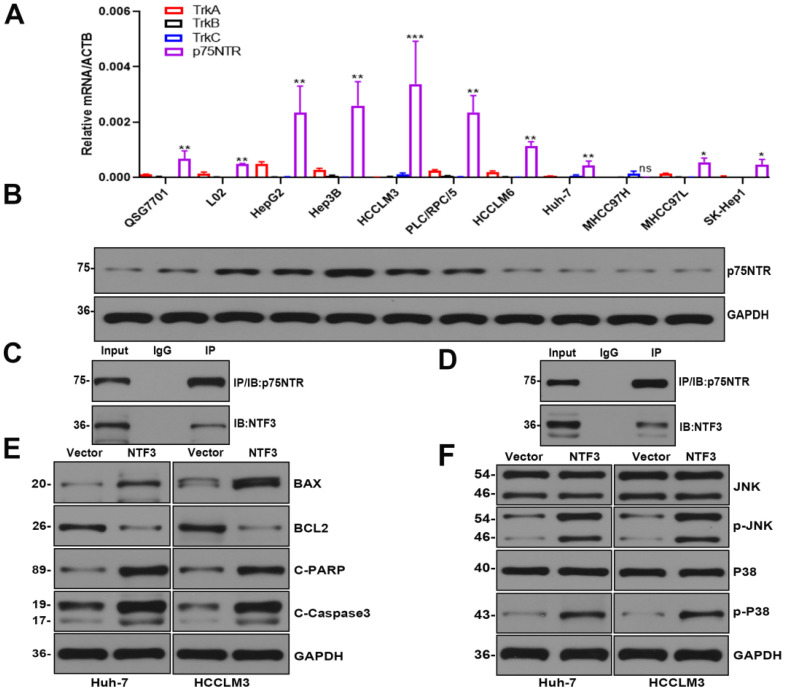
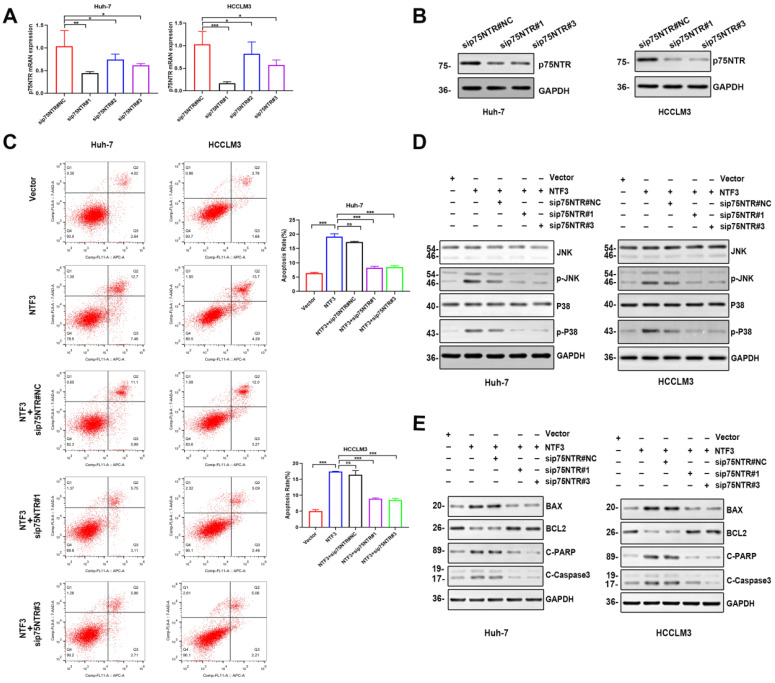
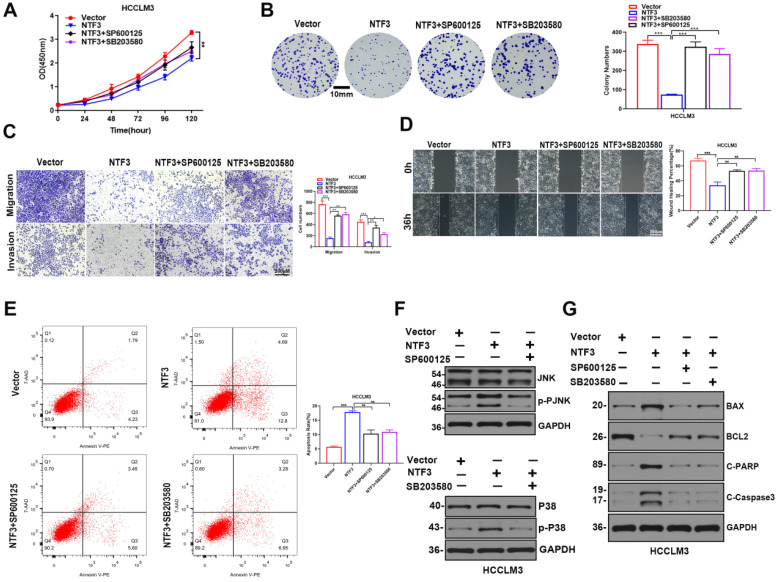
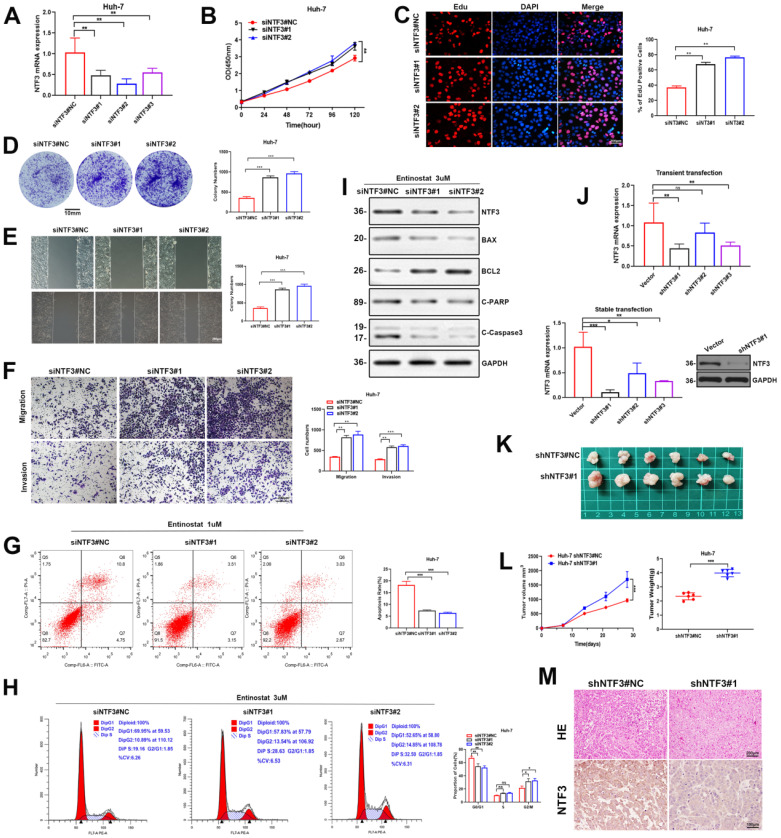
Although liver cancer is a malignant tumor with the highest mortality across the world, its pathogenesis and therapeutic targets remain unclear. Apoptosis, a natural cell death mechanism, is an important target of anticancer therapy. The discovery of effective apoptotic regulators can lead to the identification of novel therapeutic targets for treating cancer. Neurotrophin 3 (NTF3) is a member of the nerve growth factor (NGF) family that is involved in the progression of various cancers, including medulloblastoma, primitive neuroectodermal brain tumors, and breast cancer. NTF3 is under-expressed in human hepatocellular carcinoma (HCC), albeit its specific effects and the action mechanism have not been elucidated. Here, we confirmed that NTF3 expression was significantly low in HCC with reference to the GSEA database. By collecting patient data from our center and performing qRT-PCR analysis, we found that expression was significantly downregulated in 74 patients with HCC. Low NTF3 expression was associated with a shorter overall survival (OS), recurrence-free survival (RFS), progression-free survival (PFS), and disease-specific survival (DSS). Both and experiments revealed that NTF3 considerably inhibited the progression of HCC cells. We found that the ligand NTF3 is regulated by c-Jun and binds to the p75 neurotrophin receptor (p75NTR) and then activates the JNK and P38 MAPK pathways to induce apoptosis. Entinostat (the target of HDAC1/HDAC3) can activate the NTF3/p75NTR pathway. These results indicate that NTF3 is a tumor suppressor, and that its low expression can help in predict poor clinical outcomes in HCC. Therefore, NTF3 can be used as a potential treatment molecule for HCC.
尽管肝癌是全球死亡率最高的恶性肿瘤,但肝癌的发病机制和治疗靶点仍不清楚。细胞凋亡是一种重要的细胞死亡机制,是抗肿瘤治疗的重要靶点。发现有效的凋亡调节剂可以为癌症的治疗提供新的治疗靶点。神经生长因子 3(NTF3)是神经生长因子(NGF)家族的成员,参与多种癌症的进展,包括髓母细胞瘤、原始神经外胚层脑肿瘤和乳腺癌。尽管在人类肝癌(HCC)中 NTF3 的表达水平明显降低,但它的具体作用和作用机制尚未阐明。在这里,我们参考 GSEA 数据库证实 NTF3 在 HCC 中的表达明显降低。通过从我们中心收集患者数据并进行 qRT-PCR 分析,我们发现 74 例 HCC 患者的表达明显下调。低 NTF3 表达与总生存期(OS)、无复发生存期(RFS)、无进展生存期(PFS)和疾病特异性生存期(DSS)较短相关。和 实验均表明 NTF3 可显著抑制 HCC 细胞的进展。我们发现配体 NTF3 受 c-Jun 调控,并与 p75 神经营养因子受体(p75NTR)结合,然后激活 JNK 和 P38 MAPK 通路诱导细胞凋亡。恩替诺特(HDAC1/HDAC3 的靶点)可以激活 NTF3/p75NTR 通路。这些结果表明 NTF3 是一种肿瘤抑制因子,其低表达有助于预测 HCC 的不良临床结局。因此,NTF3 可以作为 HCC 的潜在治疗分子。