Shen Xiaolong, Zhang Hao, Li Xin, Li Peichuang, Zhao Yuancong, Wang Yunbing, Wang Jin
Panzhihua University, Panzhihua 617000, China.
Third People's Hospital of Chengdu, Southwest Jiaotong University, Chengdu, Sichuan 610031, China.
Regen Biomater. 2022 Sep 29;9:rbac068. doi: 10.1093/rb/rbac068. eCollection 2022.
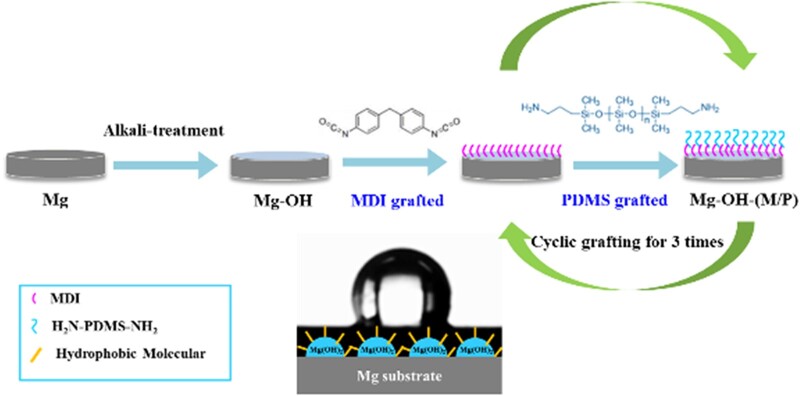
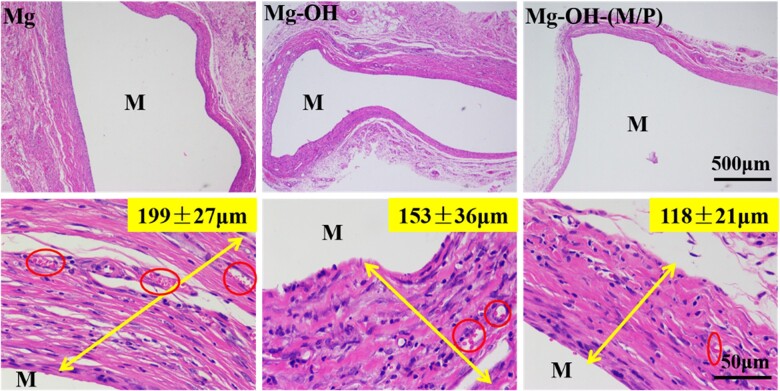
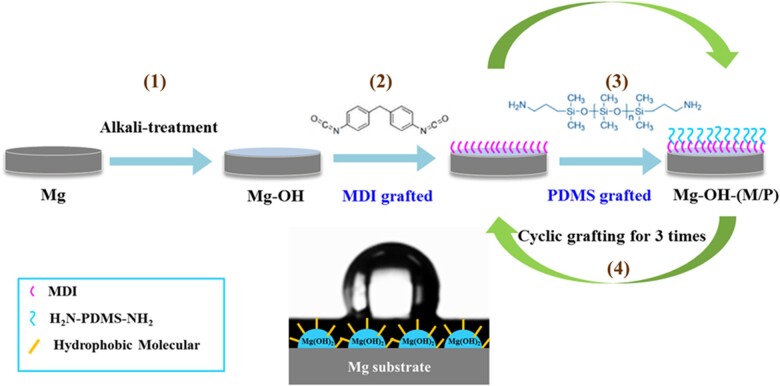
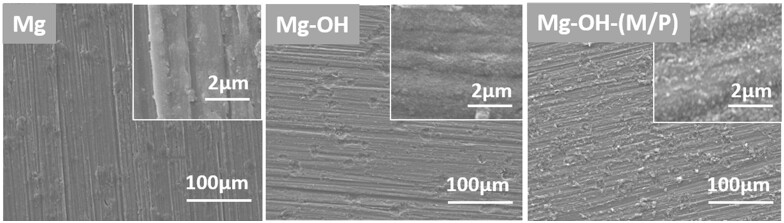
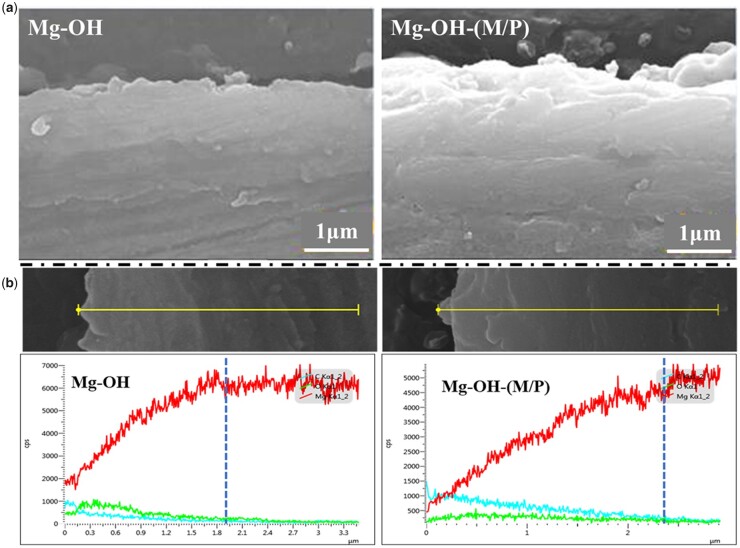
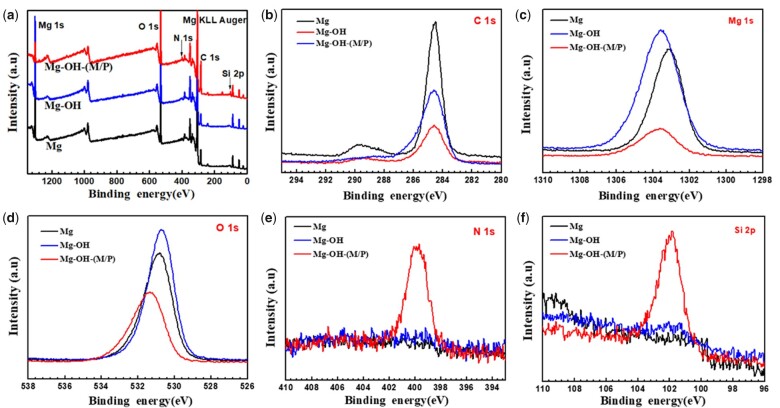
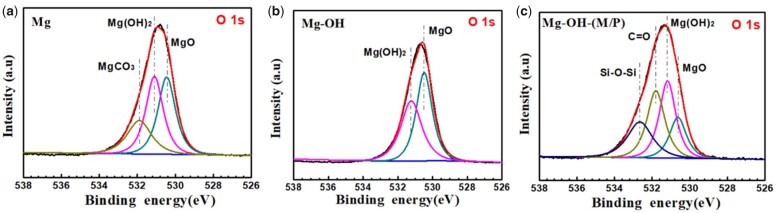
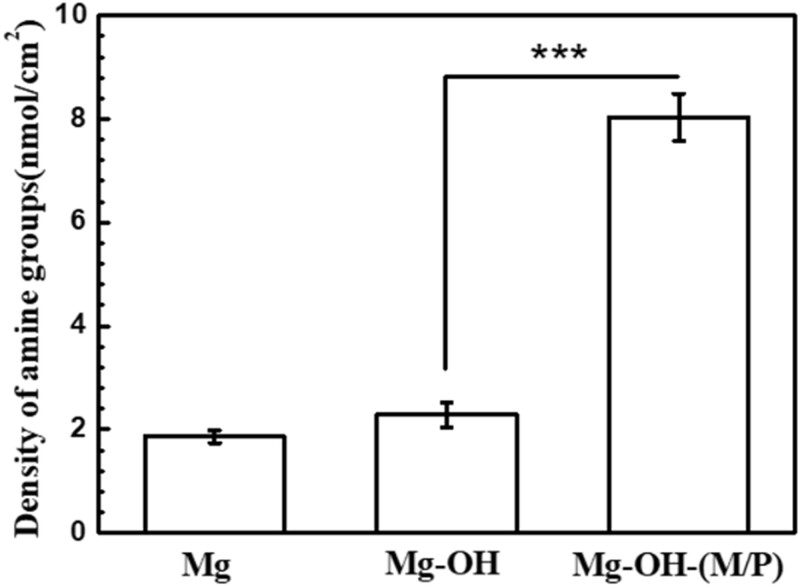
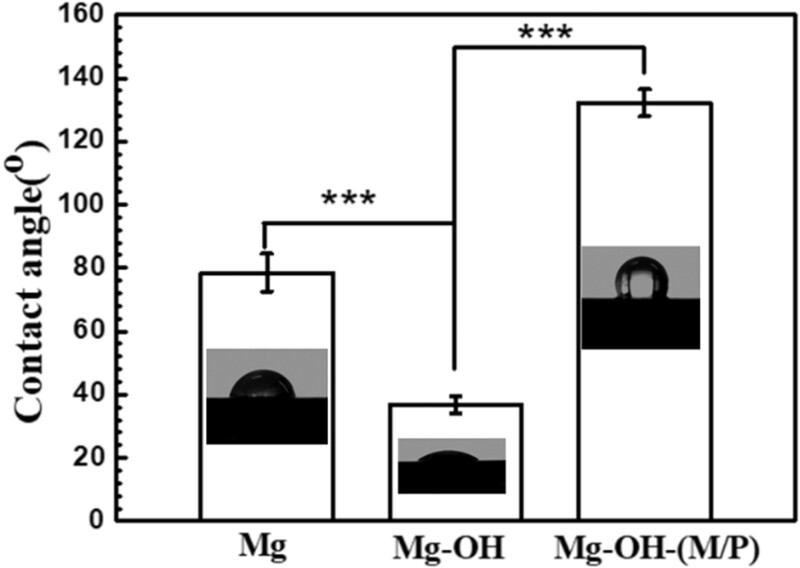
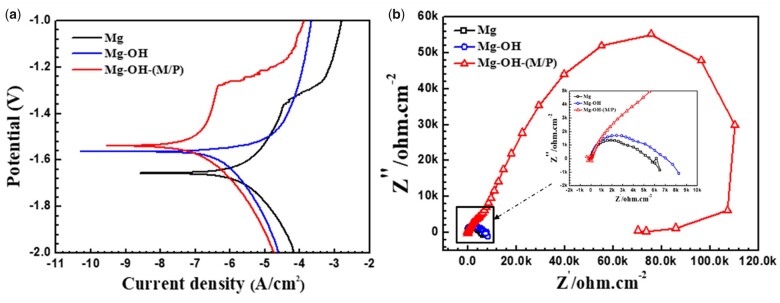
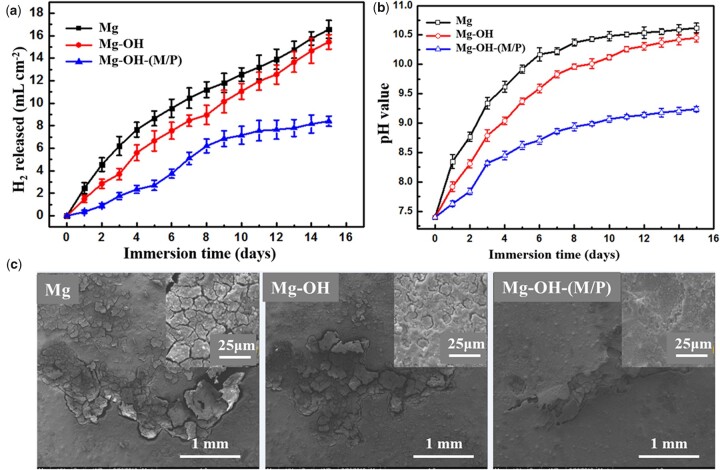
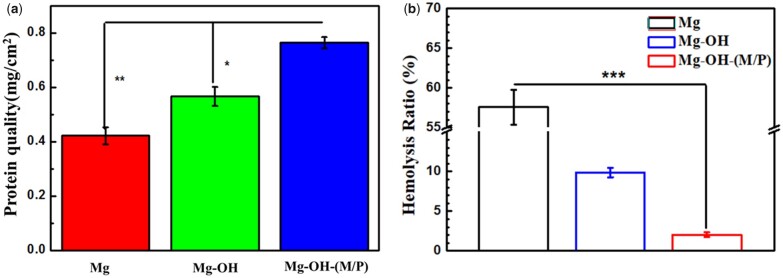
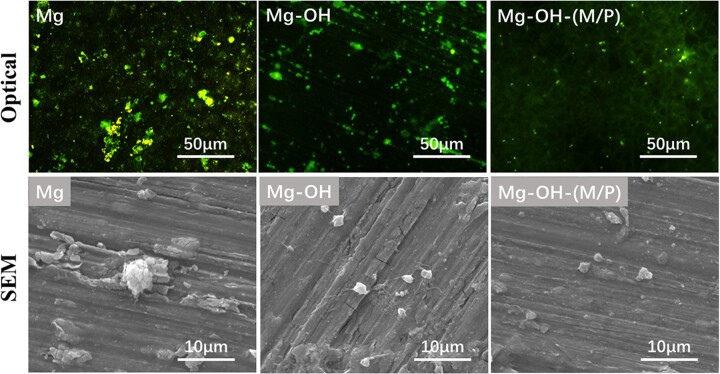
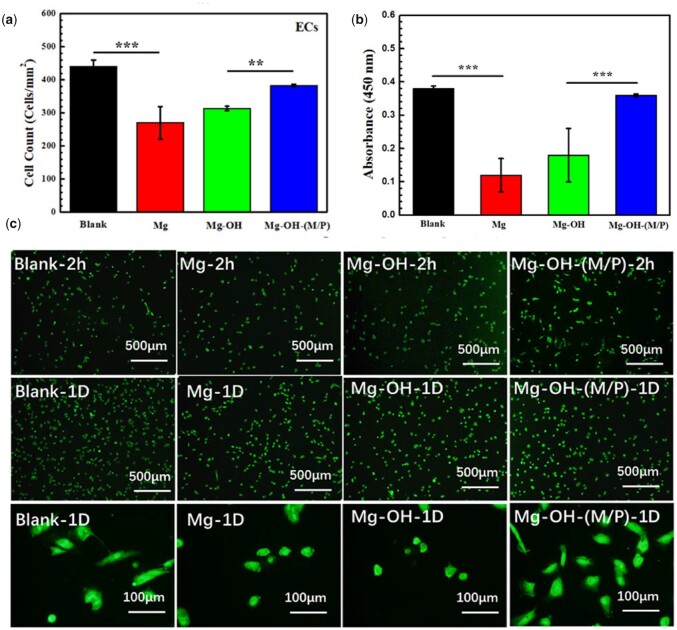
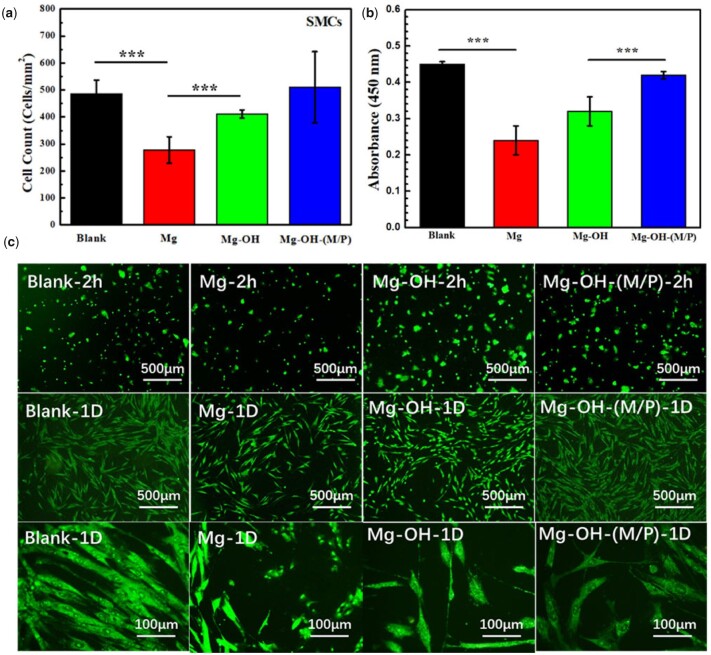
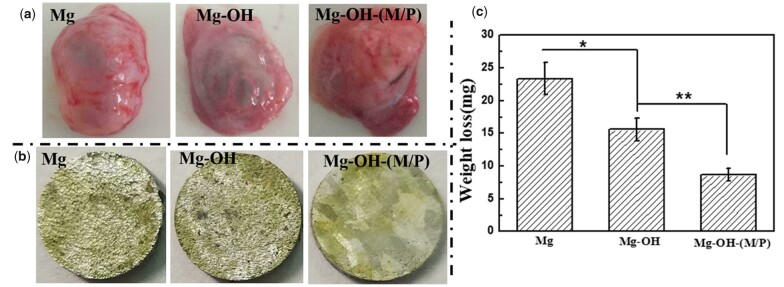
Magnesium and its alloys have been widely studied as absorbable coronary stent materials. However, the rapid corrosion rate in the intravascular environment inhibits the application of magnesium-based stents. In order to endow magnesium-based stent with appropriate degradation rate and biocompatibility, a hydrophobic layer was constructed by cyclic grafting 4,4'-diphenylmethane diisocyanate and aminopropyl-terminated polydimethylsiloxane on pure magnesium. SEM-EDS, X-ray photoelectron spectroscopy and water contact angle were detected to analyze the chemical composition of the layer. The amino groups were confirmed to be introduced on the surface which provide a platform for subsequent modification. The contact angle value of the modified surface is 132.1°, indicating a hydrophilic surface. The electrochemical measurements and immersion tests demonstrated that the hydrophobic layer significantly improved the anti-corrosion ability of the substrate. Besides, the biocompatibility of the hydrophobic surface was examined by platelet adhesion, cytocompatibility and subcutaneous implantation . Immunological and histological results indicated that the hydrophobic layer had excellent biocompatibility. Therefore, the presented study might be a promising method for the surface modification of biomedical magnesium-based stent.
镁及其合金作为可吸收冠状动脉支架材料已被广泛研究。然而,在血管内环境中的快速腐蚀速率抑制了镁基支架的应用。为了赋予镁基支架适当的降解速率和生物相容性,通过在纯镁上循环接枝4,4'-二苯基甲烷二异氰酸酯和氨基封端的聚二甲基硅氧烷构建了疏水层。通过扫描电子显微镜-能谱仪(SEM-EDS)、X射线光电子能谱和水接触角检测来分析该层的化学成分。证实表面引入了氨基,这为后续修饰提供了一个平台。改性表面的接触角值为132.1°,表明是亲水性表面。电化学测量和浸泡试验表明,疏水层显著提高了基底的抗腐蚀能力。此外,通过血小板黏附、细胞相容性和皮下植入来检测疏水表面的生物相容性。免疫学和组织学结果表明,疏水层具有优异的生物相容性。因此,本研究可能是一种用于生物医学镁基支架表面改性的有前景的方法。