Wang Gang, Feng Yusheng, Gao Caiyun, Zhang Xu, Wang Qunsong, Zhang Jie, Zhang Hongjie, Wu Yongqiang, Li Xin, Wang Lin, Fu Ye, Yu Xiaoye, Zhang Deyuan, Liu Jianxiong, Ding Jiandong
State Key Laboratory of Molecular Engineering of Polymers, Department of Macromolecular Science, Fudan University, Shanghai 200438, China.
R&D Center, Lifetech Scientific (Shenzhen) Co., Ltd., Shenzhen 518057, China.
Regen Biomater. 2023 Jun 2;10:rbad056. doi: 10.1093/rb/rbad056. eCollection 2023.
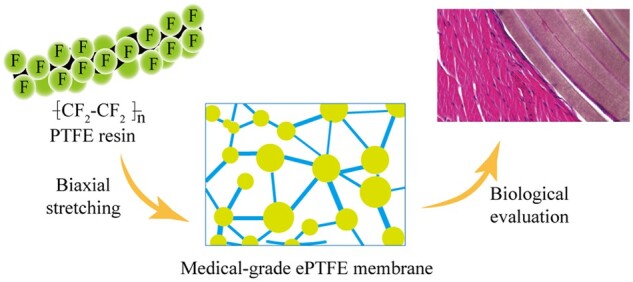
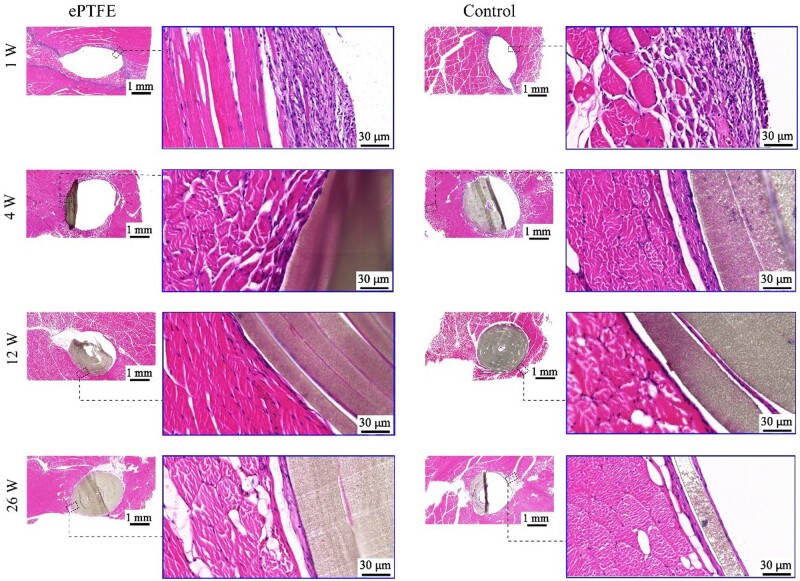
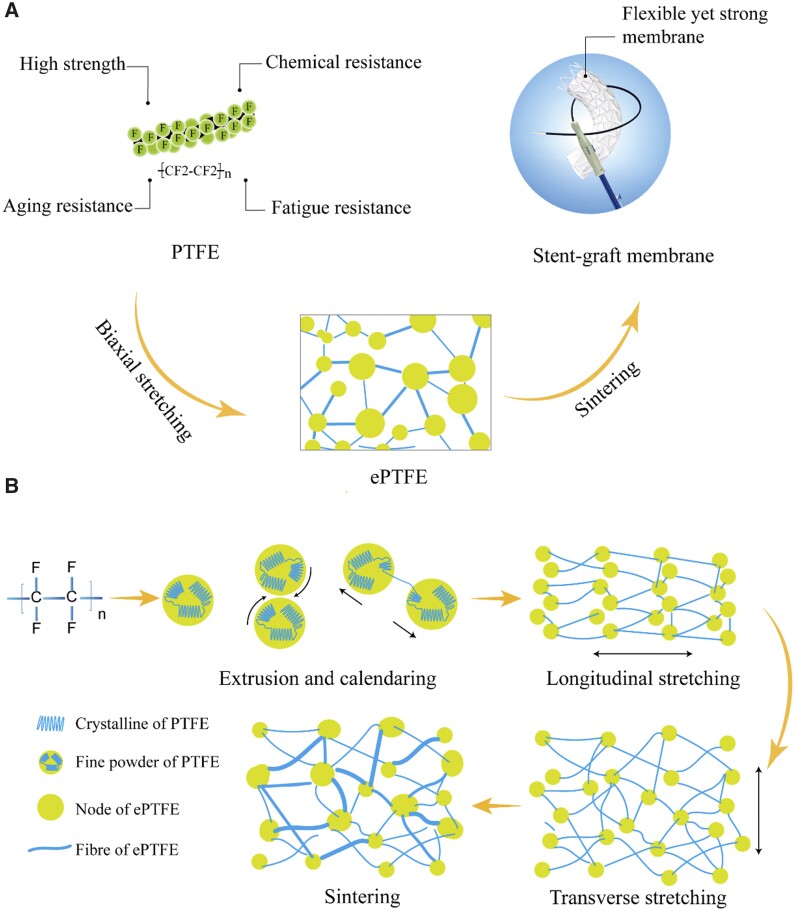
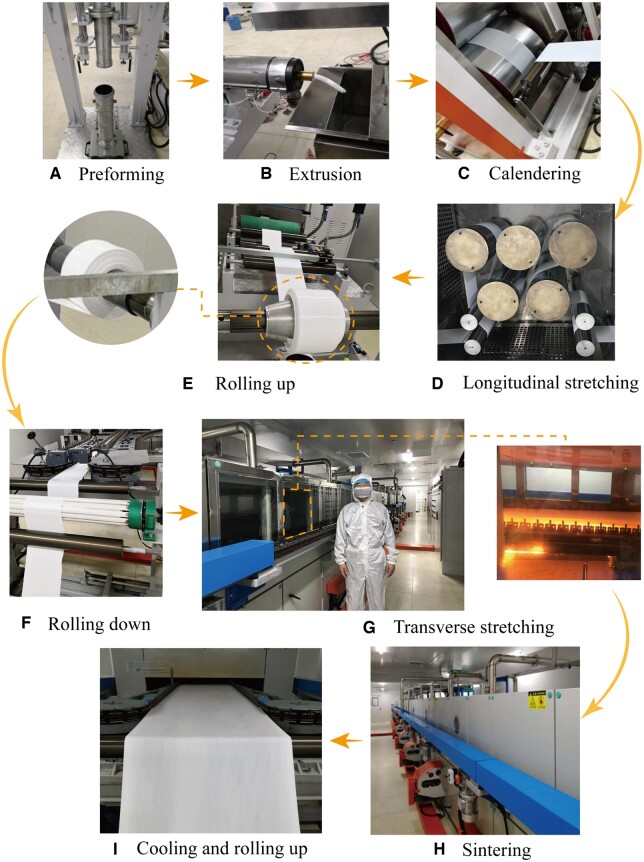
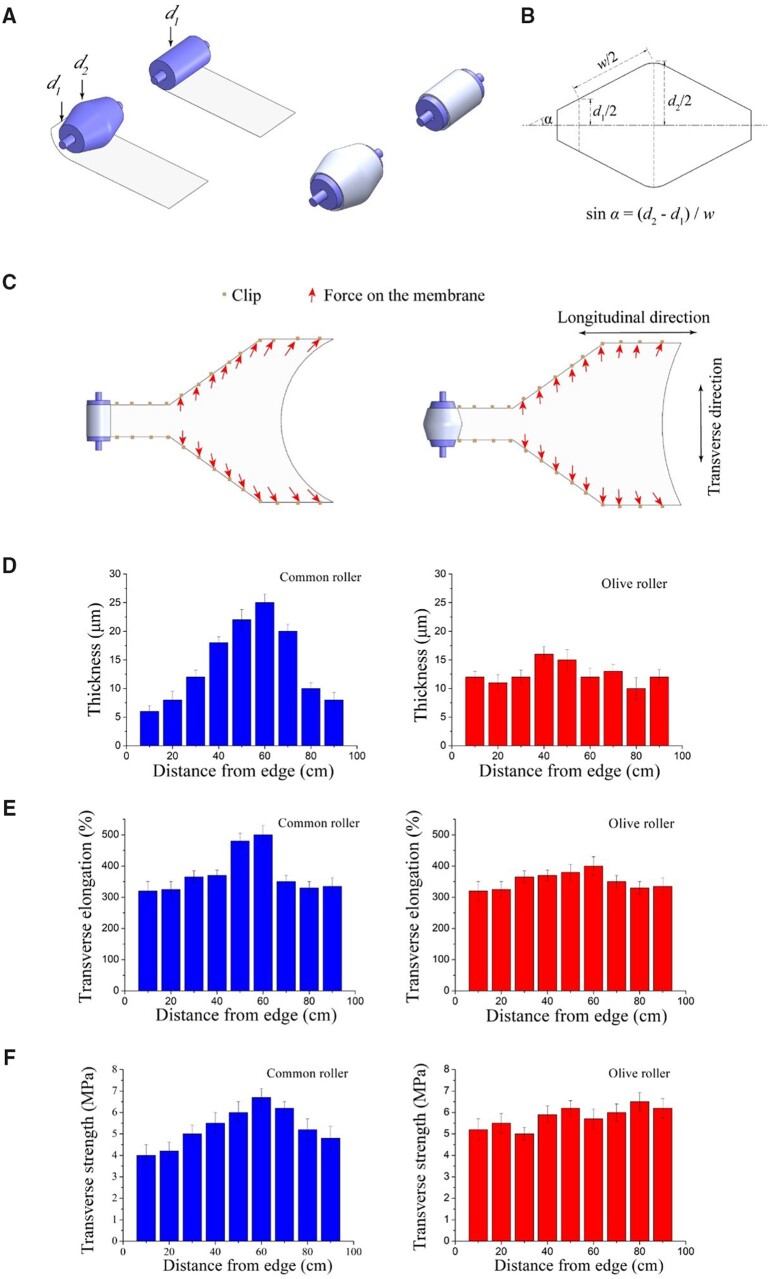
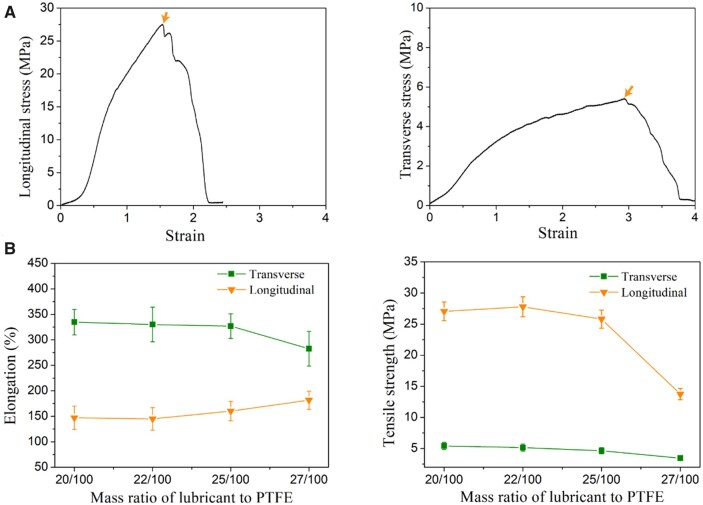
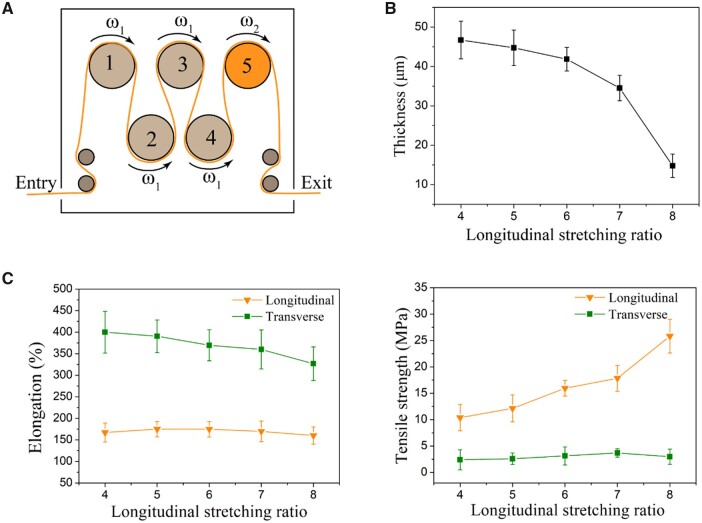
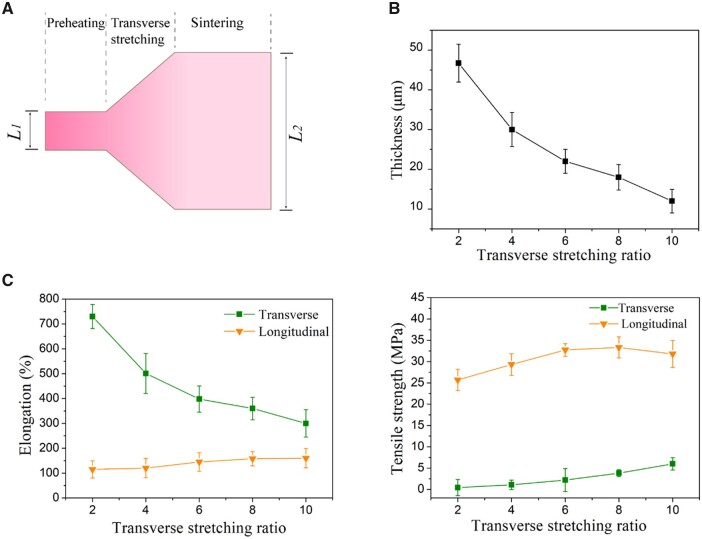
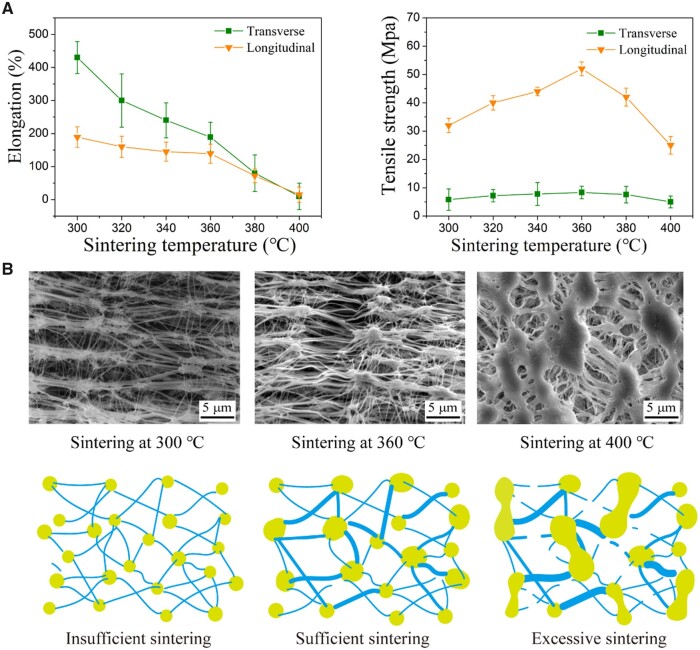
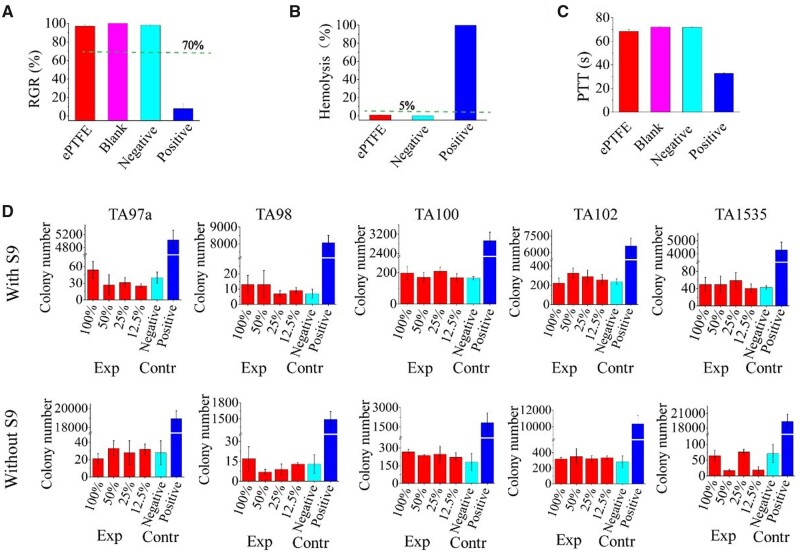
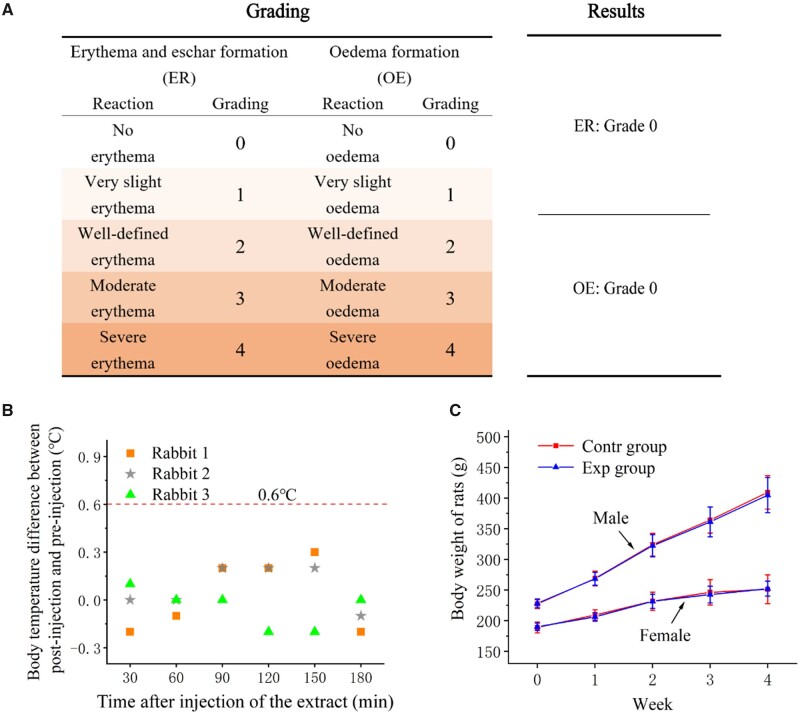
Expanded polytetrafluoroethylene (ePTFE) is promising in biomedical fields such as covered stents and plastic surgery owing to its excellent biocompatibility and mechanical properties. However, ePTFE material prepared by the traditional biaxial stretching process is with thicker middle and thinner sides due to the bowing effect, which poses a major problem in industrial-scale fabrication. To solve this problem, we design an olive-shaped winding roller to provide the middle part of the ePTFE tape with a greater longitudinal stretching amplitude than the two sides, so as to make up for the excessive longitudinal retraction tendency of the middle part when it is transversely stretched. The as-fabricated ePTFE membrane has, as designed, uniform thickness and node-fibril microstructure. In addition, we examine the effects of mass ratio of lubricant to PTFE powder, biaxial stretching ratio and sintering temperature on the performance of the resultant ePTFE membranes. Particularly, the relation between the internal microstructure of the ePTFE membrane and its mechanical properties is revealed. Besides stable mechanical properties, the sintered ePTFE membrane exhibits satisfactory biological properties. We make a series of biological assessments including hemolysis, coagulation, bacterial reverse mutation and thrombosis, intracutaneous reactivity test, pyrogen test and subchronic systemic toxicity test; all of the results meet the relevant international standards. The muscle implantation of the sintered ePTFE membrane into rabbits indicates acceptable inflammatory reactions of our sintered ePTFE membrane fabricated on industrial scale. Such a medical-grade raw material with the unique physical form and condensed-state microstructure is expected to afford an inert biomaterial potentially for stent-graft membrane.
膨体聚四氟乙烯(ePTFE)因其优异的生物相容性和机械性能,在诸如覆膜支架和整形手术等生物医学领域具有广阔前景。然而,传统双轴拉伸工艺制备的ePTFE材料由于弯曲效应,中间厚两边薄,这在工业规模制造中是一个主要问题。为解决此问题,我们设计了一种橄榄形卷绕辊,使ePTFE带材中间部分的纵向拉伸幅度大于两边,以弥补中间部分在横向拉伸时过度的纵向回缩趋势。所制备的ePTFE膜按设计具有均匀的厚度和结节 - 原纤维微观结构。此外,我们研究了润滑剂与PTFE粉末的质量比、双轴拉伸比和烧结温度对所得ePTFE膜性能的影响。特别地,揭示了ePTFE膜内部微观结构与其机械性能之间的关系。除了稳定的机械性能外,烧结后的ePTFE膜还表现出令人满意的生物学性能。我们进行了一系列生物学评估,包括溶血、凝血、细菌回复突变和血栓形成、皮内反应性试验、热原试验和亚慢性全身毒性试验;所有结果均符合相关国际标准。将烧结后的ePTFE膜植入兔肌肉表明,我们在工业规模制备的烧结ePTFE膜具有可接受的炎症反应。这种具有独特物理形态和凝聚态微观结构的医用级原材料有望为支架 - 移植物膜提供一种潜在的惰性生物材料。