Department of Gastroenterology, Jiangxi Pingxiang People's Hospital, Pingxiang 337055, Jiangxi, China.
Comput Math Methods Med. 2022 Oct 11;2022:5741437. doi: 10.1155/2022/5741437. eCollection 2022.
Cholangiocarcinoma is a common malignant tumor that occurs in the bile duct system, which can be treated by using the endoscopic retrograde cholangiography (ERCP). This study was aimed at exploring the therapeutic effect of ERCP with metal stent and plastic stent for cholangiocarcinoma.
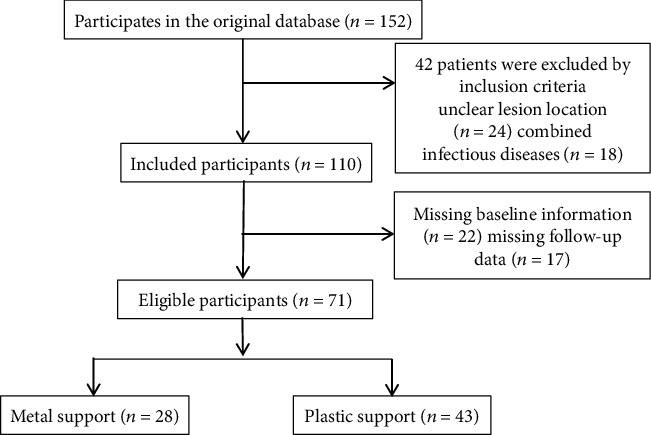
The clinical data of 71 patients with cholangiocarcinoma treated by ERCP in our hospital from June 2020 to October 2021 were retrospectively analyzed. According to different stent types, the patients were divided into plastic stent group ( = 43) and metal stent group ( = 28). Patients in the plastic stent group and metal stent group were received with plastic stent and metal stent, respectively. The indexes of liver function (serum alkaline phosphatase (ALT), direct bilirubin (DBIL), glutamic oxaloacetic transaminase (AST), alkaline phosphatase (ALP), and total bilirubin (TBIL)), postoperative complications, success rate of stent implantation, and survival time of patients in the two groups were determined. Logistic multivariate regression analysis was used to analyze the prognostic factors of postoperative cholangiocarcinoma.
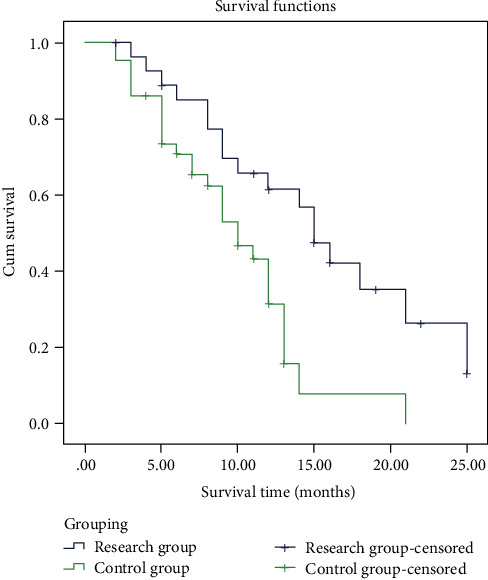
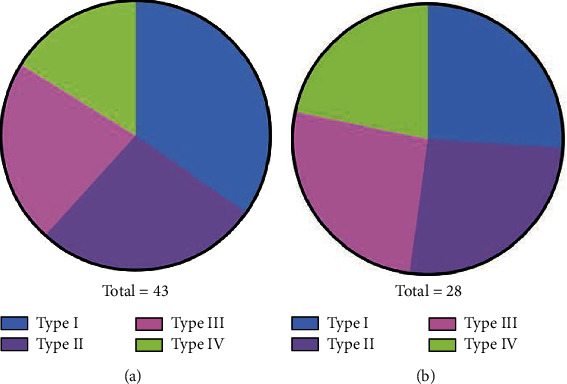
The liver function indexes of the two groups were significantly improved after treatment with the stent, in which the ameliorative effect in the metal stent group was better than that in the plastic stent group ( < 0.05). The incidence of postoperative complications in the plastic stent group and the metal stent group was 53.49% and 14.29%, respectively, and the success rate of stent placement was 60.47% and 96.43%, respectively. The incidence of complications in the metal stent group was lower than that in the plastic stent group, and the success rate of stent placement was higher than that in the plastic stent group ( < 0.05). The median survival time of patients in the plastic stent group and the metal stent group was 8.15 and 11.83 months, respectively. The survival time of patients in the metal stent group was longer than that of the plastic stent group. The median survival time of patients with types I, II, III, and IV was 12.73, 11.54, 10.57, and 9.36 months, respectively. The survival time of patients with stage I was significantly higher than that of patients with types II, III, and IV. There was an inverse relationship between the disease type and the survival time of patients. Logistic multivariate regression analysis showed that tumor diameter ≥ 5 cm, portal vein invasion, lymph node metastasis, and classification of hilar cholangiocarcinoma were the risk factors ( < 0.05) and metal stent type was the protective factor ( < 0.05).
In the clinical treatment of patients with cholangiocarcinoma, the placement of metal stent and plastic stent under ERCP plays an important role. The placement of the metal stent under ERCP has a higher success rate and better prognosis and can prolong the survival time of patients to a greater extent, but the price of the metal stent is relatively expensive. For patients with an expected survival period of more than 4-6 months, the metal stent should be considered; otherwise, the plastic stent can be used to maintain cost-effectiveness. Therefore, it is necessary to comprehensively analyze the patient's economic affordability, expected survival time, stent drainage time, and personal needs and then select an appropriate treatment method.
胆管癌是一种常见的发生于胆管系统的恶性肿瘤,可以通过内镜逆行胰胆管造影(ERCP)进行治疗。本研究旨在探讨 ERCP 下金属支架和塑料支架治疗胆管癌的疗效。
回顾性分析 2020 年 6 月至 2021 年 10 月我院收治的 71 例胆管癌患者的临床资料,根据支架类型不同将患者分为塑料支架组(n=43)和金属支架组(n=28),塑料支架组和金属支架组分别给予塑料支架和金属支架治疗。比较两组患者的肝功能指标[血清碱性磷酸酶(ALT)、直接胆红素(DBIL)、谷草转氨酶(AST)、碱性磷酸酶(ALP)、总胆红素(TBIL)]、术后并发症发生率、支架植入成功率及生存时间。采用 Logistic 多因素回归分析影响术后胆管癌患者预后的因素。
两组患者支架置入后肝功能指标均明显改善,其中金属支架组改善效果优于塑料支架组( < 0.05)。塑料支架组和金属支架组术后并发症发生率分别为 53.49%和 14.29%,支架植入成功率分别为 60.47%和 96.43%。金属支架组并发症发生率低于塑料支架组,支架植入成功率高于塑料支架组( < 0.05)。塑料支架组和金属支架组患者的中位生存时间分别为 8.15 个月和 11.83 个月,金属支架组患者的生存时间长于塑料支架组。Ⅰ型、Ⅱ型、Ⅲ型和Ⅳ型患者的中位生存时间分别为 12.73、11.54、10.57 和 9.36 个月,Ⅰ型患者的生存时间明显高于Ⅱ型、Ⅲ型和Ⅳ型患者。患者的疾病类型与生存时间呈负相关。Logistic 多因素回归分析显示,肿瘤直径≥5 cm、门静脉侵犯、淋巴结转移和肝门部胆管癌分类是影响患者预后的危险因素( < 0.05),金属支架类型是保护因素( < 0.05)。
在胆管癌患者的临床治疗中,ERCP 下金属支架和塑料支架的置入均发挥着重要作用,ERCP 下金属支架的置入成功率更高,预后更好,能更大程度地延长患者的生存时间,但金属支架的价格相对较高。对于预期生存时间超过 4~6 个月的患者,应考虑使用金属支架;否则,可使用塑料支架以保持成本效益。因此,有必要综合分析患者的经济承受能力、预期生存时间、支架引流时间和个人需求,然后选择合适的治疗方法。