Georgakopoulou Vasiliki Epameinondas, Bali Triada, Adamantou Magdalini, Asimakopoulou Stavroula, Makrodimitri Sotiria, Samara Stamatia, Triantafyllou Maria, Voutsinas Pantazis M, Eliadi Irene, Karamanakos Georgios, Basoulis Dimitrios, Chatzipanagiotou Odysseas, Adamopoulou Eleni, Alevizou Antonia, Athanasiadis Menelaos, Spandidos Demetrios A, Papalexis Petros, Tarantinos Kyriakos, Sipsas Nikolaos V, Samarkos Michael, Cholongitas Evangelos
Infectious Diseases and COVID-19 Unit, Laiko General Hospital, Medical School, National and Kapodistrian University of Athens, 11527 Athens, Greece.
First Department of Internal Medicine, Laiko General Hospital, Medical School, National and Kapodistrian University of Athens, 11527 Athens, Greece.
Exp Ther Med. 2022 Sep 26;24(5):691. doi: 10.3892/etm.2022.11627. eCollection 2022 Nov.
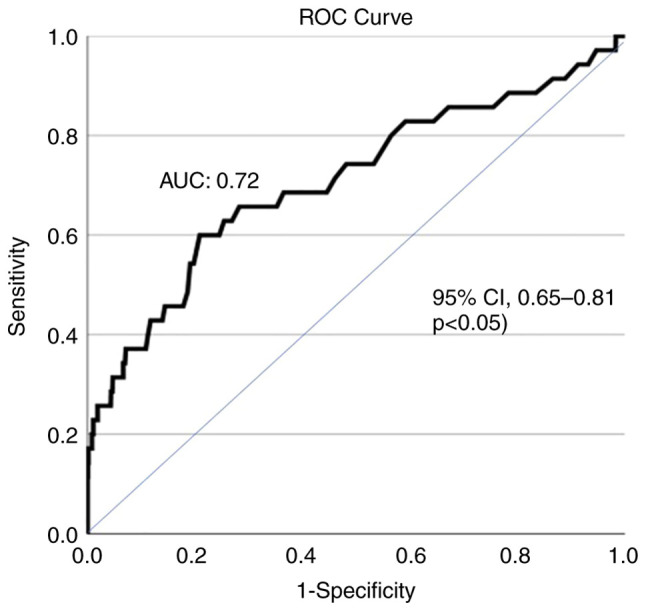
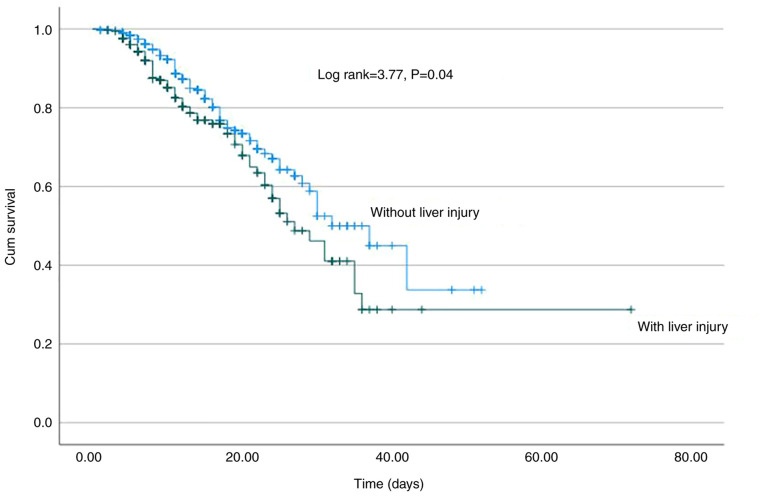
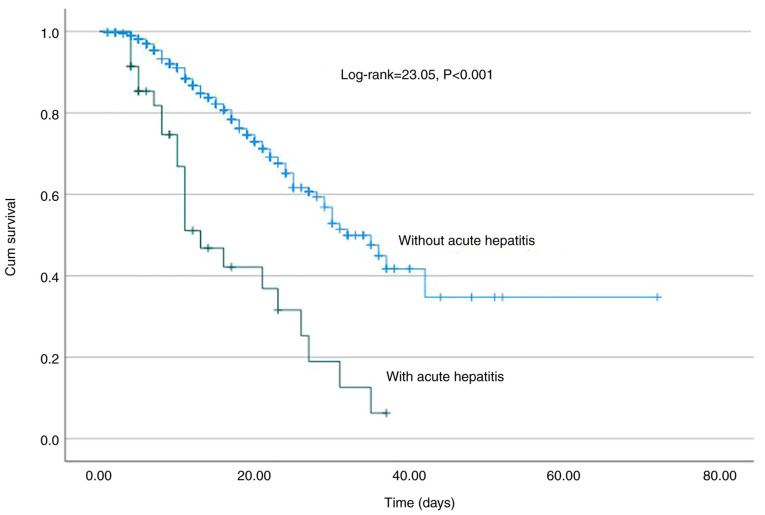
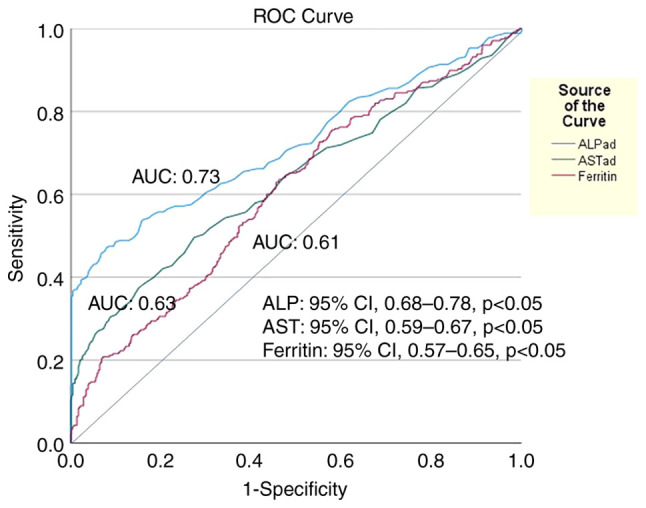
Coronavirus disease 2019 (COVID-19) is a systemic illness with an increased host inflammatory response that affects multiple extra-pulmonary organs, including the gastrointestinal tract. Abnormalities in liver biochemistry have been observed in a significant proportion of patients with COVID-19 upon admission, and this proportion increases with hospitalization. These abnormalities are typically manifested as elevations in aspartate aminotransferase (AST) and alanine aminotransferase (ALT) levels, with less frequently detected elevations in the levels of cholestatic enzymes. Elevated aminotransaminase levels have been linked to an increased risk of mortality and complications, indicating the severity of COVID-19 infection. The present study evaluated the prevalence and the baseline factors associated with the development of acute hepatitis (ΑΗ), liver injury (LI) and associated patterns, as well as the presence of abnormalities in the levels of aminotransferases at discharge in the same cohort. For this purpose, 1,304 patients with confirmed COVID-19 infection were enrolled in the study. According to the results obtained, AST levels at baseline were the only independent factor for AH during hospital stay, while AST, alkaline phosphatase and ferritin levels were independent baseline factors for the development of LI. The patients with hepatocellular, compared to those with cholestatic LI, exhibited similar survival rates, as well as similarities in the development of acute kidney injury and the need for oxygen via high-flow nasal cannula and/or mechanical ventilation. In addition, age and ALT were independent risk factors for persistent abnormal values of AST and ALT at discharge.
2019冠状病毒病(COVID-19)是一种全身性疾病,宿主炎症反应增强,可影响包括胃肠道在内的多个肺外器官。相当一部分COVID-19患者入院时出现肝脏生化异常,且这一比例随住院时间增加。这些异常通常表现为天冬氨酸转氨酶(AST)和丙氨酸转氨酶(ALT)水平升高,而胆汁淤积酶水平升高较少见。转氨酶水平升高与死亡和并发症风险增加有关,表明COVID-19感染的严重性。本研究评估了急性肝炎(AH)、肝损伤(LI)及其相关模式的发生率和基线因素,以及同一队列出院时转氨酶水平异常情况。为此,1304例确诊COVID-19感染患者纳入研究。根据所得结果,基线时AST水平是住院期间AH的唯一独立因素,而AST、碱性磷酸酶和铁蛋白水平是LI发生的独立基线因素。与胆汁淤积性LI患者相比,肝细胞性LI患者的生存率相似,急性肾损伤的发生情况以及通过高流量鼻导管和/或机械通气吸氧的需求也相似。此外,年龄和ALT是出院时AST和ALT持续异常值的独立危险因素。