School of Clinical Sciences, Faculty of Medicine, University of Bristol, Bristol, BS28DX, UK.
Department of Radiology, Children's Hospital of Philadelphia, Philadelphia, PA, USA.
J Digit Imaging. 2023 Feb;36(1):17-28. doi: 10.1007/s10278-022-00723-7. Epub 2022 Oct 24.
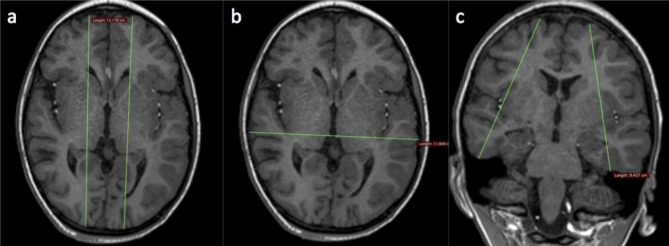
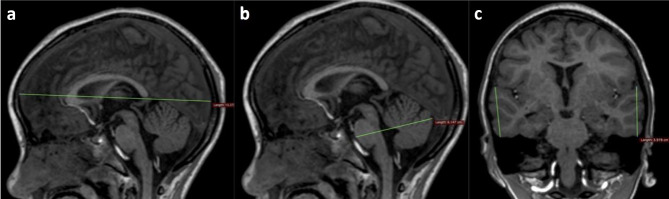
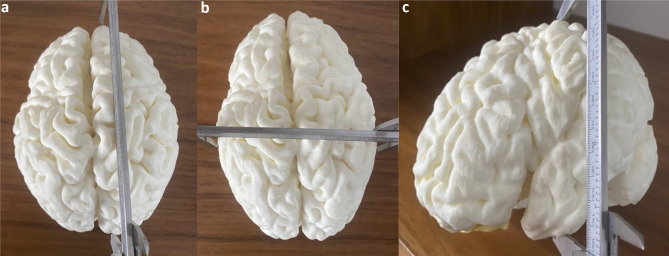
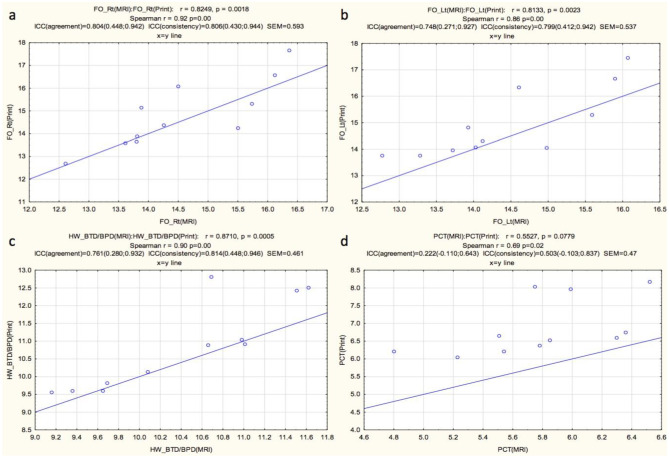
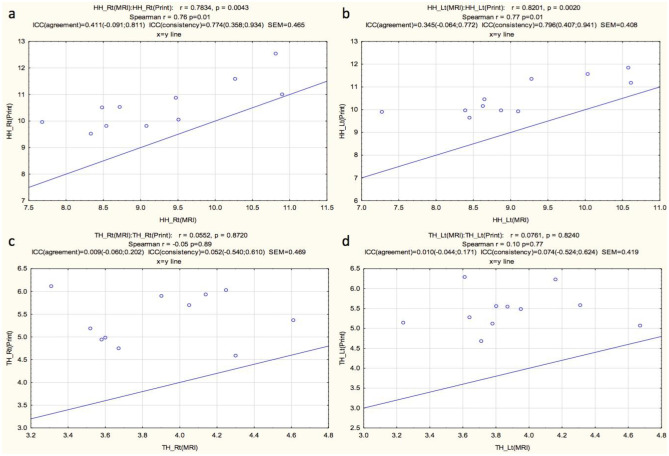
Cortical injury on the surface of the brain in children with hypoxic ischemic injury (HII) can be difficult to demonstrate to non-radiologists and lay people using brain images alone. Three-dimensional (3D) printing is helpful to communicate the volume loss and pathology due to HII in children's brains. 3D printed models represent the brain to scale and can be held up against models of normal brains for appreciation of volume loss. If 3D printed brains are to be used for formal communication, e.g., with medical colleagues or in court, they should have high fidelity of reproduction of the actual size of patients' brains. Here, we evaluate the size fidelity of 3D printed models from MRI scans of the brain, in children with prior HII. Twelve 3D prints of the brain were created from MRI scans of children with HII and selected to represent a variety of cortical pathologies. Specific predetermined measures of the 3D prints were made and compared to measures in matched planes on MRI. Fronto-occipital length (FOL) and bi-temporal/bi-parietal diameters (BTD/BPD) demonstrated high interclass correlations (ICC). Correlations were moderate to weak for hemispheric height, temporal height, and pons-cerebellar thickness. The average standard error of measurement (SEM) was 0.48 cm. Our results demonstrate high correlations in overall measurements of each 3D printed model derived from brain MRI scans versus the original MRI, evidenced by high ICC values for FOL and BTD/BPD. Measures with low correlation values can be explained by variability in matching the plane of measurement to the MRI slice orientation.
对于缺氧缺血性损伤(HII)患儿,大脑表面的皮质损伤单凭脑图像很难向非放射科医生和非专业人士解释清楚。三维(3D)打印有助于沟通儿童大脑因 HII 导致的容积损失和病变。3D 打印模型按比例代表大脑,可以与正常大脑的模型进行对比,以了解容积损失情况。如果要将 3D 打印的大脑用于正式交流,例如与医疗同事交流或在法庭上使用,那么它们应该高度忠实地再现患者大脑的实际大小。在这里,我们评估了先前患有 HII 的儿童的脑 MRI 扫描的 3D 打印模型的大小准确性。从患有 HII 的儿童的 MRI 扫描中创建了 12 个大脑 3D 打印模型,以代表各种皮质病变。对 3D 打印模型的特定预定测量值进行了测量,并与 MRI 上匹配的平面进行了比较。额枕长度(FOL)和双侧颞叶/顶叶直径(BTD/BPD)表现出较高的组内相关系数(ICC)。半球高度、颞叶高度和桥脑小脑厚度的相关性为中度至弱。平均测量标准误差(SEM)为 0.48cm。我们的结果表明,从脑 MRI 扫描中获得的每个 3D 打印模型的总体测量值与原始 MRI 之间具有高度相关性,FOL 和 BTD/BPD 的 ICC 值较高证明了这一点。具有低相关值的测量值可以通过将测量平面与 MRI 切片方向匹配的可变性来解释。