Hunan Key Laboratory of Molecular Precision Medicine, Department of Critical Care Medicine, Xiangya Hospital, Central South University, Changsha, 410008, China.
Department of Neurology, Xiangya Hospital, Central South University, Changsha, 410008, China.
Transl Neurodegener. 2022 Oct 26;11(1):46. doi: 10.1186/s40035-022-00320-2.
Amyotrophic lateral sclerosis (ALS) is a devastating progressive neurodegenerative disease that affects neurons in the central nervous system and the spinal cord. As in many other neurodegenerative disorders, the genetic risk factors and pathogenesis of ALS involve dysregulation of cytoskeleton and neuronal transport. Notably, sensory and motor neuron diseases such as hereditary sensory and autonomic neuropathy type 2 (HSAN2) and spastic paraplegia 30 (SPG30) share several causative genes with ALS, as well as having common clinical phenotypes. KIF1A encodes a kinesin 3 motor that transports presynaptic vesicle precursors (SVPs) and dense core vesicles and has been reported as a causative gene for HSAN2 and SPG30.
Here, we analyzed whole-exome sequencing data from 941 patients with ALS to investigate the genetic association of KIF1A with ALS.
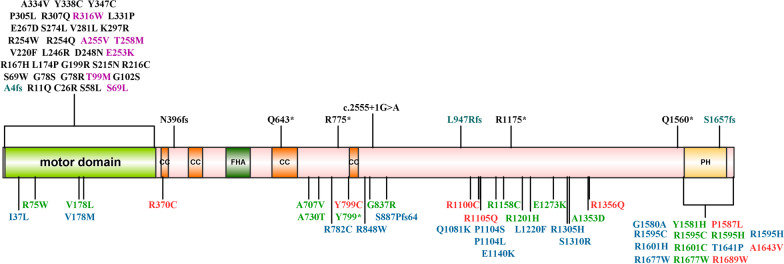
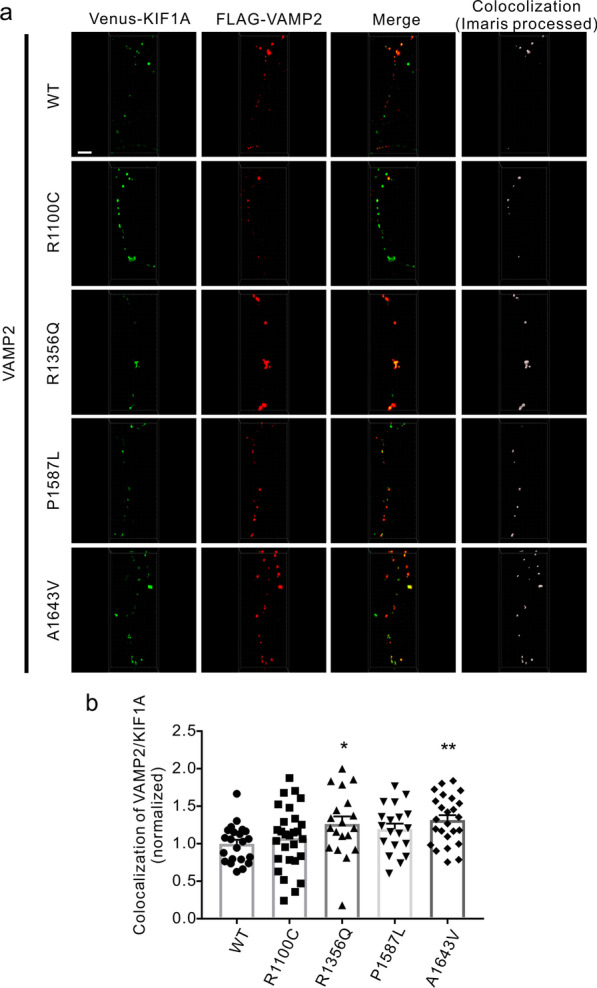
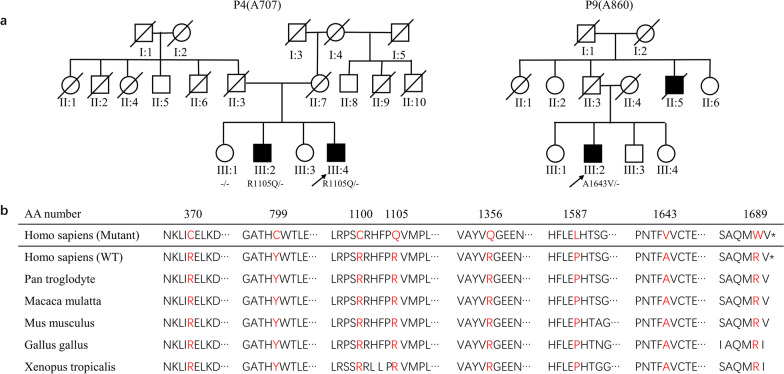
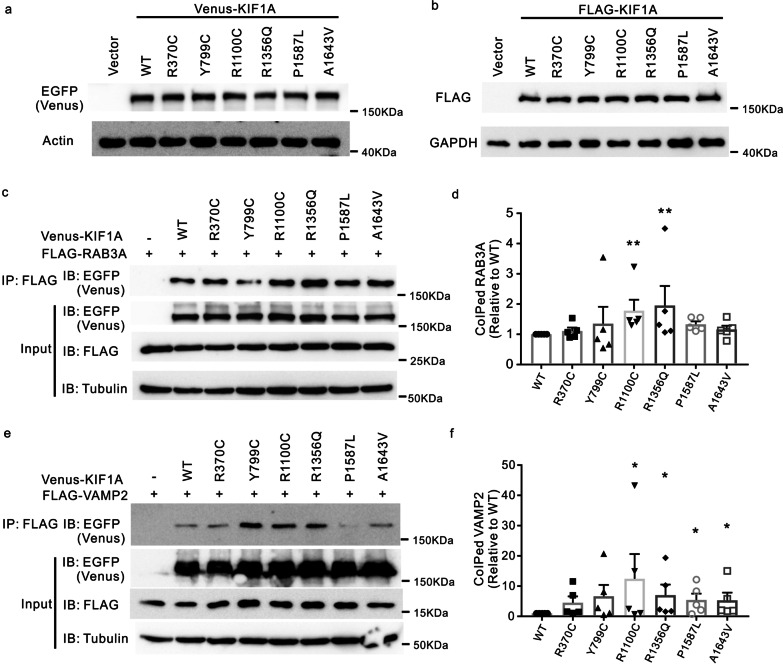
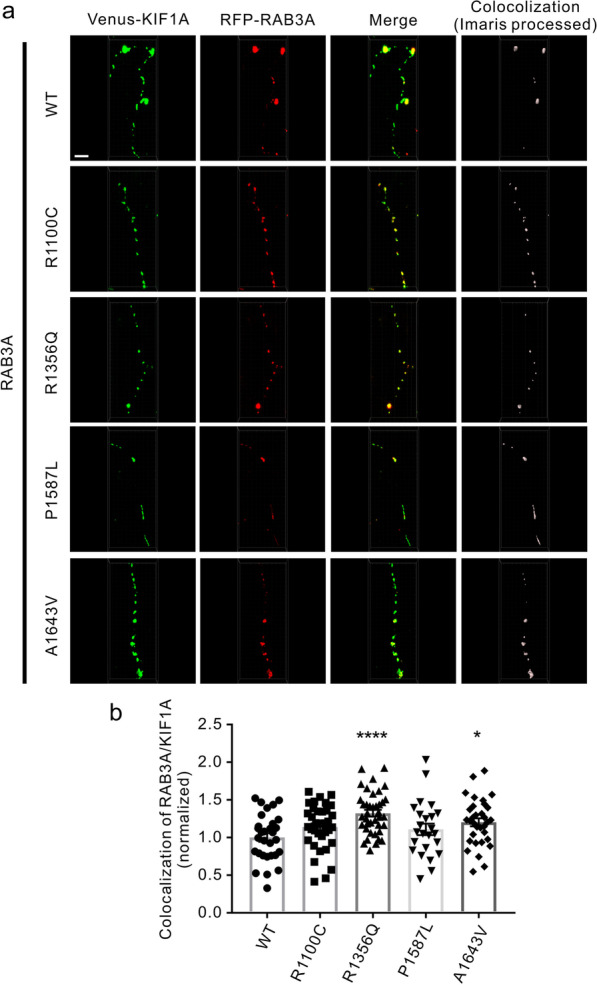
We identified rare damage variants (RDVs) in the KIF1A gene associated with ALS and delineated the clinical characteristics of ALS patients with KIF1A RDVs. Clinically, these patients tended to exhibit sensory disturbance. Interestingly, the majority of these variants are located at the C-terminal cargo-binding region of the KIF1A protein. Functional examination revealed that the ALS-associated KIF1A variants located in the C-terminal region preferentially enhanced the binding of SVPs containing RAB3A, VAMP2, and synaptophysin. Expression of several disease-related KIF1A mutants in cultured mouse cortical neurons led to enhanced colocalization of RAB3A or VAMP2 with the KIF1A motor.
Our study highlighted the importance of KIF1A motor-mediated transport in the pathogenesis of ALS, indicating KIF1A as an important player in the oligogenic scenario of ALS.
肌萎缩侧索硬化症(ALS)是一种破坏性的进行性神经退行性疾病,影响中枢神经系统和脊髓中的神经元。与许多其他神经退行性疾病一样,ALS 的遗传风险因素和发病机制涉及细胞骨架和神经元运输的失调。值得注意的是,遗传性感觉和自主神经病 2 型(HSAN2)和痉挛性截瘫 30 型(SPG30)等感觉和运动神经元疾病与 ALS 具有几个共同的致病基因,并具有共同的临床表型。KIF1A 编码一种运输突触前囊泡前体(SVPs)和致密核心囊泡的驱动蛋白 3,已被报道为 HSAN2 和 SPG30 的致病基因。
我们分析了 941 名 ALS 患者的外显子组测序数据,以研究 KIF1A 与 ALS 的遗传关联。
我们鉴定了与 ALS 相关的 KIF1A 基因中的罕见损伤变异(RDV),并描绘了具有 KIF1A RDV 的 ALS 患者的临床特征。临床上,这些患者往往表现出感觉障碍。有趣的是,这些变体中的大多数位于 KIF1A 蛋白的 C 末端货物结合区。功能检测表明,位于 KIF1A 蛋白 C 末端的 ALS 相关 KIF1A 变体优先增强了含有 RAB3A、VAMP2 和突触素的 SVPs 的结合。在培养的小鼠皮质神经元中表达几种与疾病相关的 KIF1A 突变体导致 RAB3A 或 VAMP2 与 KIF1A 马达的共定位增强。
我们的研究强调了 KIF1A 马达介导的运输在 ALS 发病机制中的重要性,表明 KIF1A 是 ALS 寡基因情景中的一个重要参与者。