Department of Chemistry, University of Torino, Via P. Giuria 7, 10125, Turin, Italy.
J Org Chem. 2023 May 19;88(10):6420-6433. doi: 10.1021/acs.joc.2c01963. Epub 2022 Oct 26.
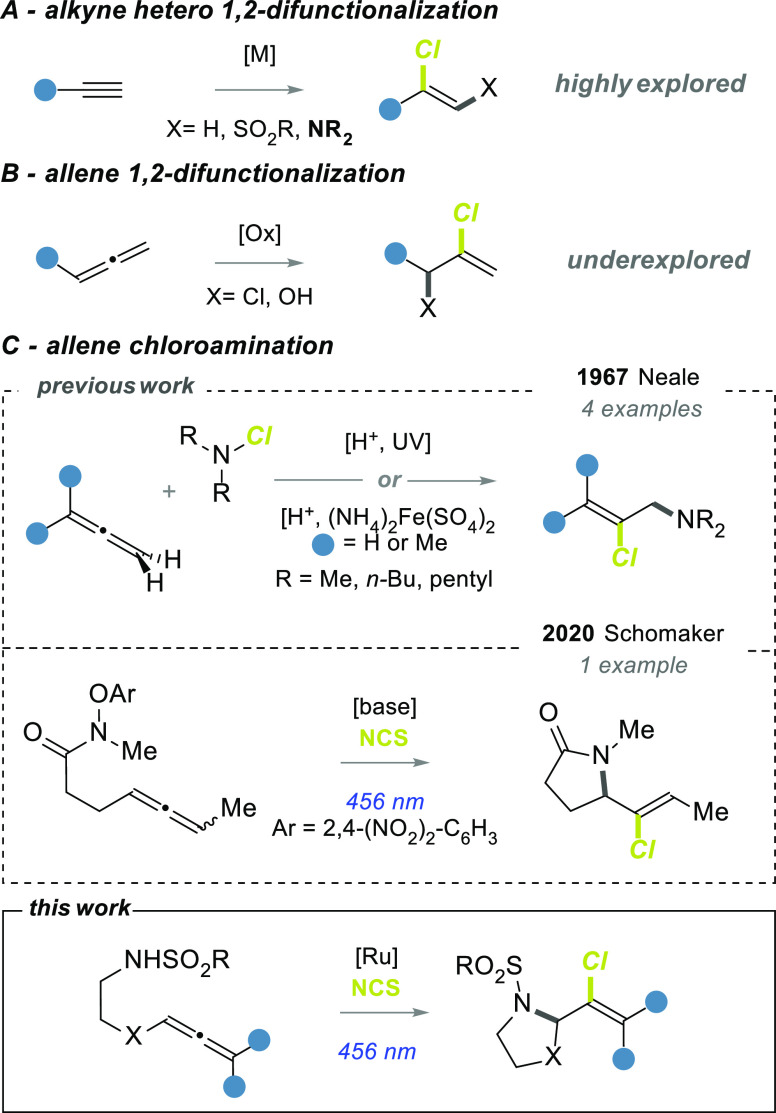
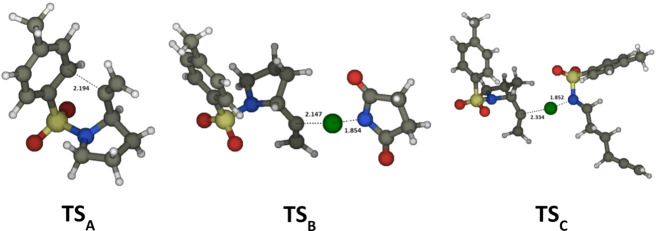
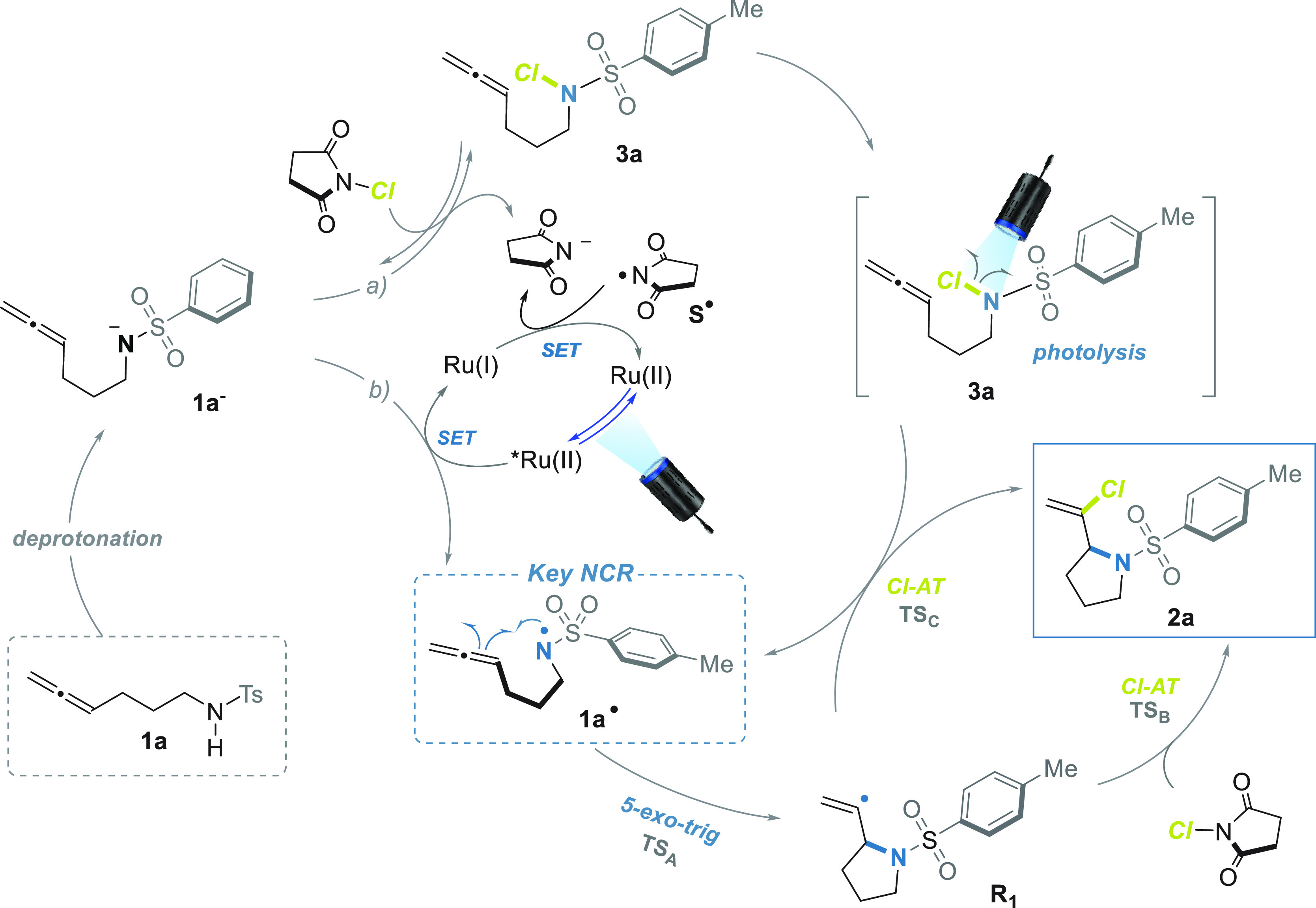
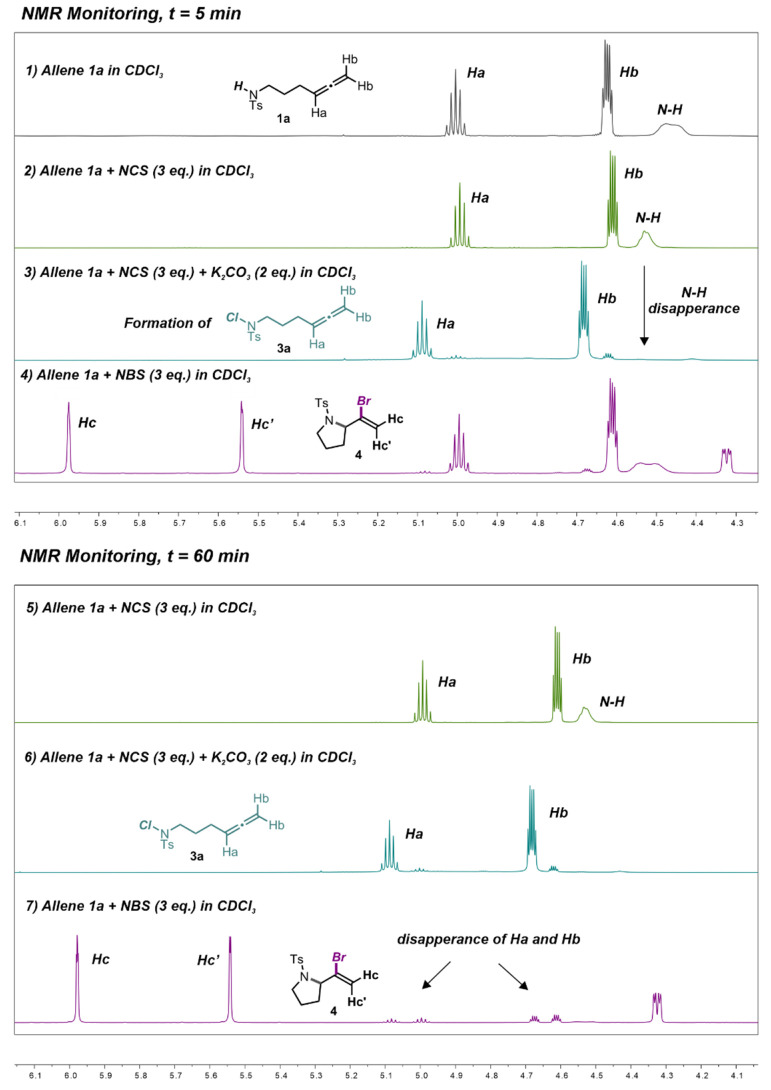
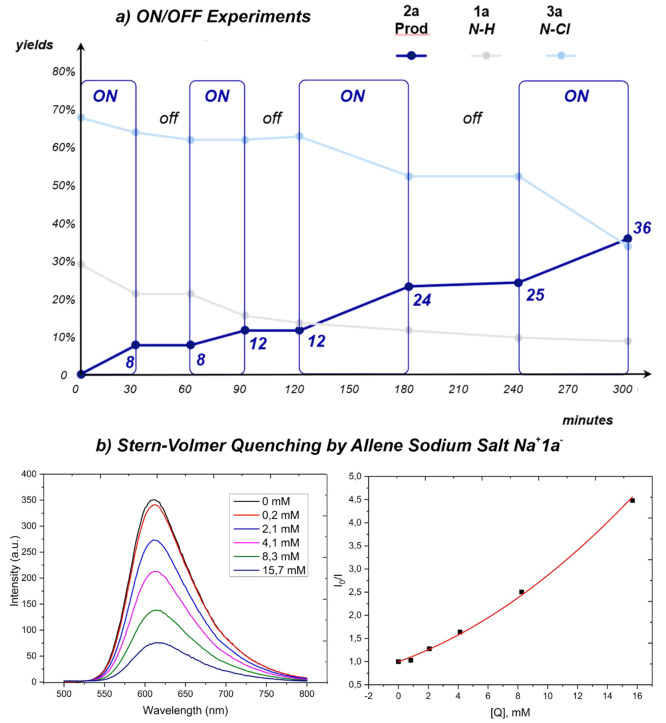
Here, we present an intriguing photoinduced chloroamination cyclization of allenes bearing a tethered sulfonylamido group to afford 2-(1-chlorovinyl)pyrrolidines and related heterocycles in the presence of -chlorosuccinimide (NCS) as the chlorine source. An in depth experimental and computational mechanistic study revealed the existence of multiple reaction pathways leading to a common nitrogen centered radical (NCR). This key NCR can be, in fact, originated from (a) the oxidation of the deprotonated allene by the photoexcited state of the Ru-catalyst and (b) the photodissociation of the in situ formed -chloroallene. The NCR formation triggers an intramolecular cyclization to a highly reactive pyrrolidine vinyl radical, which upon chlorination delivers the final product. Thus, NCS plays a dual role, serving both as an activator of the sulfonamido functionality and as the chlorinating agent.
在这里,我们展示了一个有趣的光诱导氯胺化环化反应,其中带有连接的磺酰胺基团的丙二烯在 -氯代丁二酰亚胺 (NCS) 作为氯源的存在下,生成 2-(1-氯乙烯基)吡咯烷和相关杂环。深入的实验和计算机制研究揭示了存在多种反应途径,导致共同的氮中心自由基 (NCR)。这个关键的 NCR 实际上可以源自 (a) Ru-催化剂的光激发态氧化脱质子的丙二烯和 (b) 原位形成的 -氯丙二烯的光解。NCR 的形成引发了分子内环化,形成高反应性的吡咯烷乙烯基自由基,随后氯化得到最终产物。因此,NCS 发挥了双重作用,既是磺酰胺官能团的活化剂,也是氯化剂。