Cacao Research Center (CEPEC/CEPLAC), Ilhéus, BA, Brazil.
Plant Genetics Laboratory, EMBRAPA Genetic Resources and Biotechnology, Brasilia, Brazil.
PLoS One. 2022 Oct 26;17(10):e0270437. doi: 10.1371/journal.pone.0270437. eCollection 2022.
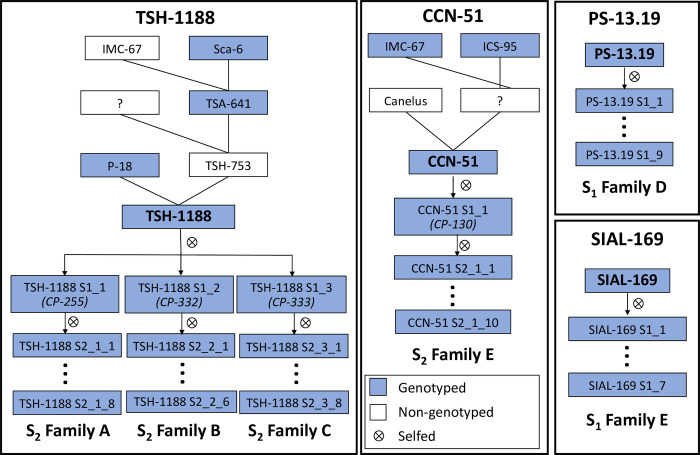
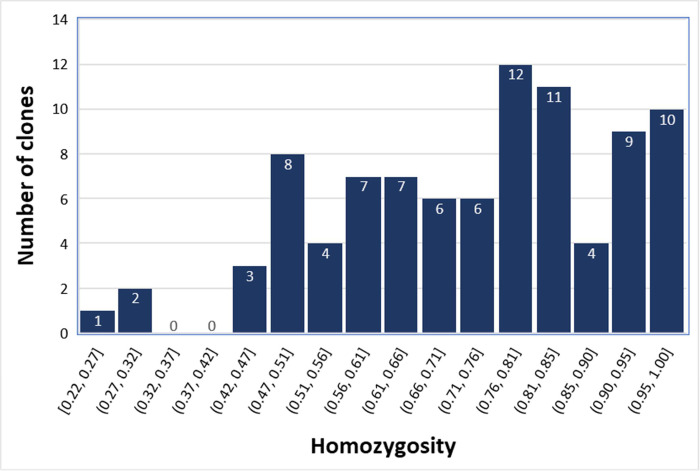
Cacao is a globally important crop with a long history of domestication and selective breeding. Despite the increased use of elite clones by cacao farmers, worldwide plantations are established mainly using hybrid progeny material derived from heterozygous parents, therefore displaying high tree-to-tree variability. The deliberate development of hybrids from advanced inbred lines produced by successive generations of self-pollination has not yet been fully considered in cacao breeding. This is largely due to the self-incompatibility of the species, the long generation cycles (3-5 years) and the extensive trial areas needed to accomplish the endeavor. We propose a simple and accessible approach to develop inbred lines based on accelerating the buildup of homozygosity based on regular selfing assisted by genome-wide SNP genotyping. In this study we genotyped 90 clones from the Brazilian CEPEC´s germplasm collection and 49 inbred offspring of six S1 or S2 cacao families derived from self-pollinating clones CCN-51, PS-13.19, TSH-1188 and SIAL-169. A set of 3,380 SNPs distributed across the cacao genome were interrogated on the EMBRAPA multi-species 65k Infinium chip. The 90 cacao clones showed considerable variation in genome-wide SNP homozygosity (mean 0.727± 0.182) and 19 of them with homozygosity ≥90%. By assessing the increase in homozygosity across two generations of self-pollinations, SNP data revealed the wide variability in homozygosity within and between S1 and S2 families. Even in small families (<10 sibs), individuals were identified with up to ~1.5 standard deviations above the family mean homozygosity. From baseline homozygosities of 0.476 and 0.454, offspring with homozygosities of 0.862 and 0.879 were recovered for clones TSH-1188 and CCN-51 respectively, in only two generations of selfing (81-93% increase). SNP marker assisted monitoring and selection of inbred individuals can be a practical tool to optimize and accelerate the development of inbred lines of outbred tree species. This approach will allow a faster and more accurate exploitation of hybrid breeding strategies in cacao improvement programs and potentially in other perennial fruit and forest trees.
可可树是一种具有悠久驯化和选育历史的全球重要作物。尽管可可种植者越来越多地使用优良无性系,但全球种植园主要使用源自杂合亲本的杂种后代材料,因此表现出高度的个体间变异性。在可可育种中,尚未充分考虑从连续自交产生的先进近交系中有意开发杂种。这在很大程度上是由于该物种的自交不亲和性、较长的世代周期(3-5 年)以及完成这一工作所需的广泛试验面积。我们提出了一种简单易用的方法,通过常规自交辅助的全基因组 SNP 基因分型加速纯合性的建立,从而开发近交系。在这项研究中,我们对来自巴西 CEPEC 种质资源库的 90 个克隆体和源自自交克隆体 CCN-51、PS-13.19、TSH-1188 和 SIAL-169 的 6 个 S1 或 S2 可可家系的 49 个近交后代进行了基因分型。一组分布在可可基因组上的 3380 个 SNP 利用 EMBRAPA 多物种 65k Infinium 芯片进行了检测。90 个可可克隆体在全基因组 SNP 纯合度上表现出相当大的变异(平均值为 0.727±0.182),其中 19 个克隆体的纯合度≥90%。通过评估两代自交过程中纯合度的增加,SNP 数据揭示了 S1 和 S2 家系内和家系间的广泛变异性。即使在小家庭(<10 个同胞)中,也发现个体的纯合度比家系平均值高出约 1.5 个标准差。从基线纯合度 0.476 和 0.454 开始,TSH-1188 和 CCN-51 克隆体的后代纯合度分别恢复到 0.862 和 0.879,仅经过两代自交(增加 81-93%)。SNP 标记辅助监测和选择近交个体可以成为优化和加速杂种树种种质资源近交系开发的实用工具。这种方法将使可可改良计划中杂交育种策略的利用更快、更准确,并可能在其他多年生水果和林木中得到利用。