Division of Cancer and Genetics, Section of Hematology, School of Medicine, Cardiff University, Cardiff, United Kingdom.
Experimental Clinical Medical Center (ECMC) Cardiff, School of Medicine, Cardiff University, Cardiff, United Kingdom.
PLoS Genet. 2022 Oct 26;18(10):e1010463. doi: 10.1371/journal.pgen.1010463. eCollection 2022 Oct.
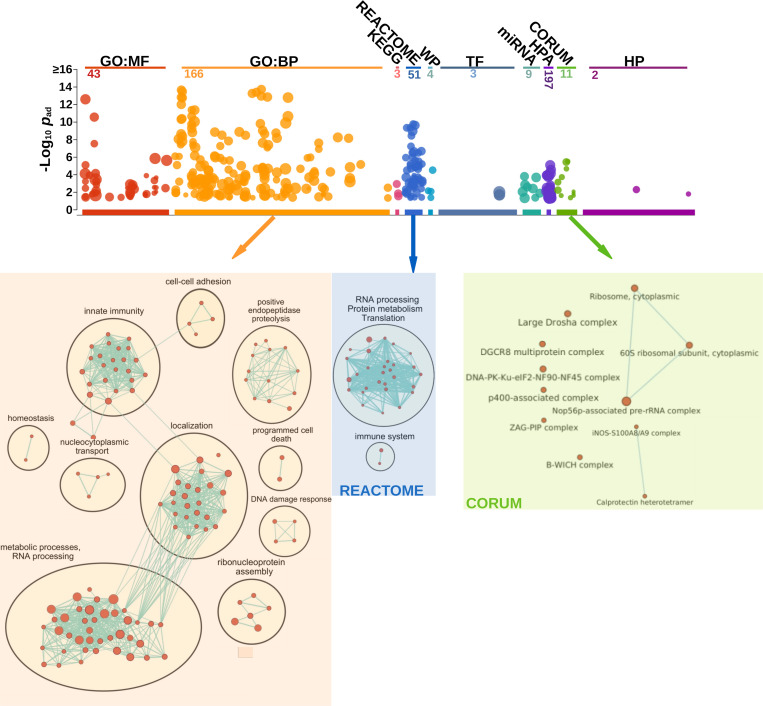
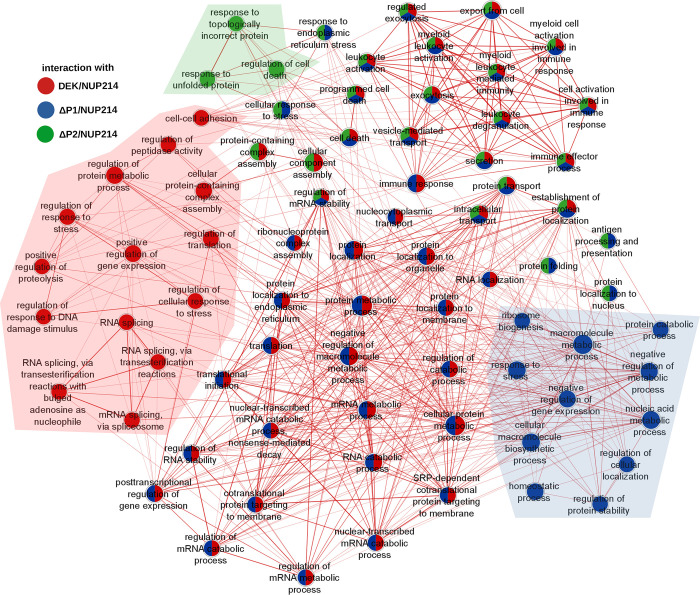
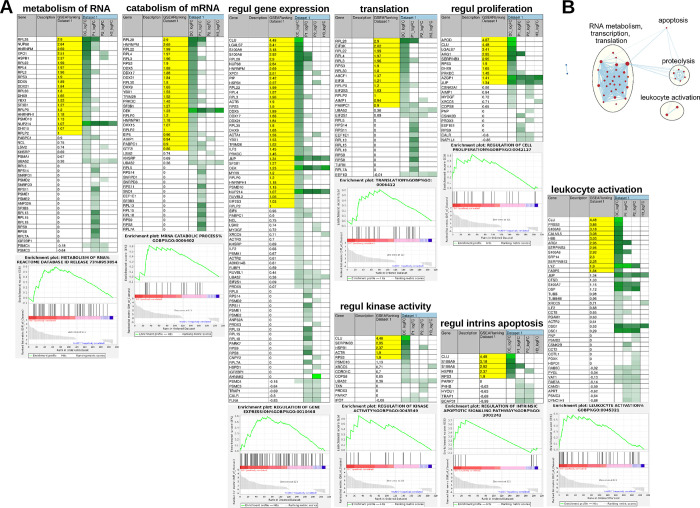
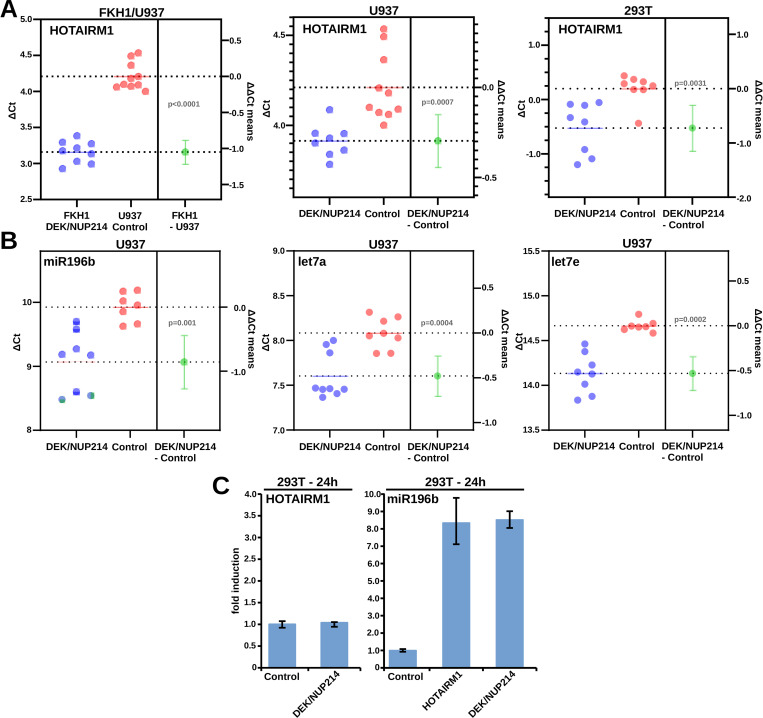
The WHO classifies t(6;9)-positive acute myeloid leukemia (AML) as a subgroup of high-risk AML because of its clinical and biological peculiarities, such as young age and therapy resistance. t(6;9) encodes the DEK/NUP214 fusion oncoprotein that targets only a small subpopulation of bone marrow progenitors for leukemic transformation. This distinguishes DEK/NUP214 from other fusion oncoproteins, such as PML/RARα, RUNX1/ETO, or MLL/AF9, which have a broad target population they block differentiation and increase stem cell capacity. A common theme among most leukemogenic fusion proteins is their aberrant localization compared to their wild-type counterparts. Although the actual consequences are widely unknown, it seems to contribute to leukemogenesis most likely by a sequester of interaction partners. Thus, we applied a global approach to studying the consequences of the aberrant localization of t(6;9)-DEK/NUP214 for its interactome. This study aimed to disclose the role of localization of DEK/NUP214 and the related sequester of proteins interacting with DEK/NUP214 for the determination of the biology of t(6;9)-AML. Here we show the complexity of the biological consequences of the expression of DEK/NUP214 by an in-depth bioinformatic analysis of the interactome of DEK/NUP214 and its biologically dead mutants. DEK/NUP214's interactome points to an essential role for aberrant RNA-regulation and aberrant regulation of apoptosis and leukocyte activation as a significant determinant of the phenotype of t(6;9)-AML. Taken together, we provide evidence that the interactome contributes to the aberrant biology of an oncoprotein, providing opportunities for developing novel targeted therapy approaches.
世界卫生组织将 t(6;9)阳性急性髓系白血病 (AML) 归类为高危 AML 的亚组,因为其具有临床和生物学特征,如年轻和治疗耐药。t(6;9)编码 DEK/NUP214 融合癌蛋白,该蛋白仅针对骨髓祖细胞的一小部分进行白血病转化。这将 DEK/NUP214 与其他融合癌蛋白区分开来,如 PML/RARα、RUNX1/ETO 或 MLL/AF9,这些融合癌蛋白的靶标人群广泛,可阻止分化并增加干细胞能力。大多数致白血病融合蛋白的一个共同主题是它们与野生型相比的异常定位。尽管实际后果尚不清楚,但它似乎最有可能通过隔离相互作用伙伴来促成白血病的发生。因此,我们采用了一种全局方法来研究 t(6;9)-DEK/NUP214 异常定位对其相互作用组的影响。本研究旨在揭示 DEK/NUP214 定位及其与 DEK/NUP214 相互作用的蛋白质相关隔离的作用,以确定 t(6;9)-AML 的生物学特性。在这里,我们通过对 DEK/NUP214 的相互作用组及其生物学无效突变体的深入生物信息学分析,展示了 DEK/NUP214 表达的生物学后果的复杂性。DEK/NUP214 的相互作用组表明,异常的 RNA 调控和异常的细胞凋亡和白细胞激活调控在很大程度上决定了 t(6;9)-AML 的表型,这是一个至关重要的作用。总之,我们提供的证据表明,相互作用组有助于癌蛋白的异常生物学,为开发新的靶向治疗方法提供了机会。