California National Primate Research Center, University of California Davis, Davis, CA 95616, USA.
Center for Immunology and Infectious Diseases, University of California Davis, Davis, CA 95616, USA; Graduate Group in Immunology, University of California Davis, Davis, CA 95616, USA.
Cell Rep. 2022 Nov 1;41(5):111573. doi: 10.1016/j.celrep.2022.111573. Epub 2022 Oct 12.
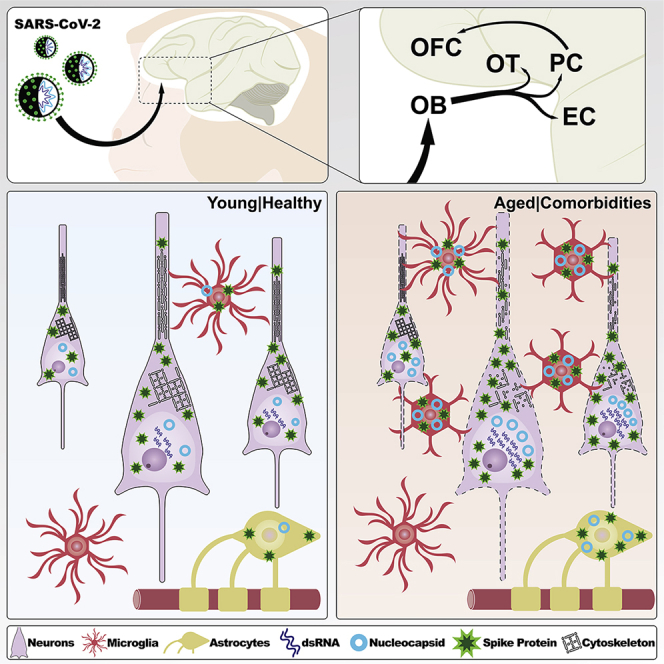
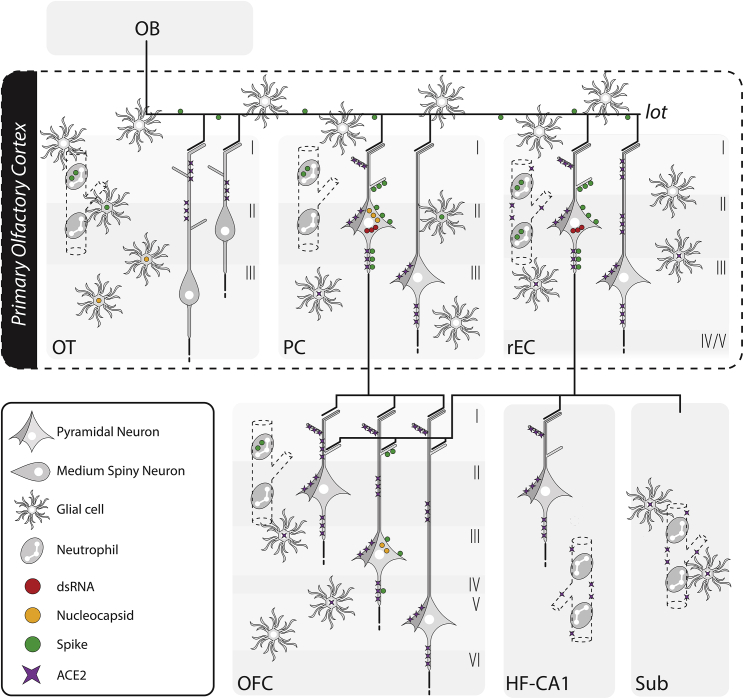
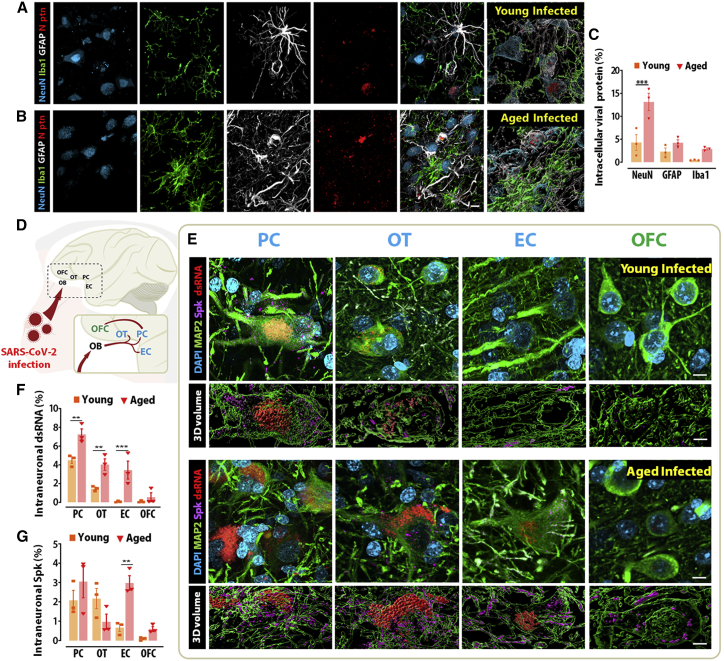
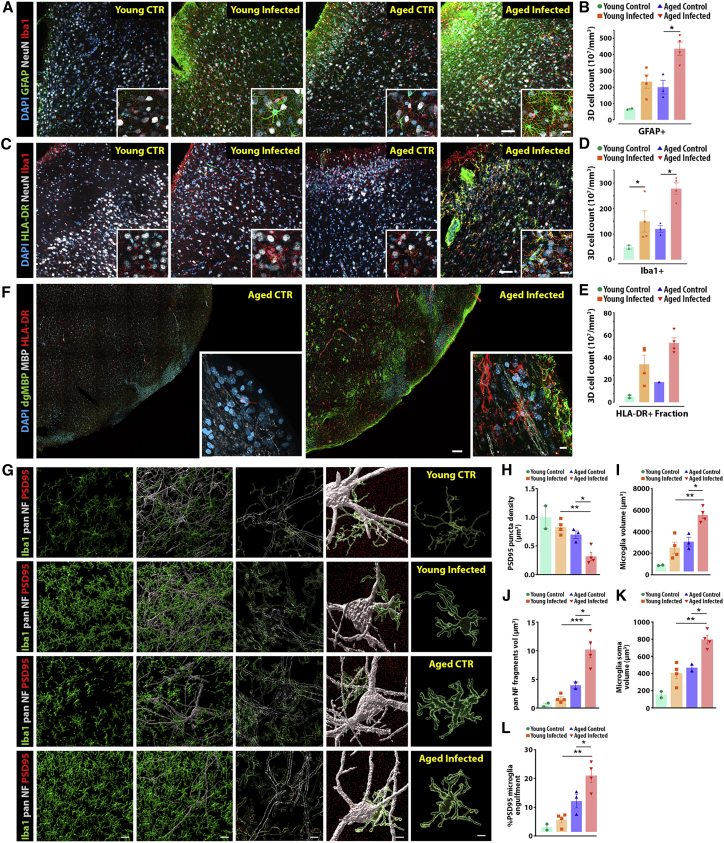
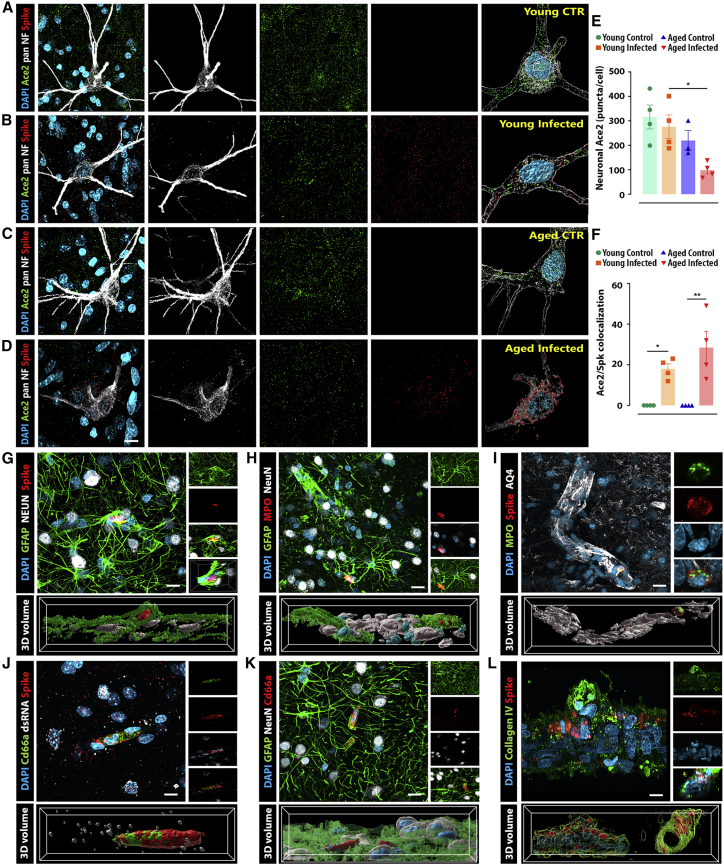
Severe acute respiratory syndrome coronavirus 2 (SARS-CoV-2), the etiologic agent of coronavirus disease 2019 (COVID-19), can induce a plethora of neurological complications in some patients. However, it is still under debate whether SARS-CoV-2 directly infects the brain or whether CNS sequelae result from systemic inflammatory responses triggered in the periphery. By using high-resolution microscopy, we investigated whether SARS-CoV-2 reaches the brain and how viral neurotropism can be modulated by aging in a non-human primate model of COVID-19. Seven days after infection, SARS-CoV-2 was detected in the olfactory cortex and interconnected regions and was accompanied by robust neuroinflammation and neuronal damage exacerbated in aged, diabetic animals. Our study provides an initial framework for identifying the molecular and cellular mechanisms underlying SARS-CoV-2 neurological complications, which will be essential to reducing both the short- and long-term burden of COVID-19.
严重急性呼吸综合征冠状病毒 2(SARS-CoV-2)是 2019 年冠状病毒病(COVID-19)的病原体,它可导致一些患者出现多种神经系统并发症。然而,SARS-CoV-2 是否直接感染大脑,或者中枢神经系统后遗症是否由外周引发的全身炎症反应引起,目前仍存在争议。我们通过使用高分辨率显微镜,研究了 SARS-CoV-2 是否能到达大脑,以及在 COVID-19 的非人类灵长类动物模型中,衰老如何调节病毒的嗜神经性。感染后 7 天,在嗅皮层和相互连接的区域检测到 SARS-CoV-2,同时伴有强烈的神经炎症和在老年、糖尿病动物中加重的神经元损伤。我们的研究为确定 SARS-CoV-2 神经系统并发症的分子和细胞机制提供了初步框架,这对于减轻 COVID-19 的短期和长期负担至关重要。